New Rolls-Royce Project Nightingale: longer (and probably heavier) than a Cullinan
Coachbuilt cabrio is the first in a series of specials for Rolls-Royce’s most discerning and engaged customers

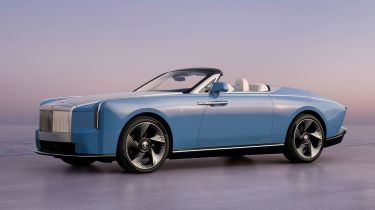
Rolls-Royce has pulled the (extra-large) covers off its first so-called ‘Coachbuild Collection’ car, dubbed Project Nightingale. Drawing inspiration from the brand’s high-speed experimental ‘EX’ cars from the 1920s, the Rolls-Royce Project Nightingale is a huge, two-seat electric drop-top for the firm’s “most dedicated and discerning” clients. Only 100 will be built, with the first cars due for completion in 2028.
Auto Express was invited to a private media preview of the new model at Rolls-Royce HQ in Goodwood, West Sussex. Joined by head of future product, Phil Harnett, and lead designer, Jacobo Dominguez Ojea, we were given an exclusive walkaround of the marque’s latest project.

The ‘Nightingale’ moniker is inspired by the name of the designer’s house at founder Henry Royce’s winter home on the Côte d'Azur in France. It is “defined by grand proportions” and underpinned by a fully-electric drivetrain – although exact specifications will remain under wraps until testing concludes next year.
According to Rolls-Royce CEO, Chris Brownridge, Project Nightingale was born as a result of requests from the company’s “most discerning clients” asking for the maker’s “most ambitious work”. Apparently, the result is “the most extravagant expression of what Rolls-Royce is capable of today”.
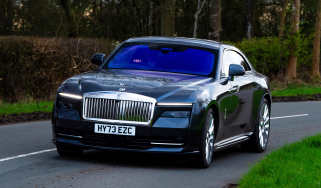
From the front, the bluff nose and tall bonnet are typical, modern-day Rolls-Royce. The giant Pantheon Grille measures almost a metre in width and is adorned by 24 vertical vanes. The slim headlights, which also house the indicators and daytime running-lights, are completely bespoke and are apparently so intricate and hard to assemble that, at this stage, cannot be put into series production.
Below the grille sits a carbon-fibre lower bumper with chrome detailing, while above you’ll find the familiar Spirit of Ecstasy flying mascot. The red Rolls-Royce logo signifies this as a ‘production concept’ – customer cars will get conventional badges.
Dominguez Ojea told us: “Very early in the process, we realised this is a once-in-a-lifetime opportunity to do something like this. We had the freedom to do something truly special.
“This car is about the wind in your hair, it’s about feeling what’s around you. It’s not just a car to go from point A to point B: the experience of driving this car is a destination in itself. We wanted to do something clearly modern, but also bold and pure in its shape.”
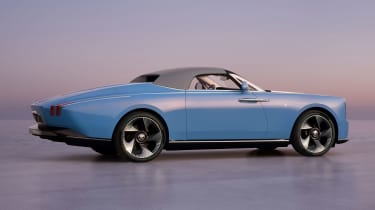
It’s in profile where the car’s “upright to flowing” design philosophy is most obvious. The torpedo-shape rear is inspired by the 16EX and 17EX prototypes from the 1920s – models that Rolls-Royce claims are among the “rarest and most desirable motor cars” in its history. It sits on 24-inch wheels – the largest on any Rolls to date – and each rim is unique: the rears are wider than the fronts, while the turbine-like pattern requires different designs left and right.
The fabric roof, although a crude one-piece lift-off design at this stage of the car’s development, will fold neatly behind the seats and within the rear deck at the “touch of a button”, according to Harnett. The side-hinged boot is being adapted to hold two sets of golf clubs.
Dominguez Ojea told us Rolls-Royce will offer nine paint colours, seven roof hues, two wheel options and 11 interior leathers unavailable elsewhere in the model range. Of course, owners will be able to customise the car to their heart’s content, with each car built on the same production line as the rest of the maker’s line-up.
Measuring 5.76 metres nose to tail, Project Nightingale is almost the same length as a Rolls-Royce Phantom. But with just two rear-hinged doors and no rear seats, the focus is very much on the lavish interior, which thanks to the shallow windscreen and tall beltline creates an “enveloping cabin with driver and companion set deep inside”.
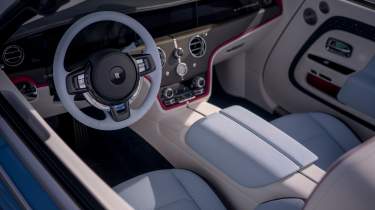
The dashboard layout is relatively simple, with a simple digital instrument cluster and central screen, plus the usual organ-style ventilation controls and knurled switchgear. The entire cockpit, including the seats and tall centre console, are covered in the finest leather and materials, while Rolls-Royce says it’ll offer a bespoke luggage set that fits snugly behind the driver and passenger.
As mentioned, Rolls is staying tight-lipped on technical details for the time being, but Harnett told us Project Nightingale will use “newer technology” than that found on the current Spectre. However, we can expect the drop-top to “be in that ballpark” when it comes to range and charging capabilities. That should mean 300 miles on a charge, plus rapid-charge speeds of 200kW or more.
Harnett wouldn’t be drawn on price, but insisted that the 100 Project Nightingale production cars would sit somewhere between the company’s series models like the Spectre and Phantom, and the one-off coachbuilt models such as the stunning Boat Tail and Sweptail models. In other words, don’t expect change from £1 million – with the scope to spend plenty more for bespoke finishes or unique trim.
Shooting down interested prospective customers, Harnett said his team is currently undergoing a “final selection” process, but that they “know basically all the homes they're going to, and they are all existing Rolls-Royce owners”.
The maker has said it will involve its customers in the entire development process. The first prototypes are being built now, before testing starts in August. The second wave of homologation will take place early next year, before tech specs are locked in by summer 2027. We’re told all 100 cars will be delivered in 2028.
Not on the list for an exclusive Rolls-Royce? Never fear, you can still find your luxury dream through Auto Express’s Find a Car service, including a £77,000 Rolls-Royce Ghost.