Can you park over a dropped kerb? Blocked driveways, rights and the law explained
A dropped kerb allows vehicles to legally cross the pavement between the road and a private driveway or parking space, here’s everything you need to know when it comes to parking and the law.

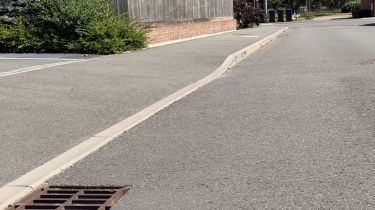
Dropped kerbs are a common sight in the UK. They are a vital piece of highway infrastructure that allows vehicles to legally cross a pavement to gain access between the public road and a private driveway or parking space. They also make it easier for pedestrians to safely navigate road crossings in pathways.
A dropped kerb does exactly what the name suggests, replacing a high kerb at the roadside with a lower one and a ramp sloping down to the road level across the footpath. But what does the law say about dropped kerbs and can you park your car in front of a dropped kerb, blocking access to private driveways? Let us explain.
What is a dropped kerb?
A dropped kerb is a section of pavement which has been lowered to be level with the carriageway or road surface.
Officially known as a ‘vehicle crossover’ or ‘vehicular crossing’, dropped kerbs allow people to legally drive over the pavement to access driveways, garages, parking spots or other off-street zones.
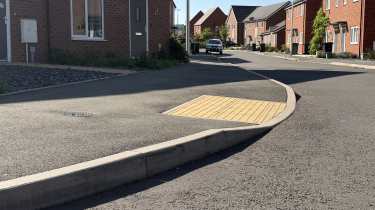
Dropped kerbs are also commonly found at pedestrian crossings to allow people to navigate and cross the street safely. Often, dropped kerbs will be used in conjunction with tactile paving to help blind or partially sighted people use crossings safely.
Parking in front of a dropped kerb
If you were thinking of parking in front of a dropped kerb, you might want to think again as it is illegal.
Not only is parking in front of a dropped kerb illegal, it is also inconsiderate. Blocking a driveway is an easy way to anger your neighbours, but blocking a pedestrian crossing or cycle lane merging point is pretty serious and you could quickly end up getting fined.
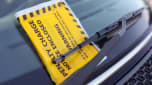
Under the Traffic Management Act 2004, if your car blocks a dropped kerb then you could face a Penalty Charge Notice of £70, or £35 if you pay within 14 days.
Reporting to the police
If you come home to find a vehicle has blocked the entrance to your driveway then this is not a police matter but you can report the offending vehicle to the council and a traffic warden may issue a ticket. Of course, we recommend having a polite word with the driver first as there may have been a misunderstanding.
If a vehicle has been parked across a dropped kerb and is preventing you from leaving your driveway, however, then this is a matter for the police. It can be reported as antisocial behaviour on the police website, by visiting a police station or by calling 101.
The police may then arrange for the illegally-parked vehicle to be towed away.
Dropped kerb parking exceptions
According to Section 86 of the Traffic Management Act 2004, a vehicle must not park next to a dropped kerb where the pavement has been lowered to assist pedestrians, cyclists or vehicles to enter and leave the carriageway. However, this is subject to the following exceptions:
Private residential properties
It is possible to park in front of a dropped kerb outside a private residential property with the express given consent of the property owner. It’s important to note that this does not include shared driveways, even if permission is granted by all parties involved.
Private property residential owners are also not allowed to charge visitors to park across a dropped kerb outside their property. If a property owner tries to charge you, or you see a similar parking spot appear on a driveway rental parking app, avoid parking there.
If you do decide to park, just be considerate to wheelchair users, pushchairs or other pedestrians who might require a lowered kerb to cross the road. If in doubt, park somewhere else.
Deliveries
If you are delivering, collecting, loading or unloading goods then you are permitted to park in front of a dropped kerb. You must not be parked for any longer than necessary and is only allowed if this action cannot be done in any other reasonable way.
Emergency services, roadworks, waste collection and repair work
Needless to say, the ambulance service, fire brigade and police are allowed to park in front of dropped kerbs when attending an emergency situation.
Waste collection services, highway maintenance and utilities teams like gas, electricity, water and communications companies may also park in front of a dropped kerb. As with delivery drivers, the vehicle must not be parked in front of a dropped kerb for any longer than necessary and is only permitted if there’s no other reasonable way to perform the relevant services.
Driveways without a dropped kerb
Parking in busy residential areas can be difficult at the best of times, so some people might decide to convert their front garden into a driveway or an extra parking spot.
If the area you have converted into a driveway is off the highway, then it might not have a dropped kerb to provide access to the space. This makes the act of crossing the pavement to get into it unlawful.
While it is perfectly legal to have a driveway without a dropped kerb, you cannot legally drive your car in or out of the space as it has no official access from the carriageway.
The pavement is owned by the local council and by driving your car over the pavement, you are breaking the Highways Act 1980.
Problems of not having a dropped kerb in front of a driveway
If you do convert a garden into a driveway and do not have a dropped kerb installed, then you have very limited legal protections.
There are very few rules and restrictions when it comes to parking in front of a driveway without a dropped kerb. Where councils can issue parking tickets to cars parked in front of dropped kerbs and driveways, they don’t necessarily have to do so in these situations.
Parking disputes
Driveways with no official dropped kerb have been known to cause fierce disputes between neighbours.
While the Highway Code advises drivers to avoid “stopping in front of property entrances or driveways” the rule is purely advisory and there is nothing stopping anyone parking here.
The police might be able to assist if a parked vehicle is preventing you from leaving your driveway or forcing pedestrians to enter the road, although there’s no guarantee of a quick response.
The easiest solution to this problem is to have a dropped kerb installed.
How to have a dropped kerb installed and key considerations
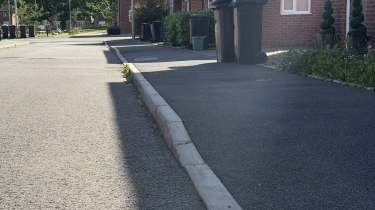
Installing a dropped kerb isn’t as simple as ringing up a building contractor and telling them what you want, there’s a lot of legal and planning hoops you need to jump through first. We’ve outlined the process below.
Get permission
As the pavement is public property, you will need to obtain formal permission from the council and you must use an accredited contractor.
If the proposed vehicle access is on an A, B or C classified road, then you will also need planning permission from the local planning authority.
If you live in rented accommodation, you will also need to seek written permission from the landlord to turn the proposed area into hard standing for vehicles and this must be sent with the application form.
Application process
Once permission for a dropped kerb has been granted, you will need to submit an application form with the following details for the dropped kerb application:
- A detailed plan including measurements and any obstructions such as lampposts or utilities access.
- Photographs of where the dropped kerb is to be installed.
- Proof of permission from the council, land authorities and landlord (if applicable).
Before you start the application process, it's recommended that you check out your local council website for more details on the specific requirements and potential fees.
For example, there needs to be enough space on the driveway so a parked vehicle does not overhang onto the pavement. There must also be space for manoeuvring on and off the highway to be done safely.
If you are unsure, it’s best to speak with your local council who will be able to advise you further.
Parking on the pavement
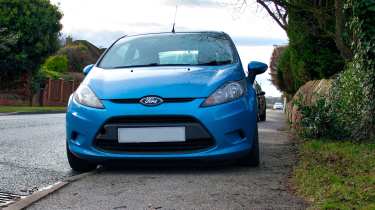
With or without a dropped kerb, the act of parking completely or partially on the pavement is subject to some quite complex rules and we have a dedicated page covering this issue. In short, the rules are different depending on where you are in the country.
For example, in London and Scotland you are banned from parking on the pavement in any capacity and doing so could result in a fine of up to £100. However, in Somerset it is not illegal to park on the pavement “unless there is an adjacent parking restriction”.
Wherever you are in the country, we’d avoid parking on the pavement. Not only is it inconsiderate for people who are pushing pushchairs or using mobility aids; it can be dangerous and cause obstruction.
The Government is also drafting up legislation to give councils in England more powers to fine motorists who cause disruption by parking on the pavement.
Get even more from Auto Express, follow our channels...
• Google
• Reddit
• Whatsapp