Hyundai i30 (2016-2026) review
The Hyundai i30 is a well-built and refined family car, but it fails to excite in a class with plenty of dynamic and stylish rivals


Our opinion on the Hyundai i30
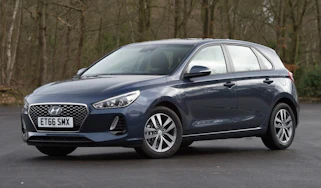
The current Hyundai i30 does just enough to keep pace with a pool of very talented family hatchback rivals that includes the Vauxhall Astra and Volkswagen Golf. It’s not the most exciting compact family car on the market, but it’s well built, refined and economical, and comes with a strong haul of standard equipment.
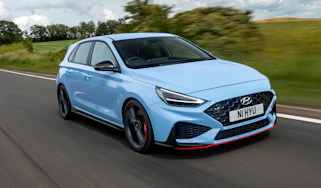
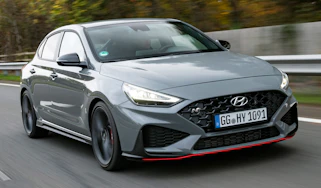
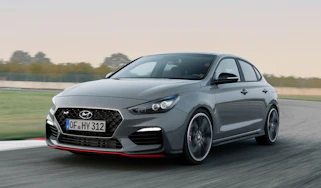
Much like a number of its rivals in the family hatchback class, the i30 is available as a five-door hatchback or as an estate car. Unfortunately, though, the i30 N hot hatch is no more.
About the Hyundai i30
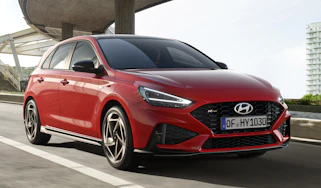
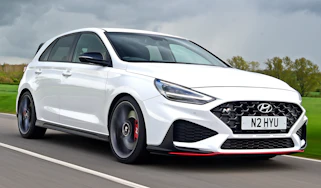
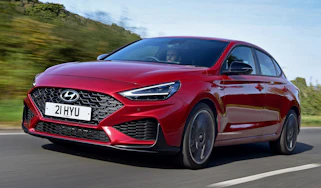
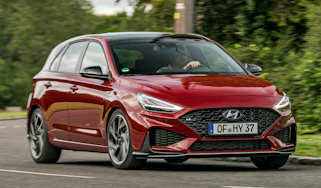
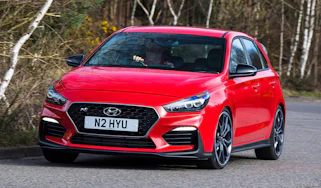
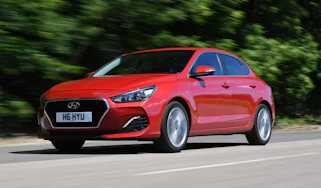
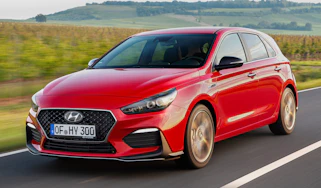
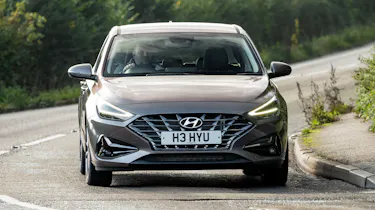
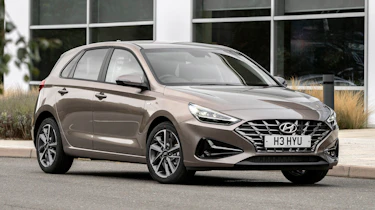
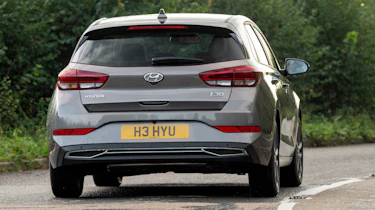
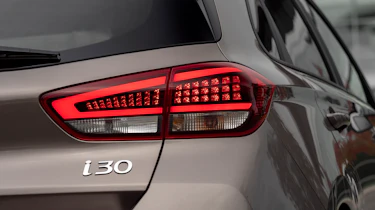
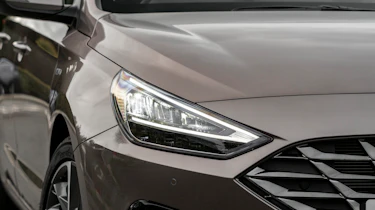
As one of the oldest members of Hyundai’s current line-up, the i30 has been treated to a couple of facelifts throughout its lifetime, with a view to maintaining its appeal against younger rivals. With striking LED headlights and a revamped grille, the i30 certainly looks smarter now than when it first arrived, although Hyundai hasn’t gone to the same lengths as it did with the distinctive Tucson SUV. Updates are less noticeable around the back, save for a slightly jazzier set of tail-lights.
Hyundai has also streamlined the i30 range over the years. There’s no longer a sparsely equipped S model, so the standard-fit kit list is now far more appealing.
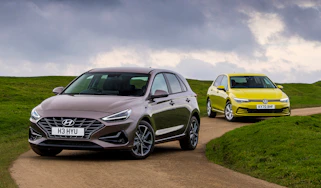
Perhaps the best news about the Hyundai i30’s long lifespan is that we’ve put this family hatchback to the test in the UK on a number of occasions. When we pitched the Hyundai i30 against the Volkswagen Golf in a twin test, the i30 lost out to the Golf because it wasn’t as satisfying or comfortable to drive, nor did it offer the practicality of its German rival.
Hyundai i30 prices and latest deals
A brand-new Hyundai i30 hatchback will set you back around £25,300 for a base model in Advance trim. At the top of the hatchback line-up sits the N Line S at around £28,500. If you’d prefer the Hyundai i30 Tourer estate, this starts from £24,300 for the Advance, moving all the way up to £28,400 for the Premium. You can only have the hatchback in N Line or N Line S trim.
Used - available now


If you’d rather save an average of £3,100, you can instead build your perfect i30 hatchback or i30 Tourer through the Auto Express Buy a Car service. We also have a selection of great new i30s in stock, along with a variety of used Hyundai i30 deals. We can also help you sell your car, too.
Performance & driving experience
Pros |
|
Cons |
|
The Hyundai i30 is a capable and well-rounded car, and one that easily competes with the best in class when it comes to long-distance refinement. However, the Vauxhall Astra is just that bit more engaging to drive.
| Model | Power | 0-62mph | Top speed |
| i30 1.5T GDi Advance Hatchback | 140bhp | 9.6 seconds | 130mph |
| i30 1.5T GDi N Line DCT Hatchback | 140bhp | 9.7 seconds | 130mph |
| i30 1.5T GDi Premium Tourer | 140bhp | 9.8 seconds | 130mph |
Performance, 0-60mph acceleration and top speed
Now in the latter stage of its life, the Hyundai i30’s engine line-up has been cut right back to just one petrol unit. The 1.5 T-GDi is a turbocharged four-cylinder that’s paired with mild-hybrid tech. This combination returns 138bhp and 253Nm of torque in both the hatchback and estate, although the additional weight of the latter means it’s ever so slightly slower.
Hyundai claims a 0-62mph sprint of 9.6 seconds for the hatchback when fitted with the standard five-speed manual gearbox, increasing to 9.8 seconds for the Tourer. Opt for the seven-speed DCT automatic, and these times change to 9.7 and 9.9 seconds, respectively.
In other words, no i30 can really be described as seriously quick (the hot i30 N is no longer in production), but there’s enough power on tap to cope with motorways. This engine remains pleasantly refined at higher speeds, though, and doesn’t feel stressed at the higher end of the rev range.
Town driving, visibility and parking
While its size is rarely an issue, the Hyundai i30’s ride quality does find itself becoming a little bit compromised when pootling around at typical inner-city speeds. This soon corrects itself once you hit the open road, though, so it’s a pretty minor inconvenience overall.
Visibility is also fine for the most part, although we found the rear windscreen to be a tad small at times (especially when parking). Fortunately, a rear-view camera and front and rear sensors are standard across the line-up, and these help to mitigate the issue.
Country road driving and handling
The i30 is one of the comfiest cars in its class, but the downside of this is that it doesn’t sparkle all that much dynamically. There’s enough grip on offer, but we find the Golf hangs on better in the corners when you push it. We’d also like more responsive steering in the i30 because while Hyundai has dropped its largely ineffective FlexSteer power-assistance system, the wheel still feels lifeless, with a constant weight no matter what speed you’re doing or how much lock you add.
The wheel feels inert as a result, although the fairly positive six-speed manual goes some way towards rescuing the driving experience. The automatic option costs £1,200 across the range, barely affects fuel economy and shifts smoothly under gentle acceleration. Push harder, and you’ll wish you opted for the manual, though.
Motorway driving and long-distance comfort
What’s important with hatchbacks like this is ride quality. The i30 deals well with rough roads up to a point, beyond which the suspension starts to struggle. In spite of the new model's more sophisticated rear axle, there’s a noticeable level of body movement that can be felt from the cabin. A Volkswagen Golf is better at soaking up bumps, while the ride imperfections are exacerbated on N Line models with their firmer suspension and big wheels.
Apart from this, the i30 is a comfortable cruiser, with enough wheel control to smother most surface imperfections and keep things calm for passengers.
“The Hyundai isn’t helped by its poor throttle response, which makes it feel sluggish. The Golf is much more responsive and enjoyable to drive as a result.” - Alex Ingram, chief reviewer.
MPG & running costs
Pros |
|
Cons |
|
While the diesel and 1.0-litre petrol are no more, the remaining 1.5-litre petrol engine is reasonably light on fuel, thanks to the car’s mild-hybrid tech.
That being said, an official WLTP combined average of up to 48.7mpg isn’t exactly phenomenal by today’s standards. For example, a mild-hybrid Vauxhall Astra can return over 58mpg, while a Volkswagen Golf with the 1.5-litre eTSI engine can manage over 54mpg.
All cars come with stop-start technology, which shuts off the engine in traffic. The mild-hybrid system also stores energy in a small battery to ever-so-slightly boost fuel efficiency. If you want a more efficient Hyundai, you'll be better served by hybrid or electric models like the Kona and Ioniq 5.
| Model | MPG | CO2 | Insurance group |
| i30 1.5T GDi Advance Hatchback | 47.9mpg | 130g/km | 15 |
| i30 1.5T GDi N Line DCT Hatchback | 44.1mpg | 145g/km | 15 |
| i30 1.5T GDi Premium Tourer | 47.1mpg | 135g/km | 14 |
Insurance groups
Relatively modest power outputs will help newer drivers to afford insurance for an i30 without too much trouble. The line-up resides between groups 11 and 16.
The Vauxhall Astra is likely to be more expensive to insure because it starts in group 17, and goes as high as group 28.
Tax
Every i30 is liable for the standard rate of VED road tax, but the luxury car tax levy won’t be a problem here because every model stays below the £40,000 threshold.
Company car drivers will need to look towards fully electric alternatives like the Vauxhall Astra Electric or Peugeot E-308 if they want any Benefit-in-Kind tax savings, though.
Depreciation
Both the i30 hatchback and estate will retain around 43 to 45 per cent of their initial value after a period of 3 years or 36,000 miles. This is a stronger performance than the Vauxhall Astra, which only holds on to 32 to 41 per cent after the same amount of time.
To get an accurate valuation on a specific model check out our free car valuation tool...
Interior, design & technology
Pros |
|
Cons |
|
The current Hyundai i30 was designed, developed and tested in Europe, specifically for European buyers. While that clearly affects the way the car handles on broken and uneven UK roads, it also has a bearing on how owners interact with the simple and well laid-out interior.
On the outside, the revamped i30 features sharpened styling. While it isn’t as radical as other Hyundai models, it’s still smart enough to be a match for rivals like the Volkswagen Golf.
Interior and dashboard design
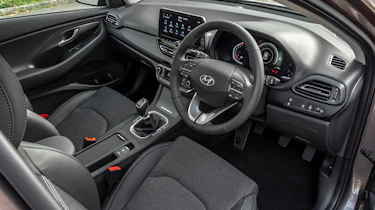
Much like the outside, the i30’s cabin follows a pretty conservative design language. The good news, though, is that everything is logically laid out and traditional buttons and knobs can be found in abundance, making it easier to use than the VW Golf and Peugeot 308, both of which have integrated many key functions into their respective central touchscreens.
If we have one criticism it’s that compared to the majority of Hyundai's rivals, the i30 is really starting to feel like a car from a previous generation (which it technically is).
Materials and build quality
While feeling its age, the i30 does at least feel sturdy enough to stand up against the rigours of family life. Low-rent plastics take up their fair share of the interior, but this is par for the course at this price.
Infotainment, sat-nav and stereo
Following the car’s multiple facelifts, all models now come with a 10.25-inch touchscreen that’s paired with a driver’s display of the same size. This system gets Apple CarPlay and Android Auto as standard, along with Hyundai’s in-built sat-nav system.
The touchscreen system is clear and quick to respond despite its dated graphics, while the live services, such as traffic, weather and speed camera alerts make life on the road easier.
We found it easy to pair our phone and use the connectivity apps available, while the decent screen also means the reversing camera gives a detailed image. Short-cut keys mounted at the bottom of the screen also make it relatively simple to jump to certain areas of the system, while Hyundai’s decision to move the buttons from the sides of the screen has also modernised the interior a little.
“There’s a secure cubby for your phone that includes a wireless charging pad. However, we found objects put here got hot while driving, so it’s maybe not a good spot for snacks.” - Alex Ingram, chief reviewer.
Boot space & practicality
Pros |
|
Cons |
|
The Hyundai i30 is available as a five-door hatchback or Tourer estate, and both variants perform pretty well as practical family cars. Some rivals do provide more passenger and luggage space, though.
There’s a good amount of storage inside the cabin, with a handy bin between the front seats and suitably-sized door pockets that are big enough for a bottle of water. There’s also a useful storage area ahead of the gear lever for placing your phone and wallet out of harm’s way.
Dimensions and size
At 4,340mm long and nearly 1,800m wide, the Hyundai i30 hatchback is slightly shorter and slightly narrower than a Vauxhall Astra. That makes it easy to drive, though manoeuvring in tight spaces is a little tricky due to the smaller rear window. The steering is light though, so you don’t have to work too hard when navigating small city streets.
| Dimensions comparison | |||
| Model | Hyundai i30 (hatch) | Vauxhall Astra (hatch) | Volkswagen Golf (hatch) |
| Length | 4,340mm | 4,374mm | 4,282mm |
| Width | 1,795mm | 1,860mm | 1,789mm |
| Height | 1,455mm | 1,441mm | 1,491mm |
| Wheelbase | 2,650mm | 2,680mm | 2,640mm |
| Boot space | 395 to 1,301 litres | 352 to 1,339 litres | 273 to 1,270 litres |
Seats & passenger space
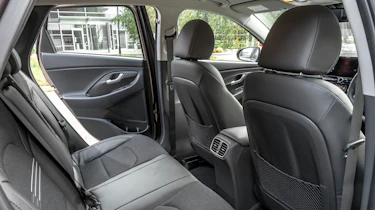
Despite its square tailgate and high roofline, the Hyundai i30 isn’t the most capacious family car on sale. Space in the back is fine for most adults, but those over six-foot will find their heads rubbing on the roof. Knee room is also adequate, but if passenger space is a priority then a Skoda Octavia will better fit the bill.
Meanwhile, space up front is fine with lots of movement in the seating position and a steering wheel with reach and rake adjustment standard on all models.
Boot space
The i30’s seats fold in one very simple motion to reveal a 1,301 litre maximum capacity. Those wanting even more room should opt for the Hyundai i30 Tourer estate, which offers 602 litres of space, or the i30 Fastback, which features a 602 litre boot.
Towing
Now that all Hyundai i30s are fitted with the same 1.5-litre petrol engine, every model (both hatchback and estate) is rated to tow up to 1,200kg braked. If you have a particularly sizeable trailer or caravan, you'll be better served by the Skoda Octavia 2.0 TDI 150, as this can pull up to 1,600kg.
“Rear-seat space isn’t as good as in the Golf, although access to the seats is slightly better. There’s not as much headroom in the i30 for rear-seat passengers, but there’s a much smaller step in the middle of the floor.” - Alex Ingram, chief reviewer.
Reliability & safety
Pros |
|
Cons |
|
While the Hyundai i30’s five-star Euro NCAP safety rating is a positive sign at first glance, the test took place in 2017. This means the rating has now expired, because NCAP’s testing criteria has become much tougher in the years that followed.
Safety kit on the Hyundai i30 is still pretty comprehensive, though, with all cars getting autonomous emergency braking, front collision warning, lane-keeping assist, high beam assist and driver attention alert.
While the Hyundai i30 didn’t appear in the most recent Driver Power best cars to own rankings, the brand was only voted as the 20th best car manufacturer out of 31. This means there’s clearly a long way to go for Hyundai to improve its reputation with buyers.
| Euro NCAP safety ratings | |
| Euro NCAP safety rating | Five stars (2017) |
| Adult occupant protection | 88% |
| Child occupant protection | 84% |
| Vulnerable road user protection | 64% |
| Safety assist | 68% |
Buying and owning
- Best buy: Hyundai i30 1.5T GDi Advance
While you won’t get a choice when it comes to the engine, we’d stick with base Advance trim in order to keep the i30’s price well within check. This trim level still comes with a good amount of mod-cons and safety tech, but you’ll need to fork out another £1,200 if you require an automatic transmission (this applies regardless of your chosen trim). The estate variant is the better candidate for family car duties, but this does come at a £700 premium.
Hyundai i30 alternatives
As we've mentioned already, the i30 is in a fiercely competitive class with a variety of very strong rivals. First, there are the more traditional competitors such as the Peugeot 308, Mazda 3, Skoda Octavia, Vauxhall Astra, and Volkswagen Golf. There are also plenty of hybrid alternatives, such as the Honda Civic and Toyota Corolla with better fuel efficiency and lower emissions.
To add to the i30’s woes, there are also an increasing number of fully electric models entering the market. These include the Cupra Born, Peugeot E-308, Renault Megane E-Tech, Vauxhall Astra Electric and Volkswagen ID.3.
Frequently Asked Questions
Like all Hyundai products, the new i30 gets the brand’s five-year unlimited mileage warranty. Depending on how often you use your car, this may prove more useful than sister company Kia’s seven-year guarantee, which is limited to 100,000 miles.
Deals on the i30 and alternatives
More reviews
Car group tests
In-depth reviews
Road tests
Used car tests
Which Is Best