EV charging gets 10% cheaper and there’s more to come
Ultra-rapid chargers in December were five pence cheaper than they were in November for off-peak users, with a cut in VAT also on the cards

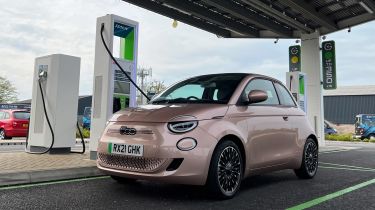
The average price of ultra-rapid EV charging dropped at the end of 2025 amid speculation that the Government could soon step in to cut costs even further.
In December 2025, the mean price of public charging using an ultra-rapid charger – one that’s capable of delivering speeds of over 150kW – dropped by 10 per cent month-on-month for those plugging-in at off-peak times. That’s the equivalent of five pence per kilowatt-hour. It means drivers charging, say, a Tesla Model Y Standard would save around £3 on a full charge.
Peak charging times for ultra-rapid chargers saw a less dramatic dip, but the one pence drop per kilowatt-hour does add up when many EVs now boast battery sizes well in excess of 100kWh.

Looking back over the last few years, head of roads policy at the AA, Jack Cousens, explained how operators adopting flexible charging rates have offered the best deals for customers: “Reflecting on how prices have changed since 2023, it is clear that chargepoint operators offering peak and off-peak rates are the most competitive, whereas flat rate providers have seen steady increases over the same period,” he said.
As for slower charging options, pricing remained relatively steady, as did flat non-flexible rates for all types of chargers. It’s worth pointing out that while the price of charging an electric car using slow and fast chargers has risen significantly since 2023; the cost of rapid and ultra-rapid charging has actually gone down as devices capable of higher speeds have become more prevalent.
Further savings in the pipeline?
More savings could be on the way as the DfT tells Auto Express that: “We’re reviewing the cost of public EV charging which will look at the impact of energy prices, wider cost contributors, and options for lowering these costs for consumers.”
One of the options being circulated is a cut in VAT for public charging. Unlike home electricity which incurs a rate of just five per cent, on-street and public chargers are burdened with the standard rate of 20 per cent and there is pressure to equalise this.
CEO of UK public charging firm Be.EV, Asif Ghafoor, explained how “If you rely on public chargers, your EV is simply more expensive to run than it should be. We don’t apply different tax rates to petrol or diesel depending on where you fill up, so we shouldn’t be doing it with electricity either.”
Of course, a slash in the price of public charging would counterbalance revenue generated from the impending eVED pay-per-mile tax for EVs, which is set to cost electric car drivers an average of between £200-300 per year on top of their standard road tax bill. It would, however, save drivers as much as 13 pence per kilowatt hour when using a flat rate ultra-rapid charger, or the equivalent of £7.80 for a full charge of the aforementioned Tesla Model Y Standard.
With this in mind, Cousens described a cut in VAT on charging as “an easy win”, calling on the Chancellor to “carry this out at the earliest opportunity. Cheaper charging away from home will help give more confidence to those drivers considering making the switch to an EV.”
Did you know you can sell your car through Auto Express? We’ll help you get a great price and find a great deal on a new car, too.