National Parking Platform (NPP) universal parking app could soon be forced on councils
The National Parking Platform (NPP) has been adopted by 15 local authorities across England, but that number could quickly rise

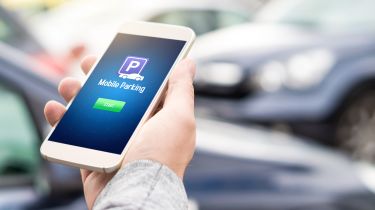
Local councils across England may soon be forced to sign up to the National Parking Platform (NPP) that’s designed to help reduce confusion and the risk of unfair fines for motorists when trying to pay for parking.
The platform was launched in May last year, and allows motorists to use one of the six large parking apps, including RingGo and PayByPhone, to pay for their parking if the location has signed up for the scheme.
This idea of being able to use one app to pay for parking sounds a lot better than having to download another app each time you visit a new location, and motorists seem to agree because the platform has handled more than 10 million transactions since it was launched.

15 local authorities have signed up for the platform so far and more than 1,200 parking locations are included in the scheme. However, reports suggest ministers will soon impose statutory guidance to accelerate the uptake, with the goal of doubling the number of councils committed to the scheme.
While statutory guidance is not law, it is official advice issued by the Government that organisations including local councils are expected to follow, unless they have a very good, justifiable reason not to.
This guidance will reportedly be part of the Government’s new Better Connected transport strategy that’s set to be unveiled this Thursday (2 April) and aims to improve travel across England. Councils may also be encouraged to consider how the NPP could extend beyond parking to potentially cover road tolls and electric vehicle charging as part of the strategy.
In October 2025, a survey conducted by the RAC of more than 1,700 drivers found that nearly three quarters had experienced difficulties trying to use a mobile app to pay for parking. The most common frustration was a lack of mobile phone signal in the car park, followed by apps not correctly recognising the car park the driver was in and apps crashing during the payment process.
Nearly two thirds of the drivers in the survey who use mobile apps to pay to park had at least two installed on their phones; 36 per cent said they had at least three, and 15 per cent had as many as four or more installed at any one time.

Unsurprisingly, due to the problems drivers experience with these apps, bank cards or Apple Pay/Google Pay were the most popular payment method, favoured by 46 per cent of motorists in the survey. Cash was also found to be preferable to a mobile app, which reinforces earlier RAC research that found that the majority of drivers were angry about the loss of coin and card payment machines in car parks, in favour of mobile app payment schemes.
RAC senior policy officer Rod Dennis said: “Parking should, in theory at least, be one of the simplest tasks any driver completes, but having to navigate a variety of differently designed apps – and register an account, vehicle details and bank cards with each one – can be a pain.
“Having card details saved with a myriad of different providers also isn’t ideal from a security perspective, because unlike using conventional websites, there’s generally no reassuring padlock symbol on parking apps to show card details are being shared securely.
“The launch of the National Parking Platform, which we welcome, should spell the end of drivers needing to download lots of separate apps just to park – and simplify things enormously,” he said. “This does depend on enough local authorities and parking companies up and down the country signing up, though.”
Did you know you can sell your car through Auto Express? We’ll help you get a great price and find a great deal on a new car, too.