Gov to let private firms run UK toll roads and enforce fines
The Highways (Financing) Bill could help sluggish road projects off the ground, thanks to private investment

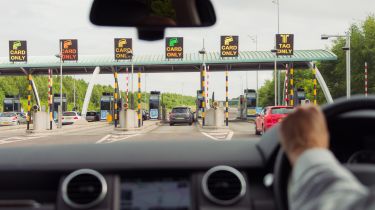
Private firms could soon be allowed to finance major road projects and, in return, collect tolls from motorists as part of the Government’s plan to take the financial strain off the taxpayer and speed up sluggish roadbuilding projects.
Labour's new Highways (Financing) Bill plans to establish a Regulated Asset Base (RAB) funding model for major road projects. Under such an arrangement, private firms and individuals will be granted the opportunity to invest in projects as ‘licence holders’.
The key draw for financiers is that the Government will allow them to charge tolls in order for drivers to use a piece of infrastructure which they hold the licence for, whether it be a road, bridge or tunnel.

As you might expect, the prospect of more tolls on UK roads has been met with backlash; AA president, Edmund King, said: “Drivers already pay for roads with £34billion in fuel duty and vehicle excise duty (VED), so extra charges would be a toll too far.” Of course, it’s worth pointing out that neither of the levies mentioned by the AA are ringfenced, instead going straight to the Government’s Consolidated Fund.
As per the first draft of the Bill, firms will be given the power to employ private agents to break into cars that are suspected to be passing through tolls using “false documents”. The same goes for those suspected of using jammers or any other equipment to cause “interference” with toll equipment. In fact, being found doing so or “intentionally disrupting” agents could land you a six-month prison sentence or a fine of up to £500.
Nevertheless, to ensure things are “well maintained, efficiently managed, and provided at a fair and proportionate cost to users”, the Government says the Office of Rail and Road (ORR) will be tasked as a regulator of keeping firms in-line. The DfT also states that “A licence holder would not be able to introduce new tolls without permission, and any tolls introduced under this legislation will be capped and independently regulated”. Not complying with ORR regulations could see licence holders charged up to 10 per cent of their annual earnings.
It’s expected that the first project to get underway if and when the Bill gains Royal Assent will be the Thames Tideway Tunnel - a giant sewer project, rather than one concerning roads. However, it’s hoped that the much-touted Lower Thames Crossing could indeed be constructed under the RAB model. This, alongside a recent announcement of a £28billion investment into UK roads, could see many other major road projects get off the ground, too.
The boss of Logistics UK, Ben Fletcher, said: “A reliable road network is critical for the UK’s logistics sector and the nation’s economic prosperity, with delays and costs caused by poor infrastructure felt by businesses and consumers alike.”
“It is estimated that every £1 invested in the Strategic Road Network returns over £2 to society,” Fletcher continued. “A reliable road network is also critical for increasing the resilience of the UK’s supply chain by enabling better connectivity with all other modes of freight transport.”
Get even more from Auto Express, follow our channels...
• Google
• Reddit
• Whatsapp