What is antifreeze? And how to check your engine coolant level
We explain how antifreeze keeps your car's engine from overheating, and why you should regularly check your levels

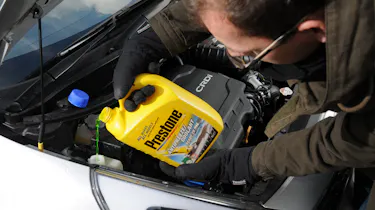
Keeping your car’s engine at the optimal temperature when running can greatly increase its longevity and prevent disastrous failures. While engine coolant prevents overheating, antifreeze is also required to prevent your coolant from freezing in colder weather.
It might sound a bit confusing at first, but don’t worry as we’re here to explain everything you need to know about antifreeze and engine coolant.
What is engine coolant?
Engines become very hot during operation, so coolant is crucial for carrying excess heat away from the engine and then dispersing it via the radiator. Your car’s cooling system is designed to keep the engine running at the ideal temperature, preventing it from overheating and being damaged as a result. Imagine spraying a bottle of cool water over yourself when exercising and you’ll get the basic idea.
What is antifreeze?
While you could simply put water into a car’s radiator, you run a very real risk of this freezing whenever the colder weather hits. As we’re sure you’re already aware, ice is solid, so having this in your car’s radiator, cooling pipes or any other components can quickly spell disaster.
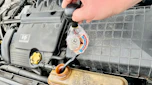
As its name suggests, the primary function of antifreeze is to prevent your car's coolant from freezing in low outside temperatures. It also serves another purpose, though, as it acts as a lubricant and protector for the engine internals. Most engines are made from either iron or aluminium, and both materials which can be corroded by water. Therefore, modern antifreeze coolant contains chemicals which protect the internals of an engine from corrosion - including the water pump, which is often located in awkward places that make repairs expensive.
Proper engine coolants are primarily made up of a mixture of treated water and antifreeze. This means you can simply top your car’s reservoir or radiator up and be ready to go, rather than carefully measuring out and manually mixing two separate fluids.
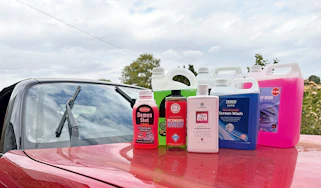
However, antifreeze does come in a number of varieties, and these are denoted by different colours - usually pink/red, blue, or green - which all indicate the type of antifreeze.
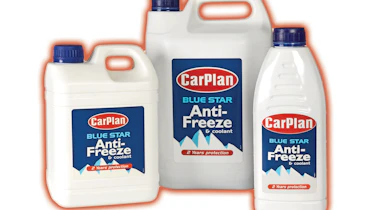
What are the different types of antifreeze?
As with many fluids for your car, there are a number of variants of antifreeze to choose from. An antifreeze’s type depends on the ingredients on which it is based.
Two of the most common types are Inorganic Additive Technology (IAT) and Organic Acid Technology (OAT). Different cars will require different types of antifreeze, as the wrong type could lack the protective qualities that your engine needs, causing premature wear or damage. So, as always, the best way to check which type of antifreeze is correct for your vehicle is to either refer to the owners’ handbook or ask your local motor factors, dealer, or garage.
How do you check your car's coolant level?
There are two common ways to do this, and it depends on the cooling system your car has. Firstly, there are systems which have a coolant reservoir that allows the coolant level to change as the system heats up without dumping fluid. To check the level of a system like this, follow the steps below:
How to check engine coolant on cars with a reservoir
- Let the engine cool completely as the system becomes pressurised under use.
- Use your handbook to locate the position of the coolant reservoir in the engine bay.
- Open the bonnet and locate the coolant reservoir, if you do not have the hand book, it is normally on one side of the engine over a wheel arch.
- On one side of the reservoir there will be a minimum and maximum mark to indicate where the level of the coolant should be (these are usually for when the coolant is cool), use these to check the level of the fluid.
How to check engine coolant on cars without a reservoir
There are also systems which do not have a reservoir. They may have an overflow tank where water can be released to, but it cannot return to the engine.
- Similar to above, let the engine cool completely as the system becomes pressurised under use.
- Open the bonnet and locate the radiator - it is usually at the front of the engine. If you cannot find it, fall back to the car’s handbook for instructions.
- Get a rag or old tea towel and carefully undo the cap on top of the radiator. If you have not waited long enough for the engine to cool, steam may be released, so be careful.
- With the cap removed, look into the radiator, the coolant should be up to the top.
If your coolant is below the minimum, you will either need to top it up, or even better, drain the system and replace the coolant. A mechanic will be more than happy to replace your engine coolant for you, and it should be a reasonably inexpensive job.
If you decide to do the work yourself, there are a couple of things to bear in mind. Firstly, most modern cars have completely sealed systems, meaning coolant should only need replacing if there has been a leak, so it may be worth investigating that first. Also, the different types of antifreeze do not mix and can have adverse effects on your car, so make sure you get the correct one.
What should I do if my car overheats?
If your car begins overheating, pull over and switch the engine off as soon as it is safe to do so. Open the bonnet and leave the engine to cool down for several minutes. During this time, do not touch any components as they could be extremely hot.
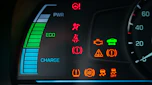
When the engine has cooled down, check your coolant level and look for any leaks. If you need to top it up but don’t have any coolant with you, it is still far better to use water than go without. However, we strongly advise having this replaced with coolant as soon as you can afterwards.
If you’re not confident about checking the vehicle or it refuses to start again, you’ll need to call a trusted mechanic or your recovery service. Continuing to drive with an overheating engine is very likely to damage it beyond repair, so it’s definitely not worth the risk.
Have you had any cooling-related horror stories? Let us know in the comments below...