New BYD Ti7 2026 review: a serious Land Rover Defender attacker
BYD’s British onslaught continues, and this time it’s taking on a national treasure


Verdict
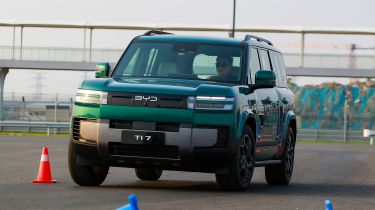
Efficient, refined and suspiciously familiar, the BYD Ti7 puts on a pretty convincing performance in its efforts to woo buyers away from the Land Rover Defender. Running costs should be considerably lower than the Landie’s, courtesy of BYD’s Super Hybrid powertrain, and we expect the Ti7 to cost thousands less to buy. We’re yet to try this model in its UK specification, but this is undoubtedly one of the most promising and interesting cars that we’ve seen from BYD so far.
They say that imitation is the sincerest form of flattery and, to put it bluntly, Chinese car brands aren’t afraid to draw heavy inspiration from well-established European rivals. While the BYD Ti7 is an all-too-obvious Land Rover Defender alternative, the Yangwang U8 and Fangchengbao 5 – both of which also come from the BYD family – follow a very similar design path.
The difference with the Ti7, though, is that its UK arrival is imminent. That means that this newcomer is challenging the formidable Defender on its home turf, but it does have an ace up its sleeve: it’s set to cost less than £50,000.
While it’s badged as a Fangchengbao in its homeland of China, this chunky SUV will wear the more familiar BYD badge when it arrives on our shores. Fangchengbao is one of BYD’s premium brands, so the Ti7 is a bit different to the other BYDs you can currently buy here.
Used - available now

2023 Mercedes
CLA
60,568 milesAutomaticPetrol1.3L
Cash £16,276
2019 Volvo
V40 Cross Country
40,011 milesAutomaticPetrol1.5L
Cash £11,302
2023 Tesla
Model Y Premium
57,955 milesAutomaticElectric
Cash £22,254
2018 Audi
SQ5
78,269 milesAutomaticPetrol3.0L
Cash £21,159Look at the Ti7 from some angles and you’d genuinely be hard-pressed to distinguish it from a Defender. The blocky bodywork, contrasting bumpers and floating roof are all present and correct. However, this is still a BYD at heart, so the European-spec car will solely be powered by a 1.5-litre plug-in hybrid powertrain; you’ll find no diesels or V8s here. A fully electric model has been confirmed for China, but BYD is keeping quiet about whether this variant will make its way to the UK.
The PHEV’s 35.6kWh battery carries a claimed pure-electric range of 79 miles. That’s undoubtedly one of the longer ranges we’ve seen from a plug-in hybrid to date, but we’ll wait to see how it holds up in our own hands on British roads before we get too excited.
Despite having half the cylinders of the beefiest Defenders, the efficiency-focused ‘Super Hybrid’ powertrain still manages to churn out up to 646bhp and 845Nm of torque, sent to all four wheels. The 1.5-litre four cylinder petrol engine is primarily used to keep the battery topped up, but it’ll kick in to assist the electric motors when needed. This prioritisation of electric power makes the car feel very spritely, too, as the instantaneous acceleration gets this 2,400kg SUV up to 62mph from a standstill in just 4.5 seconds. That’s admirably close to the full-fat Defender Octa’s 3.8-second sprint – only here you can enjoy it for a five-figure price, instead of six.
Speed is the only real source of excitement in the Ti7, mind you, as the driving experience feels more geared towards comfort rather than thrills. One of the biggest indicators of this car’s fancy Fangchengbao DNA is the level of refinement on offer. The Ti7 remained unfazed at various speeds during our tests, although the Chinese roads on which we drove it were generally smoother than most of the tarmac you’ll find in the UK. That said, it did make light work of an enormous protruding kerb we managed to fall foul of.
Generally speaking, the suspension is well judged and soft enough for long distances without bouncing about like the BYD Seal U does – possibly thanks to the longer wheelbase. Body roll is also kept under a reasonable amount of control when tackling corners at sensible speeds. Push it too far, though, and the inevitable consequences of this car’s shape and size will make themselves known.
It’s a strong performer on the road, but that’s where the BYD Ti7 is very much intended to stay. There are multiple drive modes available: Snow, Sand, Mud, Mountain, Sport+ and a custom option, but these only make mild adjustments to the steering and suspension.
In fairness to BYD, a huge quantity of Land Rovers spend the entire time on the tarmac. SUVs like these are something of a status symbol, and the Ti7 has just enough style and flashiness to take on this role for buyers on a smaller budget. The Fangchengbao-designed interior also feels like a more premium affair than you’ll find in most other BYDs, boosting its appeal further.
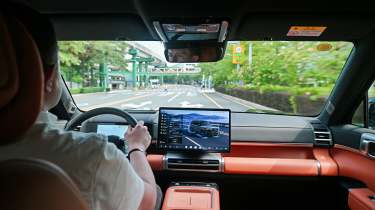
Luxurious touches like all-round heated and ventilated seats, a massage function for the front occupants, and a refrigerator under the central armrest all help dial up the car’s premium aspirations. However, it doesn’t take much effort to find some lower-grade plastics; as usual, BYD’s build quality feels sturdy but errs on the side of cost-effective here and there.
If you’re familiar with BYD’s cars, the dashboard follows a recognisable set-up consisting of a 10.25-inch driver’s display and 15.6-inch touchscreen. Both look sharp if a little cluttered, but the touchscreen is quick to respond. Unfortunately, though, some frequently-used functions, such as the regenerative braking adjustment, are lurking within sub-menus.
Much like the outside, the Ti7’s interior also draws gigantic amount of inspiration from the Defender. Chunky grab bars can be found on the dash and by the rear doors, and rubber floor mats are also included.
Being similar in stature to a Defender 110 allows the Ti7 to provide plenty of passenger space. It’s important to note, however, that buyers will get seven seats as standard in the UK, and our Chinese test car was a five-seat model. This offered plenty of head, leg and foot room in both the front and rear, and the space left over in the boot didn’t have us too worried for those who will wind up in the rearmost row. BYD is yet to confirm how much boot capacity the UK car will provide, though.
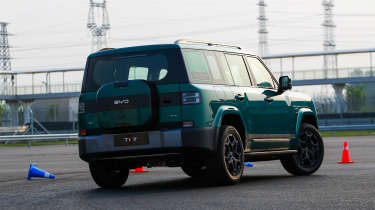
One problem we did find is that in order to accommodate the PHEV’s battery pack, there’s no usable capacity beneath the boot floor. If you struggle with heavier items, the Ti7’s high load lip and hefty sidewards-opening tailgate will also prove a bit challenging. The Land Rover-style rear-mounted spare wheel doesn’t make parking any easier, either. Thankfully, passenger access is a lot easier due to the side steps.
Our first drive of the BYD Ti7 was fairly brief, but on this evidence it certainly has the potential to perform well in the UK. Will it defeat the Defender? Pricing will be key.
Did you know you can sell your car through Auto Express? We’ll help you get a great price and find a great deal on a new car, too.
| Model: | BYD Ti7 |
| Price: | Less than £50,000 (est) |
| Powertrain: | 1.5-litre 4cyl petrol PHEV |
| Transmission: | E-CVT automatic, four-wheel drive |
| Power/torque: | 646bhp/845Nm |
| 0-62/top speed: | 4.5 secs/118mph |
| Economy/CO2: | TBC |
| Size (L/W/H): | 4,999/1,995/1,865mm |
| On sale: | Late 2026 |