Used Bentley Continental GT (Mk3, 2018-2024) review
A full used buyer’s guide on the Bentley Continental GT covering the Continental GT Mk3 that was on sale from 2018 to 2024

Verdict
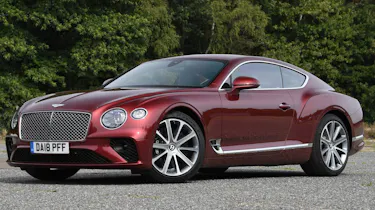
The Bentley Continental GT has it all, but you pay for the privilege of owning one. It’s beautifully built, effortless to drive, classy and gloriously comfortable. With Bentley buyers invariably taken by the Bentayga SUV, the Continental GT is even more exclusive than you might think; as a result, there aren’t as many used examples as you might expect, with convertibles even rarer. It could even be collectible in the future.
Way back in 1919 when Bentley built its first car, it was independent, but by 1931 it had been swallowed up by Rolls-Royce.
For the next 70 years most of Bentley’s products were little more than rebadged Rolls-Royces, but in 1998 the two firms separated, with Bentley now owned by the Volkswagen Group. Five years later we saw the revitalised marque’s first all-new car, the Continental GT coupé.
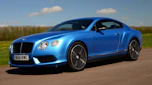
It was the tonic that Bentley needed, and sold in large numbers globally once saloon (Flying Spur) and convertible editions joined the range. An all-new Continental GT was launched 15 years later and it was faster, more hi-tech and more luxurious than ever. A highly accomplished grand tourer, the Continental GT is undeniably multi-talented, as you’d expect for such a costly car.
History
The Continental GT coupé arrived in April 2018, powered by a 626bhp 6.0-litre W12 engine and fitted with an eight-speed dual-clutch automatic gearbox. By the end of that year, an open-topped version had been unveiled. Now known as the Continental GT Convertible (previous generations were sold as the Continental GTC) and mechanically identical to the coupé, first deliveries of this car took place early the following year.
Used - available now

2021 Bentley
Continental GT
20,609 milesAutomaticPetrol4.0L
Cash £114,950
2021 Bentley
Continental GT
33,950 milesAutomaticPetrol4.0L
Cash £134,995
2017 Bentley
Continental GT
39,100 milesAutomaticPetrol6.0L
Cash £48,495
2017 Bentley
Continental GT
70,000 milesAutomaticPetrol4.0L
Cash £32,250In September 2019 a 542bhp twin-turbo 4.0-litre V8 engine was added to the range alongside the W12, and was available as a coupé or convertible. The most powerful Continental GT yet was unleashed in March 2021: the 650bhp Speed. At first only a coupé was offered, but within a month the Continental GT Convertible Speed was revealed, with the same running gear underneath as its hard-top sibling.
The Mk3 car was replaced by the Mk4 in 2024 with the W12 engine being axed in favour of a V8 hybrid.
Which one should I buy?
Standard kit on all Continental GT coupés and convertibles included 21-inch alloys, adjustable air suspension, LED matrix headlights, front and rear parking sensors and power-folding door mirrors.
Also fitted were a reversing camera, Nappa leather trim, 12-way electrically adjustable front seats, multi-zone climate control, a 12.3-inch touchscreen display, navigation and a 10-speaker 650-watt hi-fi.
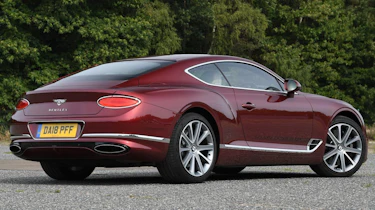
Regular options included extra paint colours, wood veneers, upgraded leathers, a heated windscreen, adaptive cruise control, and Naim or Bang & Olufsen stereo systems. Also offered were 22-inch wheels, a space-saver spare wheel, an in-dash TV and a factory-fitted tracking system.
Alternatives to the Bentley Continental GT
There are quite a few cars available for similar money to the Bentley, but that doesn’t make them direct alternatives as such. Perhaps the closest rival is the Rolls-Royce Wraith and its convertible sibling, the Dawn, both of which are opulent, have lots of power, and are suitably expensive to buy as well as to run.
Three other options are the Aston Martin DB11, the Mercedes-AMG GT and the Ferrari 812 Superfast, all of which come in open or coupé forms, and all of which are arguably more driver-focused than the Bentley. The three all blend luxury with power, and are superbly made and exclusive. The Ferrari and Mercedes-AMG have no rear seats, but even the Aston is best seen as a two-seater, because its back seats are so cramped.
Another pair of options are the Mercedes S-Class coupé and cabriolet, which don’t quite have the Bentley’s gravitas, but are extremely impressive all the same.
What to look for
Glass roof
The panoramic glass roof is worth having, because it really opens up the Continental GT’s cabin. It cost £3,150 as an option.
Brakes
The optional carbon-ceramic brakes keep their bite much better than the standard-fit items, but replacement costs for these are high.
Engine tech
Cylinder deactivation lets the W12 run on six cylinders; the V8 is barely any more frugal. Neither returns much more than 20mpg.
Display
A must-have option is the three-sided rotating display in the centre of the dashboard, featuring a touchscreen, a slab of veneer and analogue gauges.
Common faults
We don’t have any Driver Power data for the Continental Mk3, and no Bentley owners have reported faults directly to us. However, there are reports online of issues relating to the car’s suspension, brakes, and electrics.
Interior
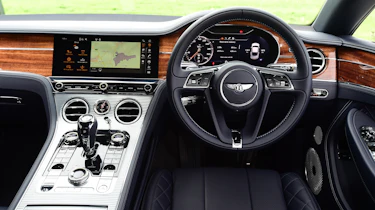
As you’d expect, the GT’s cabin is something truly special, with only premium materials everywhere: leather, wood, carbon fibre and polished, brushed or turned aluminium. The switchgear is unique to the model and it’s well laid out so that you can find everything. With lots of buttons, you don’t have to control everything via the touchscreen.
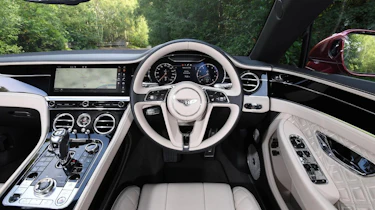
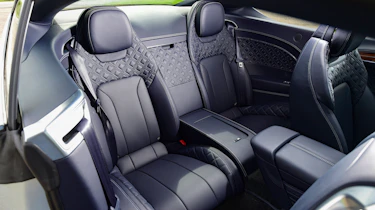
The front seats are supremely comfortable on even the longest journey, but the back seats are best suited to children or small adults, thanks to a shortage of head and legroom. It’s not as though the boot is large to compensate; at 358 litres, it’s smaller than the average small family hatchback’s.
Recalls
Bentley recalled the Continental GT five times. The first was in January 2019 because of power steering glitches; the fix was a software update. Two campaigns in July 2019 covered faulty software that needed updating and a power steering wiring harness that could short circuit. A new loom was needed to rectify this.
The fourth recall came in June 2020, because a couple of cars made in January of that year were fitted with a poorly secured sunroof. The most recent action was issued in January 2021 because 393 Continental GT convertibles were fitted with a roof that could be activated if the person holding the key was standing beyond the maximum six metres allowed. A software update was all that was needed for the cars, which were all built between August 2019 and July 2020.
Running costs
The Continental GT needs servicing every 12 months or after 10,000 miles, with the first three check-ups costing £975, £1,295 and £1,695. Once a car reaches its fourth birthday it’s eligible for discounted maintenance, with services alternating between minor and major, priced at £799 and £1,199. Independent specialists can trim these costs, but thanks to high parts prices, you can never expect a Continental to be cheap to run.
The brake fluid needs changing every two years and this costs £195 to do on its own, while fresh coolant every five years will set you back £215. There are no cambelts to replace, because both the V8 and W12 engines are chain-driven.
Driver Power owner satisfaction
As a niche seller, the Bentley Continental GT doesn’t appear in our new or used Driver Power surveys; and the company as a whole doesn’t appear in our brands section. Whether or not the type of person who buys a new Bentley has the time or inclination to fill out ownership surveys is a moot point.
Looking to sell your current car quickly and for a good price? Try our Free Car Valuation tool today!
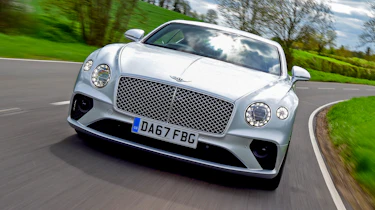
Bentley Continental GT (2018-2024) review: What we said
Extracts from our 2023 review of the Bentley Continental GT...
Few cars hit the ‘grand tourer’ brief quite as well as the Bentley Continental GT. Since it was first introduced in 2003, the large and luxurious coupe has been a sales hit, reinvigorating the Bentley brand by opening it up to a more contemporary customer. Twenty years and three generations later the Continental GT has only become more impressive, with an even wider breadth of ability and even more sumptuous luxury.
The current Continental GT was first introduced in 2018, and the range has since expanded to include two powertrain options, two body styles and five variants spread between the sportier and luxurious ends of the GT market. Yet the Continental GT’s brilliance perpetuates across the range, bringing together luxury and high performance motoring like few other cars can.
About the Bentley Continental GT
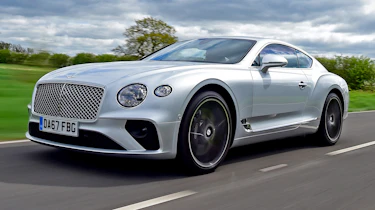
The Continental GT’s grandiose styling is perhaps first to grab the eye, while the fabulously luxurious and lavishly equipped interior feels a cut above anything else you can buy for the money. Throw in a thoroughly reworked driving experience that – courtesy of a chassis shared with the Porsche Panamera – brings a new level of responsiveness and control to what’s classically been more of a luxury than sports car.
The Continental GT is powered by either a brutish 4.0-litre V8 or effortless 6.0-litre W12 engine, each paired to a sophisticated all-wheel drive system. Together with the latest high-end chassis hardware, Bentley’s recipe for its GT car is formidable, and extremely successful.
The range is now split into no less than five individual models, most featuring a specific powertrain. At the entry-point is the V8-powered GT, then you have the Azure and V8 S models sharing the same powertrain, but coming with more kit and a bias towards luxury and a more dynamic drive, respectively. Above these sits the W12-powered Speed, leaving the Mulliner at the top of the range, which can be specified with either powertrain option.
Apart from trim changes and different wheel designs, all Continental GTs generally look similar, with the S and Speed models both offering a sportier aesthetic on account of their darker-coloured details. Mulliner models feature their own elaborate grille and wheel designs, with Bentley also recently introducing a slightly more subtle Blackline finish for its flagship trim.
Alongside the coupe is the full-four seater GT Convertible which swaps the fastback metal roof for a folding fabric item. As well as being compact enough to easily fit under a sleek tonneau, the fabric roof can also be specified in one of six different colours including a distinctive tweed finish. Of course, if you expand your idea of a GT from just being a two-door, Bentley’s Flying Spur saloon shares many of the Continental GT’s fundamentals, packaged into a sleek four-seater body.
The luxury GT coupe market currently offers an array of drool-worthy exotics, but the Continental GT remains closest to the mantra. Its rivals include the Ferrari Roma and Aston Martin DB11; look further afield and you’ll find the slightly smaller Lexus LC500 and Porsche 911. Maserati’s new GranTurismo is another consideration, and if you’re after a GT with a three-pointed star on the front your only option for now is the drop-top SL.
Engines, performance and drive
What defines the current Continental GT compared to its predecessors is the chassis layout. Rather than sourcing its underpinnings from large VW Group saloons or SUVs, Bentley has instead designed the latest Continental GT on a bespoke platform that was co-developed with Porsche. This has significantly changed the Conti’s proportions, mounting the engine further back in the chassis and completely changing its all-wheel drive system.
Previous Continental GTs had a fixed torque split, as you might find in an Audi, but this time around the system is both more flexible and predominantly rear-driven. It means that as well as having a remarkable level of grip and security, the car gains a more athletic driving experience which is especially prevalent on the V8 S and Speed models.
The torque-split of the four-wheel drive system varies depending on the selected driver mode, and makes a considerable difference to how the GT drives. In Comfort mode up to 38 per cent of available drive can be directed to the front wheels, providing the reassuring stability and security you’d expect from a four-wheel-drive car. The more sporting Bentley drive mode provides a middle ground with more torque directed to the rear plus a dash of extra damping control and more urgent throttle and gearbox responses. Select Sport mode and around 85 per cent of the engine’s torque is directed to the rear wheels, while the suspension, engine, gearbox mapping and exhaust note are dialled up.
The new chassis also features a whole toolkit of high-end toys that further improve the driving experience. This includes a trick double-wishbone front and multi-link rear suspension design paired with an adjustable three-chamber air suspension system, continuously variable dampers and (on V8 S and W12 models) active anti-roll bars. The Speed features yet more high-end hardware, with an electronically-controlled limited-slip differential fitted to the rear axle and a set of huge 440mm carbon ceramic discs on the front axle gripped by 10-piston calipers – the biggest fitted to any production car.
Of course, the reason to incorporate all of this chassis hardware is to try and offset the Continental's quite astounding weight figure. Fully loaded, a Continental GT Speed hits the scales at 2,425kg, and V8 models aren’t much lighter.
An advantage of all this mass shows when it comes to ride comfort, though. On the road the Comfort setting provides a pillowy ride that improves on its already impressive predecessor, but it’s the Bentley drive mode that delivers an even better combination of comfort and body control that allows you to devour tarmac in total relaxation. This is particularly impressive in the convertible model, with only the really worst potholes sending the structure shuddering. Given how big the void is with the roof folded down, there’s very limited shake through the chassis, and no trim rattles in the cabin.
Selecting Sport mode brings an added dimension of vitality and dynamism, and means you can throw the car around in a way that belies its considerable size. The new-found precision from both the steering and the chassis, plus the prodigious performance, provide an intoxicating mix of agility and fun.
V8 models weigh around 50kg less than its W12 sibling, with much of that being removed from the engine bay. This means there's less weight over the front wheels; turn-in is keener, making the Continental an even more entertaining proposition on a twisty road. It’s not quite as dynamic as a Ferrari Roma, but counters with a much wider operational bandwidth, and the ability to fit two actual humans in the back seats.
0-62mph acceleration and top speed
A constant partner to the Continental GT’s package over the years is its twin-turbocharged W12 engine. This complex, tightly packaged twelve-cylinder has long been noted for its impressive power and torque figures, smoothness and regal nature – all qualities it still possesses today.
In 2016 the current W12 engine was largely redesigned for its application in the Bentayga luxury SUV, integrating cutting-edge engine tech like cylinder deactivation and a clever port and direct injection system yielding impressive upswings in thermal efficiency. The engine was then upgraded further with the release of this generation of Continental GT, but is now available only in its top-spec Speed tune, producing a phenomenal 650bhp and 900Nm of torque – 24bhp more than previously. This helps the Continental GT Speed fly to 62mph in just 3.6s and continue onto a 207mph top speed.
Power is then sent to the aforementioned all-wheel drive system via a bespoke eight-speed dual-clutch transmission that’s also found in the Porsche Panamera. It has a dual-mass flywheel to dampen any transmission shunt, and offers superbly fast and crisp shifts when in its most aggressive setting.
Unfortunately, modern emissions regulations have made an impact on the W12’s economics, forcing Bentley to end production of its iconic twelve-cylinder engine in 2024. Before it goes, there will be one more ultimate iteration for use in the multi-million pound Mulliner Batur, but moving forward the Continental GT will soon adopt plug-in hybrid powertrains alongside the existing V8.
The twin-turbocharged V8 option might sound a little less exotic on account of its shared use in Porsches, Audis and even the occasional Lamborghini, but it’s a superb unit with a completely distinctive character from the W12. Bentley uses a mid-range specification producing 542bhp and 770nm, which is good for a 4 second 0-62mph time and 197mph top speed. It’s an engine that fundamentally suits the Continental GT’s character, too, with a slightly more vocal exhaust note and typical V8 burble offering a sinister edge compared to the more imperious W12.
MPG, CO2 and Running Costs
If you want to run a car with a 650bhp 12-cylinder engine under its bonnet, any interest in fuel economy is likely to centre only around the driving range on a full tank. The Continental GT’s tank will hold 20 gallons of fuel, which at the officially measured 20.6mpg combined would allow you to travel around 410 miles between fills.
The V8-engined Continental manages a more palatable 23.3mpg which is good for a claimed 474-mile range. But, to achieve this in real-world driving you'll need plenty of willpower to keep a light right foot – although it's likely that most buyers won't be troubled by such costs.
Interior, design and technology
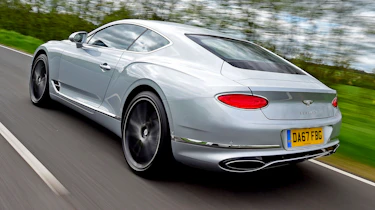
If there’s a car today that speaks to the fundamentals of looking like a grand tourer, it’s the Continental GT. The short front overhang, upright grille, long bonnet, luxurious dash-to-axle ratio, fastback roofline and over-accentuated haunches are all straight from the GT playbook, and combine to create the extravagance you’d expect from a Bentley.
The exterior is then covered in ornate detailing, from the cut-glass effect of the headlights that are designed to emulate fine crystal glassware to the chrome grille mesh. Depending on your chosen variant, or the depths of the options list you’re willing to go, elements such as the wheel design, brightwork, splitters and spoilers can all be customised. If this still isn’t enough, Bentley will gladly customise your car even further to your taste via its Mulliner bespoke program.
The interior is a real treat, with a fascia design inspired by the wings of the Bentley badge. The dashboard ‘wings’ sweep out from the central console housing the major controls and the large touchscreen, and continue into the door trims, circling the occupants with a ring of wood and leather. There’s a vast range of luxurious leather and veneer finishes, too.
As you’d expect there’s a wealth of new tech built into the latest Continental GT, and it’s all shared with the other luxury models that share this platform. As well as the formidable chassis tech, there’s an array of bang-up-to-date infotainment and safety systems that are a match for anything else on sale, which is not something that could be said with any conviction about the ageing previous-generation Continental models.
Sat-nav, stereo and infotainment
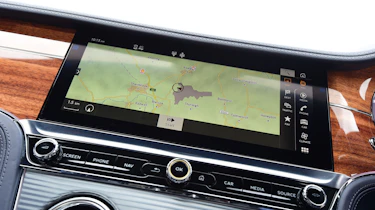
A highlight of the Bentley’s cabin is a 12.3-inch touchscreen infotainment system. It’s permanently on display in standard spec, but the Rotating Display option allows it to be hidden behind the wood veneer dash when the engine is switched off, only swivelling into view when you fire the car up.
If you want a more ‘classic’ feel, you can rotate it again to reveal a third face, which is a veneer panel housing three analogue instruments – chronograph, compass and temperature gauge. When hidden, the navigation mapping can be shown on the digital screen between the instruments in front of the driver, making the Rotating Display a neat option.
The infotainment system comes packed with features including Apple CarPlay and a range of apps, while a head-up display system is optional too.
As standard you get a 650-watt sound system with 10 speakers, but you can upgrade to a 1,500-watt Bang & Olufsen set-up with 16 speakers or really push the boat out on a 2,200-watt, 18-speaker Naim system.
Practicality, comfort and boot space
There’ll be no complaints from front seat passengers ensconced in the Bentley’s beautifully tailored and supportive standard seats, but to be on the safe side you can order a Comfort Seat package with an incredible level of adjustability and the added benefit of massage and ventilation functions. At night time, the optional Mood Lighting package offers a choice of 14 different colours.
With the new chassis offering even better control from its air suspension and little in the way of intrusive road or engine noise, it’s hard to imagine anyone not enjoying a journey in the Continental GT. Unless you’ve switched to Sport mode of course, when the exhaust note becomes more apparent.
With the latest driver aids, ranging from active cruise control to top view and night vision cameras, the new Bentley offers plenty of tech to improve the ownership experience. It’s not a car for tight, narrow roads, but it still shrugs off its bulk relatively well.
Size
Despite its sleek new looks the new model is a little longer and wider than its predecessor, at 4,850mm nose to tail and 1,966mm across with its mirrors folded. The MkII came in at 4,806mm x 1,943mm. The newcomer’s 2,851mm wheelbase is roughly 100mm longer than the older car’s too.
Leg room, head room & passenger space
While the front seats offer occupants the height of luxury, things are not quite so rosy in the rear. Despite the longer wheelbase, that tapered rear roofline ensures both leg and headroom aren’t exactly idea for taller passengers – but this is to be expected given it’s marketed as a 2+2 GT with plenty of sporting intent.
Boot
Pop open the remotely controlled ‘hands-free’ boot lid and the latest Continental GT offers a total of 358 litres in its boot helping to cement its genuine ‘Grand Touring’ credentials.