Used Alfa Romeo Spider (1996-2005) buyer's guide: fun in the sun, for a very low price
The eye-catching Spider version of this Italian marque’s sporty 916 model is still an an attractive choice if you do your homework thoroughly before buying

Verdict
The problem for Alfa Romeo is that even now it’s a brand with a reputation among the uninitiated, for building cars of poor quality with suspect ergonomics. As a result, depreciation is often steep and the value of ‘Type 916’ Spiders has been low for a long time, so there are some neglected examples about. That said, the worst examples have generally been broken for parts. But these are cars that tend to appeal to enthusiasts, so there are some truly cherished examples waiting to be snapped up. Low values mean most Spiders are sold privately which means you pay less – but before buying you need to ensure there aren’t big bills on the way.
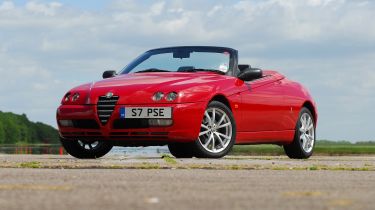
Alfa Romeo is no stranger to making distinctive and desirable cars, but the ‘Type 916’ Spider is on another level when it comes to standing out from the crowd.
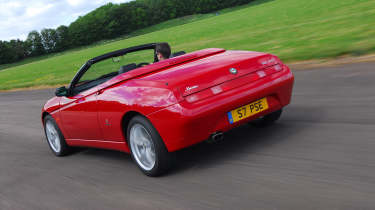
Designed by Enrico Fumia while he was working at Pininfarina, with the interior penned by Walter de Silva, these wedge-shaped sports cars arrived in the UK three decades ago next month, yet they still look fresh and interesting, and are thoroughly usable modern classics.
The Spider brand goes back six decades; Alfa Romeo introduced the original boat-tailed ‘Duetto’ in 1966, although in the mid-fifties there was a soft-top Alfa Romeo Giulietta, which was superseded by the Alfa Romeo Giulia convertible in 1962. The last time you could buy a new Alfa Romeo Spider was in 2010 (although this model was axed in 2004); now the ‘Type 916’ Spider covered here is a bona fide classic and one that’s well worth a closer look.
History
The Spider was launched in the UK in April 1996 and only available with a 2.0-litre twin-spark four-cylinder petrol engine. In May 1998 this motor received a power boost from 150bhp to 155bhp, and these updated Spiders are known as Phase 2 cars.
Used - available now

2018 Vauxhall
Grandland X
43,410 milesAutomaticPetrol1.2L
Cash £9,495
2015 Nissan
Juke
36,000 milesAutomaticPetrol1.6L
Cash £7,775
2022 MG
MG3
40,062 milesManualPetrol1.5L
Cash £8,450
2020 BMW
3 Series
47,700 milesAutomaticPetrol2.0L
Cash £16,877From April 2001 a 3.0-litre V6 engine was available, then in July 2003 the Spider was facelifted inside and out to become the Phase 3, with a refreshed nose and tail design, plus a new dashboard. In the process a 3.2-litre V6 engine superseded the 3.0-litre unit, and the 2.0 JTS replaced the 2.0 TS engine, which brought a more efficient direct-injection system for the fuel delivery.
In November 2004 the run-out Special Edition Spider was introduced, with just 80 examples available. Based on the Lusso, the Special Edition had 17-inch alloy wheels, black leather trim and a choice of red, blue or grey paint.
Which one should I buy?
Alfa sold a 1.8 Twin Spark (TS) unit and a turbocharged 2.0-litre V6 option in some overseas markets, but not in the UK, although a few have found their way here. The 2.0-litre Twin Sparks were sold here in much bigger numbers than V6s, so it’s likely you’ll be looking at a four-cylinder car, unless you specifically want a six-cylinder version.
That’s no bad thing given that most people in the know reckon that four-cylinder cars are generally better than sixes because the smaller engine is more free-revving, cheaper to run and gives the Spider better balance.
There were Lusso and Turismo trims; the former comes with electric windows, central locking, electrically adjustable and heated door mirrors, twin airbags and air-con. Facelifted cars from summer 2003 also have an electric roof. The Turismo added climate control and came on 16-inch rims.
Alfa Romeo Spider prices
At the bottom end of the market, saveable projects start at £500, while the cheapest usable Spiders are generally priced from £2,000.
You might find something a little cheaper if it’s a bit scruffy, has four cylinders and has done lots of miles. Spiders with a V6 engine are much rarer and you’ll do well to secure anything worthwhile for less than £4,000, with good cars closer to at least £6,000.
Something really nice and worth keeping long-term is more like £8,000. Few of these cars fetch more than £10,000, but a truly superb 3.2 V6 example might get a bit more. Yet very few 3.2-litre cars were sold in the UK, so at any one time there are very few – if any – for sale.
Alternatives to the Alfa Romeo Spider
A boom In the number of car makers embracing affordable convertibles in the late nineties means you’re spoiled for choice if you want a cheap classic drop-top.
The mid-engined MG F and MG TF are great to drive and plentiful, while purchase and running costs are pleasingly low if you buy well.
The Toyota MR2 Mk3 is great fun to drive but tight boot space makes it impractical, while the BMW Z3, Mercedes SLK and Porsche Boxster are good to drive and better made than the Alfa. All of these are rear-wheel drive, but if you want a FWD model like the Alfa, try the left-hand-drive-only Fiat Barchetta, while the Audi TT roadster came with front or four-wheel drive.
What to look for
- Fuel components: Stay away from E10 petrol because the in-tank fuel pump is held by a rubber bush that disintegrates through age, and the process is accelerated with the use of E10 petrol. A new fuel pump costs £250.
- Body panels: Most of the panels are either plastic (including the bonnet, front wings and valances), or galvanised steel. As a result, corrosion shouldn’t be much of a problem, but check the sills and rear wheelarches.
- Folding roof: Even when new, the roof didn’t always shut out the elements very well and the seal across the top of the windscreen tended to leak. You can still buy all seals, while replacement roofs or rear windows are sold separately.
- Engine oil: All Spider engines can use a lot of oil (as much as a litre per 1,000 miles on the Twin Spark). Also, the sumps sit quite low and can get bashed on speed bumps, so check the condition.
Interior
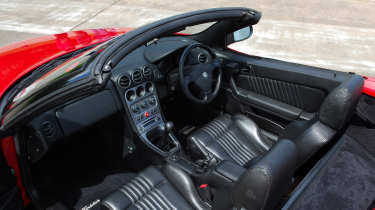
As you’d expect, the interior design and build quality are dated, but it looks appealing and is generally well laid out, while the seats are supportive with a decent amount of adjustment, and the steering wheel adjusts for reach and rake. Practicality isn’t great, because the boot holds just 108 litres of luggage, and there are only two seats.
Running costs
Low running costs are one of the most appealing things about these cars. Insure on a classic-car policy and the annual premium should be very low, while road tax is £360 a year for all Spiders registered before 1 March 2001. Later ones cost £430 per year (the Twin Spark is rated at 220g/km, the V6 is 278-315g/km).
The service interval is 12 months or 12,000 miles, and it’s worth finding a good Alfa specialist for maintenance because they’ll make the ownership experience much more enjoyable.
Both engines have a cambelt, and on Twin Sparks it should be renewed every three years or 36,000 miles, while the V6 stretches this to every five years or 48,000 miles.
Thrash a V6 and it’ll return 18mpg, but on a run 28mpg is more realistic, whereas you can get 40mpg or so from a Twin Spark at a steady cruise.
Recalls
Any recall work should have been done years ago, but it’s worth checking if a potential purchase has had the remedial work done. Alfa Romeo recalled the Spider twice in March 1996, with cars built up to November 1995 affected. The first recall was because the rear brake hoses could rub against the suspension; they should have been replaced by now anyway. The other problem was seatbelt buckles failing in a collision, so check that these have been replaced.
Did you know you can sell your car through Auto Express? We’ll help you get a great price and find a great deal on a new car, too.