Alfa Romeo Tonale review
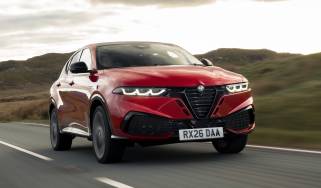
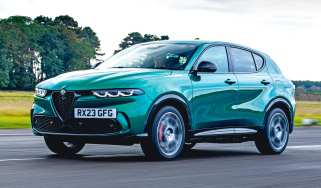
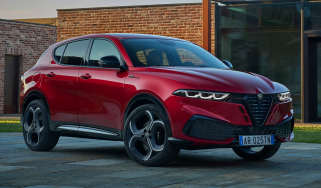
The Alfa Romeo Tonale is a stylish compact premium SUV with slick tech and good practicality


Our opinion on the Alfa Romeo Tonale
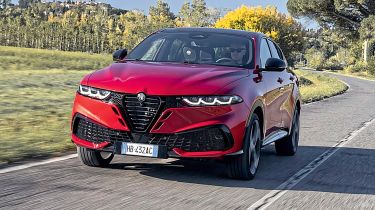
The Alfa Romeo Tonale has its flaws, but it does manage to just about hold its own against fellow compact premium SUVs from the likes of BMW, Audi and Volvo. It’s a fabulous looking family car for one thing, yet it’s still practical, handles well and features some slick in-car technology. However, the quality of the cabin falls short of what it should be considering this car’s price and competition.
The plug-in hybrid Q4 is the Tonale at its best. Not only is it the most efficient variant, but it also offers up to 42 miles of pure-electric driving. The PHEV is also better to drive than the mild-hybrid version, and it packs more performance punch. In the usual Alfa fashion, this is a car for those who like to stand out, and who are forgiving enough to overlook one or two drawbacks.
About the Alfa Romeo Tonale
While the Alfa Romeo Guilia saloon and closely related Stelvio SUV breathed some new life into the Italian carmaker, neither quite managed to propel it to new heights. So Alfa Romeo attempted to revitalise itself once again with the Tonale, which the brand proclaimed as “the beginning of a new Alfa Romeo era”.
The four-wheel drive Tonale plug-in hybrid Q4 is the most powerful variant in the range, and this consists of a 1.3-litre petrol engine, a single electric motor, and a 15.5kWh battery. Those who don’t like the idea of a plug can instead opt for a front-wheel drive, mild-hybrid variant. This uses a 1.5-litre petrol engine paired with a 20bhp electric motor. This model can run on electric power when you start it up, at low speeds and when parking.
Used - available now

2025 Alfa Romeo
Tonale
29,027 milesAutomaticPetrol1.5L
Cash £16,911
2025 Alfa Romeo
Tonale
25,512 milesAutomaticPetrol1.5L
Cash £16,996
2025 Alfa Romeo
Tonale
25,909 milesAutomaticPetrol1.3L
Cash £20,299
2022 Alfa Romeo
Tonale
9,884 milesAutomaticPetrol1.3L
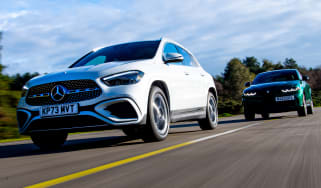
Cash £22,660We’ve put the Tonale through its paces alongside one of its more popular foes, the Mercedes GLA, in a twin test. The result might surprise you, because the Alfa bagged the win thanks to its sharp handling, good looks and usable interior space.
Alfa Romeo Tonale prices and latest deals
The mild-hybrid Alfa Romeo Tonale is the cheaper of the two, starting from around £38,500 in entry-level Sprint trim. Moving up to the mid-range Veloce increases this by around £5,000, while the range-topping Intensa commands at least £48,000.
Those eyeing up the PHEV will face a higher starting price of around £45,000 for the Sprint spec. The Veloce sits above £50,000, while the Intensa costs around £55,000.
However, you can save plenty when speccing your dream Alfa Romeo Tonale via the Buy a Car service. We also have a number of Tonale leasing deals to choose from, as well as used Tonale models in stock and ready to hit the road.
Performance & driving experience
Pros |
|
Cons |
|
The Alfa Romeo Tonale might use the same basic underpinnings, and some of the same powertrain tech, from the Jeep Compass, but this is not just a Jeep in a sharp Italian suit. The Tonale gets a bespoke suspension set-up with frequency-selective dampers that provide a great ride/handling balance that’s satisfying on a twisty road, yet comfortable enough when cruising.
The posher Veloce trim adds adaptive dampers that can be controlled independently of the drive modes via a button in the middle of the ‘DNA’ rotary selector, so even if you’re in the sportier Dynamic setting, the bumpy road mode makes the ride noticeably softer.
Alfa Romeo’s familiar ‘DNA’ drive mode selector is present, but it's slightly different here. In Dynamic mode, the throttle, gearbox, stability control and steering are tuned to provide a more direct feel, and in the plug-in hybrid Tonale Q4, the brake regeneration gets stronger, too. Natural is the hybrid mode, which balances between performance and economy, while Advance Efficiency essentially puts the car into EV mode and dulls the throttle to eke out as much range as possible from the battery. There’s also a battery save mode in the plug-in model that lets you reserve charge for later in your journey.
The entry-level Tonale uses a mild-hybrid powertrain that combines a 1.5-litre petrol engine with a small electric motor, however, the plug-in hybrid Tonale Q4 is our pick of the range. It feels more planted and less likely to be unsettled overall than the mild-hybrid version, and despite the extra weight of the PHEV model, which uses a 1.3-litre petrol engine, electric motor and 15.5kWh battery, it’s still keen to turn in and body control is kept in check.
Straight-line performance is stronger in the plug-in Tonale, too. The torque from the electric motor helps to push the back axle gently when accelerating out of a turn, though the Tonale still feels more front-driven than rear. The electric motor’s 121bhp is plenty for everyday driving, and you can drive at up to 84mph on electric power alone in the Tonale PHEV.
| Model | Power | 0-62mph | Top speed |
| Tonale 1.5 MHEV | 174bhp | 8.5 seconds | 131mph |
| Tonale 1.3 PHEV | 268bhp | 6.6 seconds | 121mph |
| Tonale 1.3 PHEV Veloce | 268bhp | 6.6 seconds | 121mph |
Performance, 0-60mph acceleration and top speed
With 158bhp and 240Nm of torque on tap in the mild-hybrid Tonale, 0-62mph takes 8.8 seconds while the top speed stands at 131mph.
Performance is modest compared to the plug-in Tonale Q4, but the real let down is the power delivery. There’s a noticeable delay between you pressing the accelerator and the car actually responding. Not only does it suck some of the joy out of blasts along country roads, but it’s a pain during regular driving, too, and means you’ll need to wait for bigger gaps when joining a roundabout or overtaking.
Opt for the plug-in hybrid Tonale Q4 with its more powerful petrol engine and electric motor, and power jumps up to 271bhp with over 400Nm of torque. This simultaneously slashes the 0-62mph sprint down to 6.2 seconds. Top speed is slightly lower, at 128mph.
The transition from electric to petrol power can be a bit clunky if you stamp on the throttle to join a motorway or overtake someone, but otherwise it’s pretty smooth, and you’re never left floundering because the electric motor gives reasonable shove straight away. The weakest part of this powertrain is the laggy six-speed automatic gearbox.
Town driving, visibility and parking
Even at lower speeds, there’s an undeniably firmness to the Tonale’s ride quality, but it isn’t so solid that it’s uncomfortable. Instead, it simply reminds you that this is a car with an element of sportiness in mind. Visibility out of the front and sides is fine, but the somewhat rakish looks of this SUV include chunky C-pillars that restrict how much you can see behind you. The base Sprint spec at least includes a basic reversing camera to help make life a bit easier for you, while a 360-degree camera is available as part of the optional Techo pack (standard in the Intensa trim).
Country road driving and handling
If you want to make the best of country roads, the Veloce’s adaptive suspension is a very useful addition. This is because we found the Tonale’s default suspension mode to be a little too firm for the average British B-road, and it made the ride a little crashy on more broken-up surfaces, which isn’t particularly confidence-inspiring or comfortable. Sticking with the smaller wheels offered should improve the ride further.
The advantage of this firmness, though, is that even in softer suspension settings the Tonale doesn’t roll to a significant degree when cornering quickly. Quick steering and sharp brakes mean you can have quite a bit of fun, too, especially by family SUV standards.
Motorway driving and long-distance comfort
We found that both the 18- and 19-inch wheel sizes generate quite a bit of road noise, and wind noise also infiltrates the cabin. Aside from this, the Tonale handles well enough at motorway speeds, even though there’s still an element of firmness in the ride quality.
The PHEV version can travel at motorway speeds on electric power alone, and when the petrol engine does kick in, it remains reasonably hushed and sits at just over 2,000rpm at cruising speed.
“There is an e-save button below the gearstick, which you press to save your electric power for when you want it. It’s already proven useful on drives from the coast to London, saving the EV power for the 20mph zones and inevitable heavy traffic.” - Dawn Grant, pictures editor.
MPG & running costs
Pros |
|
Cons |
|
The Tonale was the first hybrid to wear an Alfa Romeo badge, and marked the brand’s first step towards its all-electric future. There are two powertrains to choose from, with the first being a mild-hybrid that uses a 1.5-litre petrol engine and a small electric motor that’s fed by a minute 0.8kWh battery.
This combination, according to Alfa Romeo, will return up to 49.6mpg on the WLTP combined cycle and emit around 131g/km of CO2. This figure is an exact match for the BMW X1 sDrive20i, as well as being notably higher than the Volvo XC40’s 42.8mpg.
If it’s the lowest running costs you’re after, though, the plug-in hybrid Tonale Q4 will be the one for you. This variant’s 1.3-litre petrol engine is paired with a larger electric motor, and the resulting CO2 emissions are much lower at 33g/km. Alfa Romeo claims that this powertrain can return up to 217mpg. However, as is virtually always the case with PHEVs, you’re very unlikely to see this mammoth efficiency if you’re anywhere other than a laboratory.
It’ll become a lot thirstier if you don’t regularly charge the battery or run it flat on a longer journey, because this dead weight will drag things down to around 41.5mpg, as we experienced firsthand when we pitted one against a similarly electrified Volvo XC40 T5 Recharge.
| Model | MPG | CO2 | Insurance group |
| Tonale 1.5 MHEV | 49.6mpg | 129g/km | 28 |
| Tonale 1.5 MHEV Veloce | 49.6mpg | 129g/km | 29 |
Electric range, battery life and charge time
The Tonale PHEV is powered by a 15.5kWh battery, and recharging this unit from empty will take around two and a half hours when using a typical 7.4kW home wallbox.
Provided you keep the Tonale PHEV’s battery topped up, it can officially cover up to 38 miles on electric power alone. This is useful, but it’s literally miles behind the plug-in BMW X1, because that car manages up to 55 miles to a charge.
| Model | Battery size | Range | Insurance group |
| Tonale 1.3 PHEV | 15.5kWh | 36 miles | 33 |
| Tonale 1.3 PHEV Veloce | 15.5kWh | 36 miles | 35 |
Insurance groups
Sorting out insurance coverage for the Tonale won’t be particularly cheap because even the mild-hybrid Alfa Romeo Tonale lands in insurance groups 28 to 29 (out of 50), while the plug-in hybrid Tonale Q4 sits in groups 33 and above. The Volvo XC40 should offer more affordable quotes, because that starts in group 23 and goes up to group 30.
Cover for our long-term Tonale Q4 in Veloce trim, based on a 42-year old male living in Oxfordshire with three penalty points on their licence, came to £626.
Tax
Every Tonale qualifies for the standard rate of VED road tax, and although the plug-in hybrid model offers a little company car tax relief, business buyers will still save far more if they choose an electric car, like the Alfa Romeo Junior Elettrica.
The rather strong pricing of the Tonale means all but the base MHEV Sprint incur the luxury car tax surcharge. Add too many options to the cheapest model, though, and it’ll also be in the same boat.
Depreciation
Our market data shows that the Alfa Romeo Tonale will retain between 43 and 47 per cent of its initial value after three years or 36,000 miles, with MHEVs performing better. In comparison, the BMW X1 is a slightly better investment at 48 to 54 per cent, while the Volvo XC40 manages a rather healthy 53 to 59 per cent.
To get an accurate valuation on a specific model check out our free car valuation tool...
Interior, design & technology
Pros |
|
Cons |
|
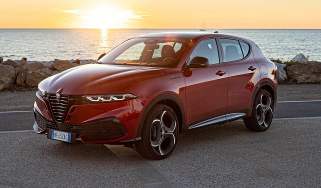
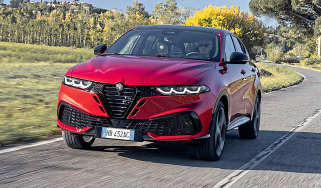
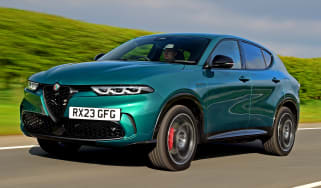
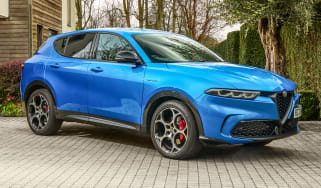
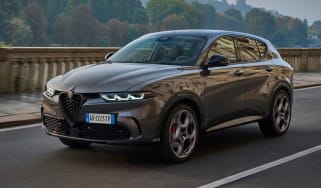
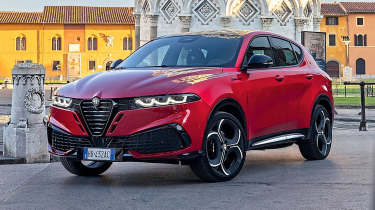
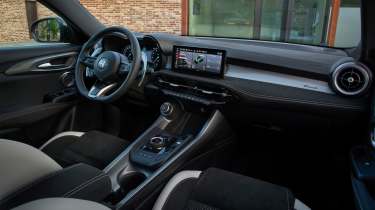
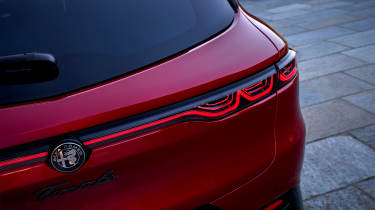
It might be based on a platform that can trace its roots back to a decades-old Fiat hatchback, but you’d never know it just by looking at the Tonale. It’s a great-looking family car that adds some flair and style to a segment that’s not exactly known for flamboyant design. There are even some references to iconic Alfas of yesteryear, top, from the SZ in the triple-element light clusters, the 8C with its window line, and (although this one is perhaps a bit of a stretch) the sixties GT’s silhouette.
A mid-life facelift saw the Tonale receive subtle exterior tweaks such as a reshaped grille and front bumper, and these have kept this SUV looking reasonably fresh. On the inside, a rejigged centre console has helped to lightly revamp the cabin.
Interior and dashboard design
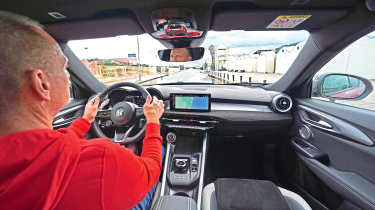
The interior is fairly minimalist but not quite to the same extent as the latest Volvo cabins, nor does it rely quite so heavily on piano black plastics as German rivals. This stylish space is also enhanced with a few elements lifted directly from the Giulia and Stelvio, with the most notable being the three-spoke steering wheel and, in the case of the Veloce and Intensa models, large metal gear shift paddles mounted to the steering column. There’s a good amount of traditional buttons and switches to be found, too.
Materials and build quality
Our impression of the pre-facelift Tonale’s build quality is that it’s typically Alfa, by which we mean there’s a mix of the great and the disappointing. Fortunately, the aspects that fall into the former category tend to be the bits that you touch often, such as the steering wheel and the excellent aluminium shift paddles if you go for the high-spec models.
We’re yet to try the revised version, so we hope that the wobbly centre console and door trims, which were made from scratchy plastic, have been worked upon and improved.
As it stands, the quality and premium feel of the cabin falls a little short of where it should be considering the price, or compared to the Tonale’s key rivals like the BMW X1, which excels in those departments. We expect the revised version to be better, but we’ll let you know if it is once we’ve tried it.
Infotainment, sat-nav and stereo
The Alfa Romeo Tonale uses the same 10.25-inch central touchscreen as the Maserati MC20 supercar, as well as the Fiat 500 and Jeep Avenger, so we know it’s a solid set-up. The Android-based operating system is easy to navigate, but a lot of the shortcut icons around the edges of the screen are pretty small and not the easiest to hit while on the move. The screen is responsive at least, plus Apple CarPlay and Android Auto feature as standard, so you can bypass the built-in infotainment if you’re really not a fan.
The touchscreen isn’t buried in the dashboard like the display in Alfa’s Giulia saloon or Stelvio SUV, instead it sits proudly on top with a set of physical climate controls below – something we always like to see, as it means you don’t have to route around a touchscreen to change the cabin temperature.
Behind the steering wheel is a slick 12.3-inch digital instrument cluster, configurable with three unique looks: a set of modern and sporty dials, a retro set-up designed to look like those in Alfas of old, and a pared-back option that’ll be easy on the eyes at night.
“I’ve noticed that there’s an anomaly with the control for the heated steering wheel. It’s positioned on the left-hand side of the screen – presumably a hangover from the car’s original left-hand-drive design. If you are on your own, it’s not the most convenient button to press.” - Dawn Grant, pictures editor.
Boot space & practicality
Pros |
|
Cons |
|
We’re willing to bet that most Tonale buyers will pick it over key rivals due to the way it drives or looks rather than how practical it is. However, cabin space and luggage capacity are decent for a premium compact SUV, just not class-leading. The Alfa’s door bins and the central armrest cubby are a good size, but not quite as large as those in the Volvo XC40, while the smartphone tray is a little awkward because the drive mode dial obstructs it slightly.
Dimensions and size
The Alfa Romeo Tonale is longer than either a BMW X1 or Volvo XC40, but it’s also slightly narrower and shorter than both of these key rivals.
| Dimensions comparison | |||
| Model | Alfa Romeo Tonale | BMW X1 | Volvo XC40 |
| Length | 4,528mm | 4,500mm | 4,440mm |
| Width | 1,841mm | 1,845mm | 1,938mm |
| Height | 1,614mm | 1,642mm | 1,657mm |
| Wheelbase | 2,640mm | 2,692mm | 2,702mm |
| Boot space |
500 litres (MHEV) 385 litres (PHEV) |
500 litres (MHEV) 490 (PHEV) | 443 litres |
Seats & passenger space
Space in the front of the Tonale is fine, but it certainly doesn’t have the more open feel of a BMW X1 or Volvo XC40 due to the Tonale’s sweptback windscreen and chunky windscreen and roof pillars. Those sharing a car will probably want either the mid-range Veloce with its standard electric front seat adjustment, or the range-topping Intensa with its driver’s side memory settings. Adding an electric driver’s seat to the entry-level Sprint is quite expensive.
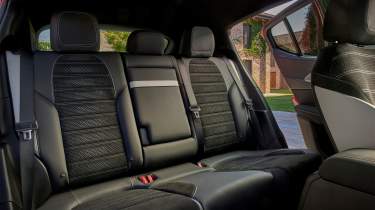
It’s a bit of a mixed bag in the back of the Tonale. Rear-seat passengers get a decent amount of head and kneeroom, but the seats feel quite flat, and the backrests are very upright. What’s more, it’s a little gloomy back there because the rising window line has created fat C-pillars (the same ones that hamper rear visibility).
There is enough space to comfortably seat three passengers at once thanks to the low floor, relatively small hump in the foot well and generous room for feet under the front seats.
Boot space
In terms of practicality, the mild-hybrid Tonale’s 500-litre boot is one of the bigger spaces that you’ll find in this class. It’s larger than the 443 litres you get from the Volvo XC40, and a match for the BMW X1.
However, in order to accommodate the battery and rear-mounted electric motor, the Tonale PHEV gets a significantly smaller 385-litre load area.
Towing
The plug-in hybrid Tonale maxes out at 1,250kg of braked caravan or trailer capacity compared to the mild-hybrid model, which can tow up to 1,500kg if you’ve got a braked trailer. Buyers who prioritise towing ability will be better served by a Volvo XC40 or BMW X1, versions of which can haul up to 2,000kg.
“This is the first long-termer I’ve run that has a powered tailgate. It’s handy if your hands are full and you can open it with the keyfob, but on the flipside it wasn’t so good when transporting my daughter’s dog. Isla will happily jump in the boot, but the lid is pretty slow to close and definitely caused her some confusion.” - Dawn Grant, pictures editor.
Reliability & safety
Pros |
|
Cons |
|
The Tonale was awarded the full five-star crash safety rating when it was tested by Euro NCAP in 2022, and its 85 per cent for safety assistance technology came as no surprise considering every model comes fitted with autonomous emergency braking, traffic-sign recognition, forward-collision warning and adaptive cruise control.
Level two autonomous driving tech is optional, and allows the car to accelerate and steer between lanes for limited periods. A 360-degree camera set-up, blind-spot detection and front parking sensor also come with the level two autonomous driving tech as part of a pack.
| Euro NCAP safety ratings | |
| Euro NCAP safety rating | Five stars (2022) |
| Adult occupant protection | 83% |
| Child occupant protection | 85% |
| Vulnerable road user protection | 67% |
| Safety assist | 85% |
Buying and owning
- Best buy: Alfa Romeo Tonale 1.3 PHEV Veloce
Although it means living with a smaller boot, the plug-in hybrid Tonale is our pick of the range as it offers the lowest running costs combined with a rather strong driving experience. We’d also invest the extra money in the mid-range Veloce trim, as this brings in a lot of useful additional kit, not to mention the adaptive suspension that makes a significant impact on the ride quality.
Alfa Romeo Tonale alternatives
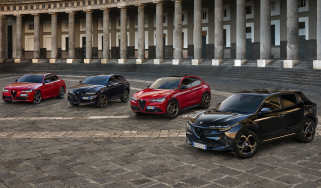
The Tonale is a compact premium SUV, which means it goes up against some heavy hitters like the Audi Q3, Mercedes GLA, Volvo XC40 and the BMW X1. Some less flashy but equally capable alternatives include the Hyundai Tucson and Kia Sportage, while the distinctive MINI Countryman will almost certainly be looking to steal some sales from the baby Alfa, too.
Electric SUVs are becoming more prevalent, with the Alfa Romeo Junior Elettrica being a close relation (and rival) to the Tonale. The BMW iX1, Mercedes EQA, and Volvo EX40 all make a convincing case for company car drivers looking to lower their tax bill.
Alfa Romeo Tonale Veloce PHEV long-term test
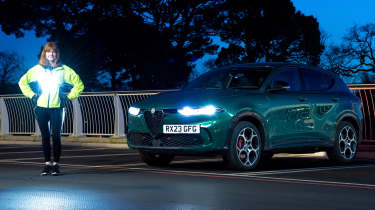
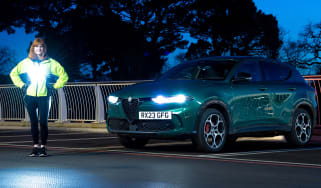
Our pictures editor, Dawn Grant, has spent six months living with the Alfa Romeo Tonale PHEV as part of our long-term test fleet. Along with its stylish appearance, Dawn has been impressed with the Alfa’s highly effective LED lighting. Elsewhere, most of the on-board features have proved useful and easy to operate, but the powered tailgate has been less than convenient when Dawn has needed to transport her daughter’s dog.
Another area where the Alfa falls short is the automatic gearbox. Dawn says the Tonale was sometimes reluctant to change up at the necessary time, causing the engine to rev excessively. The lane-keeping assist system also failed to detect a set of temporary roadwork markings, nearly causing the car to pull into a set of traffic cones. You can read the full long-term test here...
Deals on the Tonale and alternatives
Frequently Asked Questions
The Tonale gets a three-year, unlimited mileage factory warranty which will suit most people who decide to lease, but Alfa also offers extended warranties that run in conjunction with any finance deal you might take out. However, the just one year of free roadside recovery you get with the Tonale isn’t so generous. In comparison, Volvo XC40 and BMW X1 customers get three years of free roadside assistance.