Alfa Romeo Stelvio review
The Alfa Romeo Stelvio is a stylish, sporty SUV that’s great to drive but pricey to own

Our opinion on the Alfa Romeo Stelvio
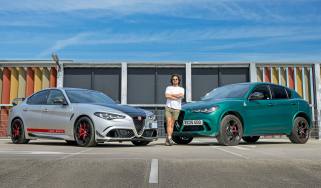
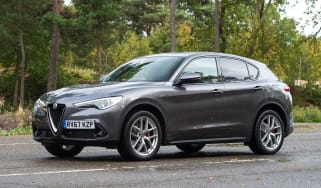
The Stelvio inherits perhaps the most important quality of any Alfa Romeo: uniquely desirable styling that stands out in the SUV crowd. The interior is similarly attractive to the eye, even if the Germans still have it beaten for fit and finish and rear seat space.
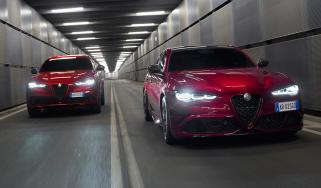
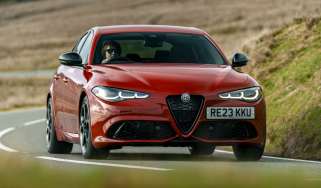
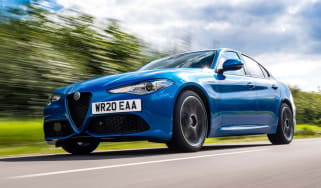
The sporty Italian SUV follows in the footsteps of the excellent Giulia saloon; it's great to drive, with agile, involving handling, although the ride isn't as comfortable as its best rivals'. Overall, the Alfa Romeo Stelvio is definitely worth a look if you're bored of the German establishment.
About the Alfa Romeo Stelvio
These days, a car company can't just rely on its heritage and character to earn sales, the big bucks are in the business of meeting customer demand. So really it's no surprise that the Alfa Romeo Stelvio, the company's first SUV, exists. Alfa clearly saw the money to be made in the mid-size premium SUV class and decided it needed to put one on sale.
Under the skin, the Stelvio shares a platform with the Alfa Romeo Giulia saloon, and it’s designed to contribute towards the revival of Alfa as a viable alternative to the Germanic norm. As a result, the platform is designed to deliver comfort as well as an engaging driving experience.
Used - available now

2019 Alfa Romeo
Stelvio
54,889 milesAutomaticDiesel2.1L
Cash £14,995
2026 Alfa Romeo
Stelvio
29,000 milesAutomaticPetrol2.0L
Cash £31,995
2021 Alfa Romeo
Stelvio
51,000 milesAutomaticPetrol2.0L
Cash £24,995
2021 Alfa Romeo
Stelvio
48,500 milesAutomaticPetrol2.0L
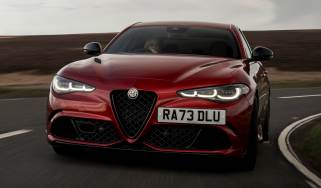
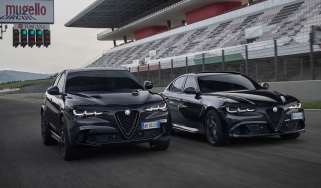
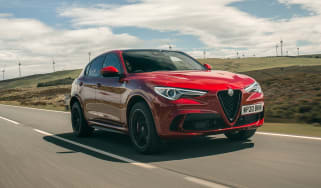
Cash £25,995The model and engine choices have narrowed as the Stelvio has aged. The core line-up currently consists of two trim levels and a single petrol engine that powers all four wheels via an eight-speed automatic gearbox. The hot Alfa Romeo Stelvio Quadrifoglio still sits at the top of the range, and we also have a dedicated in-depth review of this model.
We’ve put the Alfa Romeo Stelvio through its fair share of testing since it first went on sale. This included a triple test with the Cupra Formentor and previous-generation Porsche Macan.
Performance & driving experience
Pros |
|
Cons |
|
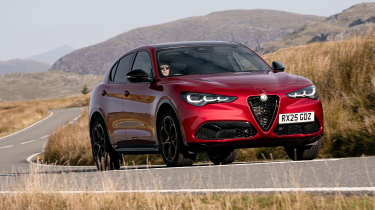
For a mainstream SUV, the Stelvio boasts some advanced engineering. While you might not be able to see it, Alfa hopes you can feel it. The first is a carbon fibre propshaft, which combined with a number of other measures – such as aluminium suspension components – helps keep weight down.
Those aluminium components are part of the double-wishbone front suspension system, while at the rear there’s a multi-link axle. This set-up gives the Stelvio a dynamic edge over most of its rivals, and it all means that the Stelvio is huge fun to drive for an SUV.
Compared with the Giulia, the Stelvio has been raised by 22cm to help give it a proper SUV stance, while Alfa’s Q4 four-wheel drive system is standard.
Alfa insists that the Stelvio is a road-based SUV – it does without the kind of off-road driving modes you’d find on a Land Rover Discovery Sport, although there is a downhill descent system fitted, should the need arise.
| Model | Power | 0-62mph | Top speed |
| Stelvio Sprint | 276bhp | 5.7 seconds | 143mph |
| Stelvio Veloce | 276bhp | 5.7 seconds | 143mph |
| Stelvio Intensa | 276bhp | 5.7 seconds | 143mph |
Performance, 0-60mph acceleration and top speed
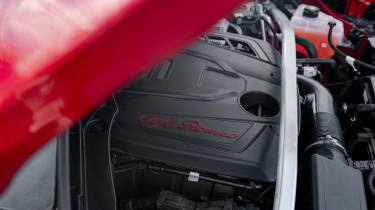
As part of the Stelvio's midlife facelift, the standard engine line-up has ditched diesel and is reduced to a lone 2.0-litre, four-cylinder turbocharged petrol unit producing 276bhp. The Stelvio Quadrifoglio, meanwhile, is powered by a larger 2.9-litre twin-turbocharged V6.
The 276bhp petrol is a suitably punchy powertrain, offering up a broad spread of power felt from just over 2,000rpm and taking this SUV from 0-62mph in 5.7 seconds. It's smooth and flexible, but it's a pity the engine note is lacking, as having sweet-sounding petrol engines has historically been an Alfa trait.
You can't fail to notice the brisk acceleration, but after that you’ll also notice the steering, which is sharp and accurate; the slightest twitch from your wrist is transmitted directly to the wheels. It instils the Stelvio with a greater sense of agility than its kerbweight would lead you to believe possible.
Flick through the various drive modes up to the most aggressive Race setting, and the reins are loosened on the stability control. This allows for a bit more movement at the rear end before the four-wheel drive system gathers it all up and launches you down the road, but even here it’s incredibly surefooted.
All cars come with a ZF eight-speed automatic gearbox. It’s a good combination with the 2.0-litre engine and delivers quick and sharp gear changes. The aluminium paddles on the steering column add a level of tactility that’s lacking in some of the Stelvio’s rivals – those cars tend to use flimsier plastic paddles. If you're a keen driver who likes to take control, you'll appreciate this touch.
Town driving, visibility and parking
The fundamental benefits of an SUV are clear in the Stelvio, as even with a high dash and thin glass, there’s still a good view out from the front and reasonable visibility out back. The fast steering rack that helps define the car’s high-speed manners are also an advantage at low speeds, helping all variants feel agile in city traffic.
However the Stelvio’s aging powertrain holds it back thanks to a gearbox that can occasionally be a little sluggish. Compared to more modern rivals that have clever mild-hybrid systems, the engine can feel laggy at low speeds as the turbo needs time to start spinning, and the low-speed engine and gearbox noise is hardly pleasant – these engines weren’t exactly cutting-edge when the car was new, and they feel positively ancient now.
All versions come with front and rear parking sensors plus a reversing camera to spot obstacles when parking.
Country road driving and handling
This might be a jacked-up SUV, but the first thing that’ll strike you out on the road is the speed and response of the car’s steering. It’s becoming an Alfa trademark, and despite the Stelvio’s size, you become accustomed to how fast it turns in. The steering is quick, and there’s enough grip for the chassis to cope, but until you get used to it, it can feel a little nervous and less relaxed.
Motorway driving and long-distance comfort
At a cruise, the Stelvio isn’t quite the top-level cruiser you might hope. Here the powertrain again reveals its limits, as the engine needs revs to feel good for its 276bhp figure. The gearbox has a propensity to shift up as quickly as possible for the sake of fuel economy, but it means the kickdown can be a little slow and jerky.
There’s also no doubt that while many rivals, particularly German ones, ride better the faster you go, the Stevio is more tuned towards twisting mountain roads. At a constant 70mph, the Stelvio’s ride is a little unsettled and, when combined with the fast steering, less calm and collected than you might hope.
Refinement is also only average, as wind and road noise seem to seep their way into the cabin more than its German and Swedish rivals. Another giveaway of the car’s relative age are its active cruise control and lane-keep functions. They’re fitted, but also rather rudimentary in their calibration and smoothness. If you’re after a comfortable, refined and tech-filled cruiser, we’re afraid you’ll have to look elsewhere.
“The first thing that strikes you when you climb in the Alfa is the driving position, which gives you a great view of the road ahead. But as this is billed as a performance SUV, it would be better to have a slightly lower, more cocooning driving position.” - Dean Gibson, senior road test editor.
MPG & running costs
Pros |
|
Cons |
|
Unlike a large proportion of the mid-size SUV competition, the Alfa Romeo Stelvio doesn't feature any form of hybrid technology. The fact that the diesel engine has been cut out of the range also hasn’t done this car any favours in terms of fuel economy.
According to Alfa, the 2.0-litre petrol is capable of returning up to 33.6mpg on the WLTP combined cycle, with CO2 emissions from 192g/km. However, during our own testing of the Stelvio it only managed to achieve 24.4mpg. To state the obvious, this’ll quickly ramp up the cost and frequency of fill-ups.
| Model | MPG | CO2 | Insurance group |
| Stelvio Sprint | 33.2mpg | 192g/km | 36 |
| Stelvio Veloce | 33.2mpg | 192g/km | 37 |
| Stelvio Intensa | 33.2mpg | 192g/km | 38 |
Insurance groups
The Stelvio Sprint sits in insurance group 36 out of 50, while the fancier Veloce creeps up to group 37. The fanciest standard Stelvio, the Intensa, climbs again to group 38. These numbers give the Alfa a slight edge over the most powerful Volvo XC60 T8, which is in group 41. The Mercedes GLC is also a bit pricier to cover, starting from group 40.
Tax
That aforementioned lack of hybridisation means there’s no tax savings to be found here, and you’ll also face the luxury car tax surcharge because every Stelvio sits high above the £40,000 threshold. This means another £440 on top of your annual £200 vehicle excise duty (VED) road tax bill between the second and sixth year after the car is registered.
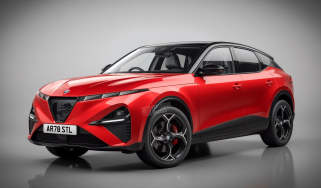
If you’re a business buyer looking to save on company car tax, you’ll be far better off looking towards an electric car. Alfa’s own entry is the Junior Elettrica, but this is quite a bit smaller than the Stelvio. Alternatively, the mid-sized Skoda Enyaq vRS, Cupra Tavascan and Kia EV6 GT all offer similar sporting credentials to the Stelvio.
Depreciation
Our market data indicates that the Stelvio will retain between 40 and 43 per cent of its original value after three years or 36,000 miles. This places it slightly behind the Volvo XC60, which manages 43 to 47 per cent, while the Mercedes GLC holds on to 47 to 54 per cent.
To get an accurate valuation on a specific model check out our Free Car Valuation tool...
Interior, design & technology
Pros |
|
Cons |
|
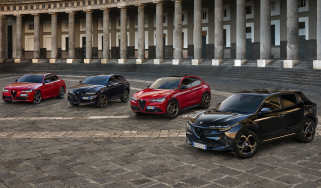
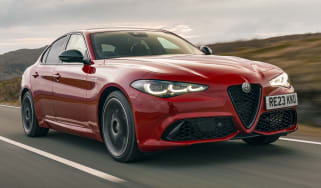
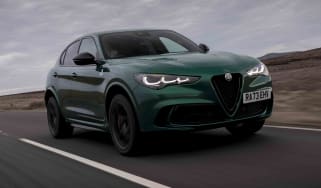
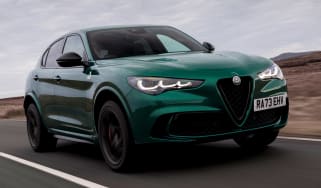
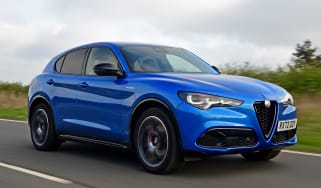
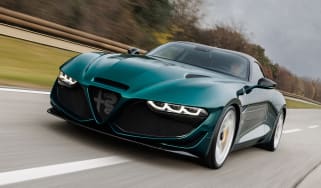
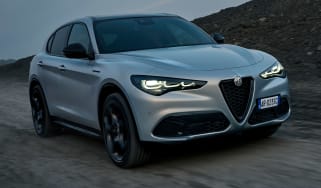
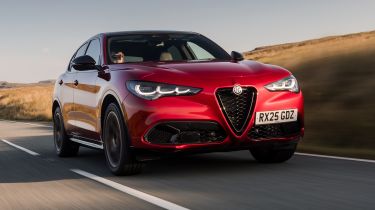
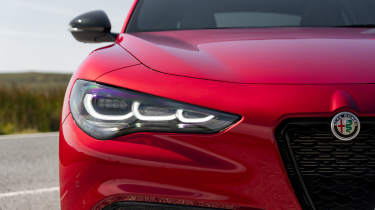
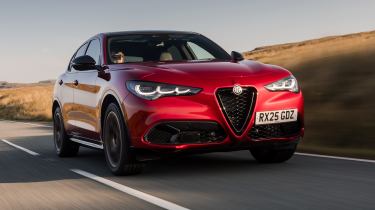
The Alfa Romeo Stelvio has been treated to a series of updates during its long life, and on the outside it now wears the 3x3 headlight signature that was first seen on the smaller Alfa Romeo Tonale SUV. This design also pays homage to the iconic SZ Zagato from the early 90s. The distinctive triangular ‘Trilobo’ grille was also given a fresh paint finish and some extra gloss black trim was added to the exterior, but that's about it for the styling changes.
Entry-level Sprint models come with the following as standard:
- 19-inch alloy wheels
- Black fabric upholstery
- Wireless charging pad
- Automatic headlights
- Front and rear sensors
- Reversing camera
Upgrading to the Veloce adds sports leather seats, 20-inch alloys, red Brembo brake calipers and heating for the front seats and steering wheel.
The fanciest Intensa gets quite a few more fancy touches, if you’re willing to pay out for it. These include heated windscreen washer jets, tan-stitched leather, adaptive LED Matrix headlights, a Harman Kardon sound system, and 20-inch alloy wheels.
Interior and dashboard design
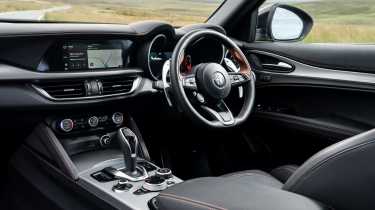
The updated Stelvio is equipped as standard with a 12.3-inch digital driver's display with three distinct layouts: 'Evolved’ is the more conventional readout, ‘Relax’ provides minimal information, and ‘Heritage’ adds a bit of retro style. We have no doubt some will miss the analogue dials you got in the pre-facelift Stelvio, but we found the new digital dash to be a welcome improvement.
While it inevitably feels a bit long in the tooth compared to a number of fresher rivals, the upside is that the Stelvio still features an array of physical buttons, which is reassuring in a time of enormous, complicated touchscreens and touch-sensitive panels.
Materials and build quality
Despite the improvements to the Stelvio's cabin and on-board technology over the years, it still can't quite stand up to its established German competition in terms of tech and quality. Make no mistake, Alfa’s standards are much higher than they once were, but we found many more cheap materials compared to the Cupra Formentor and previous Porsche Macan during our triple test.
Infotainment, sat-nav and stereo
Alfa’s infotainment has been improved over time, but it feels positively ancient compared to the latest systems that have arrived on the scene. The display itself is neatly integrated into the dash, but the screen is quite small at only 8.8 inches. The graphics are also a little on the dull side, and the screen just doesn’t have the clarity or level of detail you get in rival systems.
While the touchscreen responds well enough to inputs, a huge bonus is that this system can also be operated via a swivel wheel on the centre console; it makes using the setup while driving much easier and safer.
We did find Alfa’s infotainment pretty straightforward to use, but we expect most people will just use the standard-fit Apple CarPlay or Android Auto smartphone connectivity.
Boot space & practicality
Pros |
|
Cons |
|
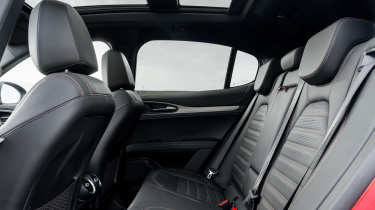
Up front, the Alfa Romeo Stelvio is reasonably spacious: there’s a good amount of headroom even for six-footers and visibility is fine thanks to thin-ish pillars. The Alfa doesn't offer the most rear passenger space in this class, but average-sized adults will find enough comfort to make this a usable family buy, even if they do sit a little upright. The boot is comparable with rivals, too, thanks to a flat, long load space, but it could be wider.
For storage, the Stelvio scores pretty highly. There are large door pockets for water bottles and other oddments, as well as a couple of cupholders ahead of the gearlever, along with a USB charging port. The glovebox is of a decent size, as is the space under the centre armrest. However, flipping the lids on the various trays and cubbies highlights some of the Alfa’s not-so-premium-quality materials, especially next to the plush-feeling Mercedes GLC.
Dimensions and size
The Stelvio is shorter than the Volvo XC60 and Mercedes GLC, but it does beat the former for boot space by quite some way. The Alfa is also wider than both of these rivals.
| Dimensions comparison | |||
| Model | Alfa Romeo Stelvio | Volvo XC60 | Mercedes GLC |
| Length | 4,687mm | 4,708mm | 4,721mm |
| Width | 2,163mm | 1,902mm | 2,076mm |
| Height | 1,632mm | 1,658mm | 1,631mm |
| Wheelbase | 2,818mm | 2,865mm | 2,888mm |
| Boot space | 525 litres | 468 litres | 620 litres |
Seats & passenger space
Interior space is pretty good for a sporty SUV: it’s acceptable for the class rather than exceeding rivals, but given the sporting focus of the Stelvio, it’s hard to argue with that. Stick four six-footers inside the Alfa and the two rear passengers would have their knees brushing the backs of the front seats a little. Headroom is merely okay, but that’s due to the sloping roof design.
Due to the Stelvio being positioned away from the family-oriented market there are no clever rear seats. They don’t slide or recline to allow more space, although you can fold them down in a 40:20:40 split to load longer items.
Boot space
Once again, the Stelvio sits in the middle of the pack when compared to its rivals. The Stelvio’s hatch slopes more heavily at the rear than some rivals, plus the roofline is lower, too. Boot space stands at 525 litres, which is considerably more than the Volvo XC60’s 468 litres, but a long way off the 620 litres you get in the Mercedes GLC. Dropping the Stelvio's rear bench increases the space to 1,600 litres.
The standard-fit electric tailgate reveals a usefully long, flat loading space, although it could be wider as the rear suspension takes up space over the wheelarches. There’s no lip when the seats are folded, and there’s no step to lug items over, though. Sadly, there are no thoughtful touches like underfloor storage, hooks or netting to store loose or bulky items.
Towing
Every standard Stelvio is capable of towing a trailer weighing up to 1,600kg. This might be more than you expected from a performance-focused Italian SUV, but it’s still well behind the Volvo XC60 B5, which is capable of up to 2,400kg.
An electronic towing hitch is available for the Alfa, but it’s a £1,250 option.
The Alfa loses out to the Cupra Formentor when it comes to the room inside; there’s space for three adults in the back, but the kneeroom isn’t as generous.” - Dean Gibson, senior road test editor.
Reliability & safety
Pros |
|
Cons |
|
Like its Giulia sibling, with which it shares key components, construction and safety features, the Stelvio was awarded Euro NCAP’s maximum five-star crash safety rating when it was tested way back in 2017. However, due to the length of time that’s passed since the test, this score has expired.
Standard safety kit is good too, as every Stelvio comes equipped with front and rear parking sensors, a rear-view camera, active cruise control, autonomous emergency braking, and lane departure warning. For an extra cost, you can add the Driver Assistance Pack to any Stelvio, which includes drowsy driver alert, traffic sign recognition, lane-keeping assist, traffic jam assist and highway assist, which combines active cruise control and lane centering technology for semi-autonomous highway driving.
While Alfa Romeo has been the butt of customer satisfaction jokes for decades, it’s clear that plenty of improvements have been made during its time under the Stellantis umbrella. A second-place finish out of 30 brands in the Driver Power best manufacturer rankings is nothing to be sniffed at, with only Mercedes managing to perform even better.
Buying, prices and deals
- Best buy: Alfa Romeo Stelvio Sprint
Buying a brand-new Stelvio is an expensive endeavour, but we think the base Sprint model comes with enough kit. The fact that it provides an equally enjoyable driving to the far pricier trim levels (not including the Quadrifoglio) also has us questioning whether it’s worth forking out any extra money. The Sprint starts from around £52,500, while the Veloce adds on a further £5,000. Meanwhile, the range-topping Intensa costs no less than £61,000.
Of course, you can save on the Alfa Romeo Stelvio with the Auto Express Buy A Car service. We have a selection of Stelvio models in stock and ready to go right now.
Alfa Romeo Stelvio alternatives
The premium mid-size SUV market is a competitive one, so the Alfa Romeo Stelvio has its work cut out. For those who wish to take a different path to the usual German options, the Volvo XC60 is a solid all-round family car with plenty of upmarket appeal.
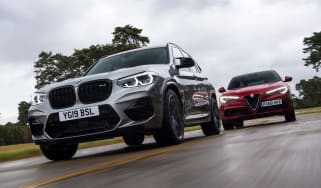
Naturally, the big German three all have a stake in this sector. The Mercedes GLC, Audi Q5 and BMW X3 are all top options, though it’s the latter that provides a level of sportiness that’s on par with the Alfa Romeo.
If you’re thinking about exploring the fully electric route, you’ll be spoilt for choice here, too. The Skoda Enyaq vRS, Cupra Tavascan and Kia EV6 GT are all mid-size SUVs that offer serious performance to accompany their low running costs.
Alfa Romeo Stelvio pictures
Key updates of the Alfa Romeo Stelvio review
7 August 2026: Latest driving impressions and line-up information.
Frequently Asked Questions
Every Alfa Romeo comes with a three-year/unlimited mileage warranty, with the opportunity to extend cover for a further 12 or 24 months at an extra cost.
Deals on the Stelvio and alternatives