When is a pothole not a pothole? Inconsistent council repair policies make bad situation worse
A new TV documentary shows how different councils operate on different parameters when it comes to deciding whether to fix a pothole

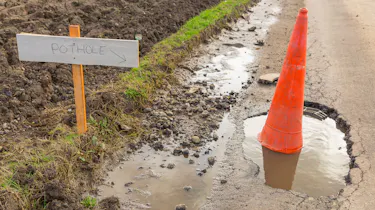
Councils in the UK cannot seem to decide when a pothole needs repairing, with almost a third refusing to publish their criteria online. That’s according to Channel 4’s latest Dispatches documentary, which uncovered a huge disparity in how local authorities judge pothole severity and what metrics must be fulfilled in order to trigger a repair.
Of the 206 councils which hold jurisdiction over the roads, roughly a third (35 per cent) said they will only fix a pothole if it reaches a certain width or depth. However, these parameters differ from council to council; while most (54) councils state a minimum depth of 4cm, some – such as Nottingham, Thurrock and Warwickshire – say a pothole must be 5cm deep before they consider filling it in.

In some cases, such as with authorities in Buckinghamshire, Stockport and Devon, a pothole must be at least 30cm wide – roughly the size of an A4 sheet of paper – as well as 4cm deep - before they decide to act.
On the other end of the scale, 29 per cent of councils don’t even publish what parameters must be in place before they fix a pothole, while 37 per cent say they take a risk-based approach, although this also means it’s unclear what constitutes a pothole that’s serious enough to require fixing.
These findings have prompted the RAC to speak out, with spokesperson Rod Dennis stating “there’s an urgent need for Whitehall to provide fresh guidance to councils to bring about consistency when it comes to prioritising potholes and taking action to fix them.”
He continued, saying: “[The RAC is] also concerned about reports that some councils are refusing compensation claims from drivers who have damaged their cars from potholes, by stating they already have them scheduled for repair – even if that repair isn’t due for months.”
All of this comes off the back of the Asphalt Industry Alliance’s (AIA) annual ALARM report which was published in March. This revealed that the cost to fix Britain’s pothole problem could be as high as £16.3 billion – an increase of as much as 16 per cent year-on year.
The Department for Transport says it has reallocated an extra £8.3 billion from the cancelled leg of the HS2 rail project, although the AIA said this “just counterbalance[s] the effects of inflation. The reality is, there is no additional money”.
How bad do you think the pothole situation is in the UK? Let us know in the comments section...