Electric cars not to blame for Luton Airport car park fire
A diesel-powered Range Rover Sport, plastic fuel tanks and lack of sprinklers were behind the 1,200-vehicle blaze

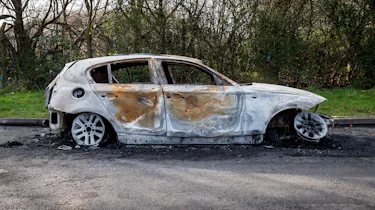
Electric cars have been cleared of blame for the inferno that took place at Luton Airport in October last year. Instead, an investigation by fire departments has raised new concerns regarding outdated building regulations and the fire risks caused by plastic fuel tanks.
The report, published by Bedfordshire Fire and Rescue Services (BFRS), reiterated how EVs were not responsible for the Terminal 2 car park blaze that involved as many as 1,200 vehicles. Investigators say the original source of the fire was a diesel-powered Range Rover Sport, which had suffered “an electrical fault or component failure”.
When investigating the fire’s environmental impact, the team at BFRS tested surrounding water samples and found little trace of lithium and cobalt – two vital ingredients in electric car batteries. This implies that EV batteries were not involved in the fire, but no investigation has been undertaken into the batteries of the burned-out remains of the few hybrid and battery-electric vehicles that were caught up in the blaze.
What fire teams did notice at the scene, however, were signs of so-called ‘running fuel’ fires, which may have played a key role in the inferno spreading as fast as it did. The suspected cause of these are the plastic fuel tanks fitted to most modern production cars; plastic tanks, such as the one fitted to the Range Rover that was the source of the blaze, are described by the BFRS investigators as “more susceptible to failure in the initial stages of a developing fire”, thus causing the flammable liquids (i.e petrol and diesel) inside to flow out and set alight.
BFRS concludes that such running fuel fires could have been prevented from spreading as far as they did if a sprinkler system was installed at the car park. Research by the Building Research Establishment shows that the usage of sprinkler systems typically results in “property loss [that] is 95 per cent lower than that of an uncontrolled fire.”
The Terminal 2 car park’s lack of a sprinkler system is symbolic of the need for updated fire safety and building regulations for car parks and public buildings in general. For starters, sprinklers are still not mandated in UK multi-storey car parks, despite their proven effectiveness; the BFRS’ Chief Fire Officer, Andy Hopkinson, says that the organisation will “support the National Fire Chiefs Council (NFCC) in lobbying for a change in national guidance and legislation to make the provision of automatic water suppression systems, such as sprinklers, a requirement in multi-storey car parks.”
Yet, several oversights were also made on the part of the fire team itself. Following the Kings Dock fire in Liverpool in 2017, which saw as many as 1,150 vehicles go up in flames, a report from Merseyside Fire and Rescue recommended a heightened level of attendance from brigades at multi-storey car-park fires due to fires spreading more quickly because of how the closely the cars are parked to each other.
However, the BFRS had not introduced an updated Pre-Determined Attendance (PDA - the agreed number of resources to be mobilised in the event of a certain type of fire) in line with what was suggested by the Merseyside brigade. While this has now been instated for Luton’s Terminal One and Two car parks, an updated PDA is yet to be agreed on for the rest of Bedfordshire’s multi-storey car parks.
Furthermore, the government’s Approved Document B (the document that outlines fire safety in public buildings) states that “Where the car park is well ventilated, there is a low probability of fire spreading from one floor to another” – something that was proved wrong by not only the example in Kings Dock, but also the fire in Luton Airport. The report by the BFRS describes the document as “requir[ing] review” and “based on outdated research on old vehicles”.
Want the latest car news in your inbox? Sign up to the free Auto Express email newsletter...