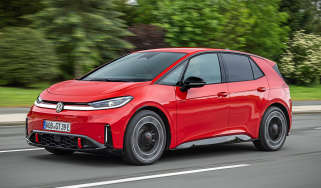
ZEV mandate relaxed to relieve struggling car industry
Carmakers can trade so-called ‘credits’ until 2029, with the government reducing its fines for those straying over the mandate’s limits

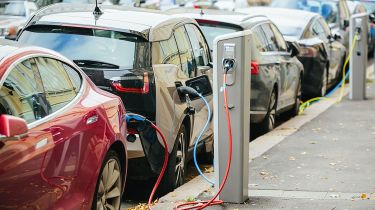
The government has announced a softening of its controversial zero-emission vehicle (ZEV) mandate rules, providing manufacturers with greater flexibility to escape fines, which have also been reduced.
Since the government’s ZEV mandate came into effect at the beginning of 2024, carmakers have been spending billions on artificially incentivising sales of electric models in order to dodge hefty fines – something that chief executive of the Society of Motor Manufacturers and Traders, Mike Hawes, previously described as “unsustainable”, stating that “the automotive sector cannot afford to deliver the world’s most ambitious transition single-handedly”.

However, subsequent to a lengthy consultation by the government, the rules behind the ZEV mandate now have been relaxed with the aim of giving the choking car industry a little extra breathing room.
One of the key changes announced is the extension of the so-called credit scheme which essentially allows brands to trade credits generated by meeting and exceeding the government’s EV quota; this was set to be discontinued next year, but has now been extended until 2029. That’s not all, as manufacturers can now also trade credits between their car and van portfolios to avoid fines.
Meanwhile, the government has reduced the penalty charge for every car over the limit from £15,000 to £12,000, and from £18,000 to £15,000 for every van. With the EU also set to bring in new emissions tests surrounding PHEVs to be more representative of their true CO2 output, the government has said that it will stick to the old guidelines when evaluating whether each brand hits its emissions targets.
These changes come alongside tweaks to the 2030 phase-out of the sale of new petrol and diesel vehicles, with hybrids and plug-in hybrids now allowed until 2035.
Prime Minister, Keir Starmer, remarked that the government’s latest moves will “help ensure home-grown firms can export British cars built by British workers around the world and the industry can look forward with confidence, as well as back with pride”.