EU axes 2035 petrol and diesel car sales ban but UK holds firm on 2030
From 2035, 10 per cent of car sales in the EU can comprise hybrid, plug-in hybrid or even standard petrol and diesel cars
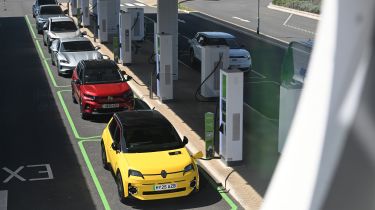
The UK Government has doubled down on its pledge to ban the sale of pure-petrol and diesel cars by 2030 and all non-zero-emissions models by 2035. This comes after the EU made the monumental decision to scrap its own 2035 ban, sending a seismic wave through the car industry.
In a statement on 16 December 2025, the European Commissioner for Climate, Net Zero and Clean Growth, Wopke Hoekstra said: "We want our industries to be the leaders of the transition to a low-carbon economy because that is what is best for our climate, competitiveness and independence.”
“Today, we are stepping in to ensure a successful clean future for the automotive sector,” they continued. “We are introducing flexibilities for manufacturers, and in turn this will have to be compensated with low-carbon steel and the use of sustainable fuels to drive down emissions.”
Petrol and diesel ban plan scrapped: what does it mean in practice?
So what does this mean? Well, while the previous plan saw only pure-electric and hydrogen cars allowed to be sold from new in the EU after 2035, the new revision enables manufacturers to consider selling plug-in, full and mild-hybrid, as well as old-school internal combustion petrol and diesel models past this date.
The catch is that these types of vehicle can only account for 10 per cent of sales; manufacturers will be required to offset the emissions from these cars by utilising low-carbon steel during manufacturing, or by powering their cars with e-fuels and biofuels.
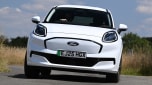
Furthermore, in the lead up to 2035 manufacturers will be able to make use of so-called ‘super credits’ for small electric cars; these models (measuring under 4.3 metres in length) will each count as 1.3 vehicles against manufacturing quotas, enabling manufacturers to effectively ‘bank’ progress towards emissions targets.
As for commercial vehicles, the quota of how many vans must be pure-electric post-2035 has been reduced from 50 to 40 per cent, whilst the Commission says it plans to invest €1.8 billion into boosting the EU battery manufacturing industry, offering interest-free loans to local cell producers.
What is the industry’s reaction?
Reaction from the automotive industry has been, as you might expect, mixed. On the one hand there are some brands who have dedicated their entire product line-ups to EVs and are thus concerned that the EU’s latest decision could put their businesses at risk; staging a protest outside the European Commission in Brussels, Polestar’s CEO, Michael Loscheller claimed: “electric is the only way forward, and we say no to combustion engines.”
“Electrification will create long-term prosperity and jobs for the decades to come,” Loscheller continued. “Reversing course would do the opposite: extending the life of outdated industries for a few short years while the rest of the world moves ahead. Europe doesn’t have a demand problem, it has a confidence problem.”
On the other hand, several European manufacturers feel the change will offer them more breathing room at a time where their sales are being snapped up by cheaper rivals from China. In November, Renault Group’s CEO, Francois Provost told Auto Express that a quarter of its R&D team is dedicated solely for catching up and complying with increasingly strict regulations.
“We need flexibility,” Provost explained. “This flexibility should be based on technological neutrality; an advanced PHEV or range extender solution is something we have to consider in order to cope with the 2035 timeline.”
Then there are brands such as Ford which has announced it will scale back its EV plans, due to what it describes as “lower-than-expected demand, high costs and regulatory changes”. The EU’s announcement is likely to reinforce this further, with the Blue Oval expected to continue relying on EV architecture from brands like Renault and Volkswagen in order to continue offering some electrified vehicles without the necessary up-front investment required for its own dedicated platform.
What will the UK do?
Auto Express asked the Government whether the recent move by the EU will ultimately alter the course for the UK’s EV transition. A Department for Transport spokesperson said: “We remain committed to phasing out all new non-zero emission car and van sales by 2035.” The DfT was also keen to point out that it reinstated the 2030 ban on the sale of pure-petrol and diesel cars in April, however, full and plug-in hybrid models will continue to be sold until 2035 under the UK’s plan.
On the other hand, the Conservative Party claims that if it wins the next general election in 2029, it will scrap the ban and ZEV mandate altogether. Writing in a column for The Telegraph newspaper, leader Kemi Badenoch described the requirement for manufacturers to sell a prescribed quota of EVs as a "well-meaning, but ultimately destructive piece of legislation".
Until recently, electric car sales have been growing strongly and are up 26 per cent for 2025 to date, but the rate of growth has slowed in recent months with November sales up just 3.6 per cent on 2024. Many manufacturers are also struggling to hit ZEV mandate targets that require 28 per cent of their sales to be zero-emission vehicles in 2025 and 33 per cent in 2026.
This lacklustre sales performance can be attributed in-part to the Government’s sometimes contradictory approach to EV adoption. On the one hand there’s the £3,750 Electric Car Grant available on some models, which has recently been extended to March 2030, but on the other there’s the looming eVED pay-per-mile tax which will see EV and PHEV drivers charged over and above their annual road tax payable by ICE car drivers.
Founder and director of Octopus Electric Vehicles, Fiona Howarth explained how: “The UK has positioned itself as a stable and attractive market for investment in electric vehicles… That credibility has been built on the strength and clarity of its regulatory framework. Diluting the UK’s ambition in response to changes in Brussels would send a damaging signal to investors, manufacturers and supply-chain partners, many of whom have already committed significant capital on the assumption that the UK would stay the course.”
Now you can buy a car through our network of top dealers around the UK. Search for the latest deals…