UK Road Safety Strategy: everything you need to know about Labour’s plan to halve road deaths by 2035
Labour says its plan will “help save thousands of lives and deliver on the Government’s commitment to growth, safer communities and easing pressure on the NHS”

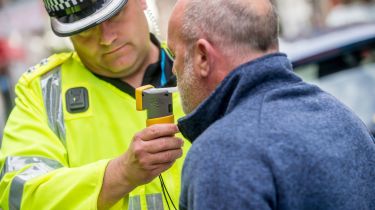
Compulsory eye and cognitive tests for the over 70s, mandatory minimum learning periods, a reduction of the drink-drive limit, alcolocks and stricter police enforcement – these are all elements of the Government’s new Road Safety Strategy which aims to halve roadgoing fatalities by 2035.
The official “radical” list of reforms comes well over a year after Labour announced it would draft the first new strategy to improve road safety in over a decade. With roadgoing casualties having only declined by seven per cent since 2015, despite all of the improvements in car active safety tech, road safety campaigners have described the plan as “long overdue”.

Local transport minister, Lilian Greenwood MP, said: “One of the hardest parts of my job is speaking to families who have lost loved ones on our roads and this is something we as a Government are taking action to prevent. No family should have to endure that loss, and this strategy sets out how we will work to ensure fewer do.”
Restrictions for older and younger drivers
Headlining the sweeping changes is the introduction of mandatory eye tests for elderly drivers. With those over 70 accounting for one in four drivers killed in 2024, motorists in their seventies or older will be required to undergo an eye examination every three years to determine whether they are fit to drive, in-line with their licence renewal. The Government says it will also consult on potentially introducing cognitive tests for older drivers, although these will need to be developed first.
It’s not just older drivers that are in the firing line; the Government says it is considering introducing a minimum learning period for new drivers, as statistics suggest one in five novice motorists are involved in an accident within a year of passing their test. This will be subject to another 12-week consultation and could result in either a three or six-month period being imposed.
Learners will be able to take their theory test and subsequently book their practical for a time after the mandatory time has passed, though. The concept of a digital logbook to record driving hours under the supervision of an instructor or experienced driver is also on the cards.
All of the above might come under a mandatory syllabus which could include driving at night or in inclement weather and is expected to increase the test pass rate, thus freeing up more tests as fewer learners are forced to try again.
Some believe this isn’t enough; the RAC’s spokesperson, Rod Dennis, pointed out how “making black-box telematics insurance mandatory for at least the first year after passing the driving test could be extremely beneficial as it closely monitors behaviour at the wheel. This can even lead to lower motor insurance costs for the safest drivers.”
Cracking down on car crime

Another pillar of the Government’s strategy is a crackdown on car crime. First and foremost, the drink-drive limit in England and Wales, which currently happens to be the highest in Europe, will be lowered to match that of Scotland: 50 milligrammes of alcohol per 100ml of blood. Furthermore, novice drivers – ie those who have held their license for less than two years – will be subject to an even lower limit of 20 milligrammes.
Labour says it will also consult on mandating the usage of alcohol interlock devices for repeat offenders, which will prevent the car from starting if the driver is over the limit. Police could be given the power to suspend the licences of those who are suspected of drink driving and/or the most serious driving offences and perform stop-search tactics to sniff out intoxicated motorists. More severe sentencing for those found guilty is also being considered.
Other dangerous driving practices will see tougher enforcement, too; being caught driving without a seatbelt, for example, will now incur penalty points. The government is also consulting on this being the case for driving without a valid MOT or failing to stop and report a collision.
Similarly, the Government insists it recognises the “growing problem” of illegal ‘ghost’ numberplates; stricter rules will be imposed by the DVLA for numberplate suppliers, while AI cameras will enable the police to detect and catch non-conforming plates (possibly including those with incorrect spacing and 3D designs) and subsequently issue penalty points.
Further changes
Finally, the Government has promised to establish what it calls a new ‘Road Safety Investigation Branch’ which will “analyse collision patterns and inform prevention strategies, drawing on linked police and healthcare data to identify root causes and target interventions more effectively.”
More Advanced Driver Assistance Systems (ADAS), such as lane-keep assist, will become mandatory on new cars sold in the UK – these systems are already compulsory in the EU, mind, with only a handful of manufacturers removing these features for the British market, anyway .“Reforms to motorcycle training, testing and licensing” will also be introduced to keep some of the most vulnerable of road users safe.
All of this, the Government says, will aid in its target of reducing road casualties by 65 per cent by 2035, and by 70 per cent for those aged under 16. Department for Transport sources also point out that road casualties already cost the NHS over £3 billion per year and the economy almost £7 billion, so a theoretical reduction in collisions will also help ease the strain elsewhere.
What’s the reaction been like?
Despite its arrival almost 14 months after its original announcement, reaction to the Government’s plans has been overwhelmingly positive, if still cautious over its implementation.
“The simple truth is that this strategy can’t come soon enough,” said Dennis. “Britain might have some of the safest roads by international standards, but on average four people are still killed and 76 seriously injured every single day. That’s an unacceptable number of lives being ruined or cut short."
Such thinking has been echoed by the Royal Society for the Prevention of Accidents; senior policy manager, Rebecca Guy, explained how: “[the] strategy signals a renewed determination to tackle preventable road harm. It must now be delivered effectively, with sufficient investment and support, so its measures have [a] real impact on our roads.”
Did you know you can sell your car through Auto Express? We’ll help you get a great price and find a great deal on a new car, too.