Huge plug-in hybrid car grant launched in Germany, but will the UK follow suit?
Buyers of plug-in hybrids could save up to 4,500 Euros, while Germans choosing an EV could save up to 6,000 Euros

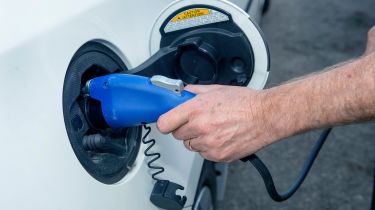
Germany has launched a new incentive for buyers of plug-in hybrid models, slashing prices by the equivalent of up to £4,000.
The announcement comes as part of a new electric car subsidy programme by the German Federal Government designed to get households with lower incomes into low and zero-emission vehicles. Electric cars benefit from a flat 3,000-Euro discount, which increases by 1,000 Euros if the vehicle costs less than 60,000 Euros, and by 2,000 Euros if it’s under 45,000 Euros. Furthermore, German households with children aged under 18 can receive an extra 500-Euro discount for each of their first two children making an extra saving of 1,000 Euros. That puts the total possible grant at 6,000 Euros (about £5,200).
Yet unlike the UK’s Electric Car Grant (ECG) which, as its name suggests, is only applicable to fully electric models, Germany’s scheme also offers discounts for petrol and diesel-powered plug-in hybrids. The basic subsidy for PHEV models is half that of EVs (1,500 Euros), but all of the aforementioned additional benefits still apply, meaning those with two children deciding to purchase a plug-in hybrid model costing under 45,000 Euros could receive a chunky 4,500-Euro (£3,900) subsidy – in effect a 10 per cent discount.
Like the ECG, which is offered in two tiers – Band 1 (£3,750 discount for the most sustainably produced EVs) and Band 2 (£1,500 discount) – the German grant comes with several stipulations. Total post-tax household earnings must be below 80,000 Euros to qualify, while a maximum holding period of 36 months means buyers will need to keep the vehicle for three years if they wish to retain the bonus and not have to pay it back.
Not all plug-in hybrid and range extender cars will be eligible for the grant, either; vehicles must emit a maximum of 60 grams of CO2 per kilometre or provide a minimum of 80km (50 miles) of pure-electric driving range.
The whole scheme is set to cost the nation almost €3 billion (£2.6bn) and aims to introduce 800,000 new electrified vehicles to German streets. This makes Germany’s EV incentive scheme much more ambitious on paper than the UK alternative, which is set to cost the British taxpayer £650 million and has recently been extended until 2030.
With the UK’s public purse already tight, it’s unlikely that our Government will mirror Germany’s policy – not to mention that doing so would undermine the UK’s EV transition goals. Speaking to Auto Express, Professor of Business and Sustainability at Cardiff University, Peter Wells, said: “I do not think there should be subsidies for hybrids in the UK. There is plenty of evidence to show that PHEVs' real-world carbon emissions are much worse than their official test emissions because in practice owners do not plug them in and use them in electric mode.”
It’s perhaps no surprise that Germany has chosen to include plug-in hybrid vehicles within its electric car scheme given that new legislatory changes by the EU mean the sale of new petrol, diesel and hybrid cars will now be permitted after 2035. However, Wells explained that such a move “sends confusing messages to the market. Rather, there should be stronger disincentives on combustion engines, and for all models the entire regime should be focused on energy efficiency”.
Germany’s new EV subsidy scheme has been announced alongside an extension of the exemption from road tax for electric cars; all other vehicles must pay an annual fee based on engine displacement and CO2 emissions.
Simultaneously, however, on the other side of Europe, UK Chancellor Rachel Reeves recently announced that electric cars will be subject to an additional pay-per-mile tax from April 2028. Reacting to the scheme’s announcement back in November, a spokesperson for Ford UK described it as “the wrong tax at the wrong time”.
Our dealer network has 1,000s of great value new cars in stock and available now right across the UK. Find your new car…