Plug-in hybrids outpace EVs on battery degradation due to varied use patterns
While average battery state of health is roughly the same for EVs and PHEVs, varied use cases create more variance for hybrids

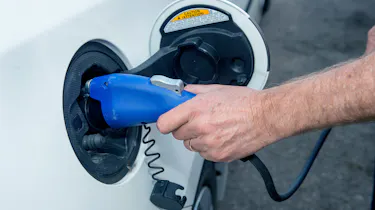
Plug-in hybrid cars are showing similar battery longevity to their fully electric counterparts. However, new data suggests that due to the more varied usage of PHEV powertrains, there is much greater variation in terms of how much (or little) a battery’s state of health (SoH) will deteriorate over time.
EV battery diagnostics firm Generational examined the data from 1,000 plug-in hybrids, all aged between brand new and 12 years old, and with anything from zero to more than 160,000 miles on the clock. Researchers found that the average PHEV battery SoH – the measure of a battery’s current capacity compared with its original state – sits at 94.27 per cent, only marginally less than the 94.94 per cent for EVs.

Yet while both vehicle types look the same at first glance, the standard deviation reveals a greater variation in terms of PHEV battery condition: 5.48 per cent for plug-in hybrids, compared with 4.14 per cent for electric cars. Plus, PHEVs are twice as likely to fall below the threshold of 85 per cent SoH than EVs, with such cars accounting for 4.7 per cent of the 1,000-car sample, in contrast to 1.5 per cent of the full-electric dataset.
All of this is despite the fact that the average age of the PHEVs and EVs tested was largely the same (3.61 years and 3.32 years, respectively), although the plug-in hybrids had a higher mean mileage (39,565 miles for PHEVs, compared with 30,343 miles for EVs).
Generational’s CEO, Oliver Phillpott, said: “PHEVs live more varied lives than BEVs. Some are plugged in every day and used almost like short-range EVs, while on the other hand, some spend far more time running as combustion vehicles. That difference in behaviour shows up in the battery data.”
PHEVs that are primarily run on EV power are typically charged more frequently than EVs, which usually boast much bigger batteries with longer ranges. This will degrade the battery more quickly than, say, a scenario where a plug-in hybrid is almost seldom plugged in and is in effect driven as a traditional internal combustion/self-charging hybrid car.
Phillpott told Auto Express that “The data makes a strong case for better battery transparency across the used market. EV and PHEV batteries are not failing at scale; in fact, the evidence points in the opposite direction.”
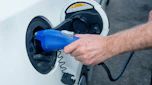
One of the most heavily touted solutions to battery condition transparency is the introduction of battery passports. These can give consumers insight into the make-up and condition of a battery and remove the sense of risk from the buying process. These become law for all new electric vehicles sold in the EU from February 2027 – it’s likely the UK will align with this legislation – but this doesn’t solve the problem of the UK’s existing fleet of over two million EVs and more than three million plug-in hybrids.
"Battery passports will help provide standardised pack-level data, and they are a key part of the solution. But they only apply to new vehicles and are fairly focused on supply chains and circularity,” Phillpott explained. “It will be a good few years before vehicles with battery passports start appearing on the used market in meaningful numbers. And even then, they won't cover vehicles already on the road, or give buyers reassurance on the things most likely to hit their wallet - like cell and module issues.”
This comes a few months after Generational revealed its findings for EV SoH, which revealed that electric car batteries were lasting far beyond expectations. Insight such as this is hoped to not only boost consumer confidence in EVs, but also to provide insurers and fleet operators with tangible evidence of battery longevity.
Did you know you can sell your car through Auto Express? We’ll help you get a great price and find a great deal on a new car, too.