In-car speed limit warning tech fails to read road signs 25% of the time
A new study by Thatcham Research found the MG ZS displays the wrong speed limit one in four times

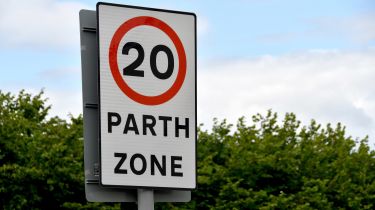
Cars are supposed to be smarter than ever these days, but safety experts are calling for new standards to better determine the accuracy of the latest driver-assistance tech. The move comes after they found cars are misreading road signs or displaying the wrong speed limit as much as a quarter of the time.
Intelligent speed assist (ISA) is one of the several advanced driver-assistance systems that the European Union has required be fitted to every new car sold on the continent since 2024, as part of its GSR2 safety regulations. Its job is to communicate the prevailing speed limit to the driver and alert them when it changes, using built-in cameras to read road signs and/or GPS data. The aim is to reduce collisions and injury by getting people to stay within the posted speed limit.

The EU mandates that ISA systems are tested over a variety of roads and a total of 250 miles. To be approved, the system must recognise the correct speed limit for at least 90 per cent of the distance covered and must be able to display the new speed limit within at least two seconds of the vehicle passing the road sign.
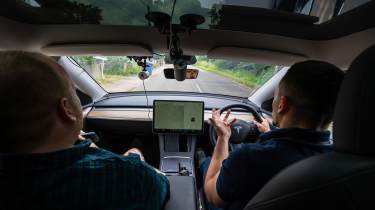
However, a new study by Thatcham Research examined the gaps between how ADAS tech is evaluated for approval in the UK and Europe, and how it performs in the real world. The team spent more than three weeks driving an MG ZS, BMW i5 and Tesla Model Y on a wide variety of roads and in different environments, covering a little over 4,500 miles in the process.
Thatcham acknowledges that the distance-based method ISA systems are officially assessed provides a useful baseline, but it can also overlook performance at key moments, such as when speed limits change. The UK safety experts’ event-based approach measured accuracy at each of these key points by recording whether or not the three cars displayed the correct speed limit whenever it changed. The testing highlighted a vast difference in performance compared with the official standard.
Intelligent Speed Assist test results
The MG ZS was the worst of the three cars in the test. Even though its speed-limit warning scored 91.3 per cent accuracy across the distance, just above the EU’s required standard, when assessed in an event-based manner, it was only 74.3 per cent accurate. This means that roughly one in four times, the ISA was displaying the wrong speed limit.
“This is exactly why people are turning the speed-limit assist off, it’s just not good enough,” Thatcham’s chief ADAS engineer, Yousif Al-Ani, told Auto Express. “And the regulation doesn’t properly reflect what a real customer will accept.”
The Tesla Model Y performed better, because it was nearly 98 per cent accurate, according to the EU’s distance-based method, but just 82.6 per cent on Thatcham’s event-based scale. According to Al-Ani, the Tesla struggled in the countryside where its map data wasn’t as good, and LED speed limit signs proved to be a problem.
The BMW i5 was the best of the bunch, 98.39 per cent accurate across the driven distance and achieving a 90.3 per cent event-based accuracy. “So even the best system we know, one in 10 events it still gets wrong. And this is a legally mandated safety system that has to come on every time [you start your car].
“Again, this is why people are turning it off. Probably the minimum pass rate should be 90 per cent event-based, and actually manufacturers need to push above that. They need to do better.”
When these cars’ ISA did display the wrong speed limit, Al-Ani told us that while the Tesla was usually 10mph under or over, the BMW’s was much further from the correct number. So “it’s not just as simple as how accurate it is over the distance or in events. Basically, when it’s wrong, how wrong is it as well?”
Thatcham’s testers also experienced the ISA displaying speed limits that are not legal in the UK multiple times. 5mph, 10mph, 15mph and even 100mph limits showed, which not only contributes to eroding trust, but can also lead to an increased collision risk if the system is linked to the car’s adaptive cruise control. An implausible speed limit reading can cause unwanted harsh braking or acceleration, again leading to the driver turning off the system.
Tougher standards and better tech needed
Thatcham is encouraging regulators and industry bodies to evolve the current approval standards by incorporating event-based assessment of ISA. This approach would better reflect real-world driving conditions and hopefully lead to the more consistent, reliable performance needed to improve consumer confidence.
Meanwhile, improving the accuracy of these systems will require improvement in the camera and sensor calibration, and the GPS data. Plus potential updates to cars’ programming so they don’t accept speed limit readings that aren’t seen in the UK, like 100mph.
We should note that Euro NCAP has recently introduced major updates to its testing procedures so that driver-assistance systems will now be evaluated not only on their crash-prevention abilities on the test track, but also during real-world driving, specifically with the aim of improving acceptance with drivers. Among the changes is the accuracy of speed-limit information will be verified during on-road driving tests for the first time.
Jonathan Hewett, CEO of Thatcham Research, said: “ADAS technologies represent one of the most significant opportunities we have to improve road safety, but that opportunity is only realised if the systems work correctly and earn the confidence of the people using them.
“[Intelligent speed-limit assist] is a case in point,” he added. “The intent behind the legislation is sound; helping drivers stay within speed limits saves lives. But a system that misreads limits, intervenes unexpectedly or presents drivers with speed data that bears no relation to the road they are on does not assist them. It frustrates and distracts them, and they turn it off.”
Want the latest car news in your inbox? Sign up to the free Auto Express email newsletter...