Brits lead the world in hating self-driving cars
British people are the most uncomfortable about riding in a driverless car, and it’s job losses that they fear the most

British people are the most sceptical when it comes to the introduction of self-driving cars. That’s according to pollster YouGov which recently studied different countries’ perception and attitudes towards the introduction of driverless vehicles.
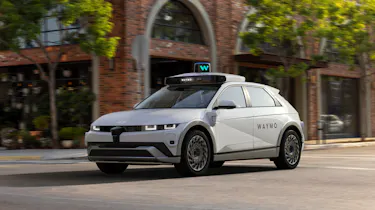
Robotaxis from the likes of Uber (in collaboration with Wayve) and Waymo have started popping up in London after they were granted licences by TfL in August 2026. However, they arrive to a frosty reception from the British public. YouGov polling suggests 73 per cent of Brits feel uncomfortable about driverless cars being allowed on UK roads.
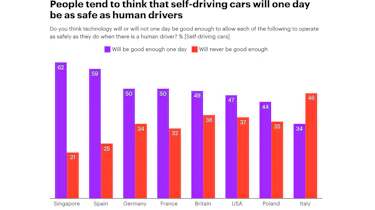
In fairness, the vast majority of the eight countries YouGov analysed – Britain, France, Germany, Italy, Poland, Singapore, Spain and the USA – all presented an uncomfortable view of driving around in a driverless car. Singapore, however, was an outlier, with 43 per cent of respondents offering a positive opinion of the technology.
As a matter of fact, 62 per cent of Singaporean respondents felt that driverless car technology would one day overtake the skill level of human drivers; most other countries, including the UK also agreed, albeit to a lesser extent. Italy, on the other hand, asserts that human drivers will always remain the safest option.
Yet safety isn’t the greatest concern felt by Brits; more than 60 per cent felt like the introduction of driverless vehicles will have a negative impact on jobs. Roughly 20 per cent felt like it would also have repercussions for the economy and society in general. This is reflected by how taxi drivers are demanding payouts for any job losses caused by the introduction of driverless cars; at the Labour Party conference in September, a spokesperson for the union GMB, Justin Madders said: “When it comes to driverless taxis, we would look for some sort of transition plan, potentially even a transition fund to get people through.”
How comfortable would people feel about riding in a self-driving car? | |||||
| Country | Very comfortable | Fairly comfortable | Don't know | Fairly uncomfortable | Very uncomfortable |
| Singapore | 9% | 34% | 12% | 30% | 14% |
| Poland | 12% | 27% | 20% | 21% | 20% |
| USA | 10% | 21% | 6% | 21% | 42% |
| Spain | 8% | 22% | 9% | 29% | 32% |
| Italy | 7% | 21% | 12% | 29% | 32% |
| France | 6% | 20% | 10% | 30% | 34% |
| Germany | 5% | 21% | 9% | 28% | 37% |
| Britain | 5% | 15% | 7% | 26% | 47% |
Yet despite this scepticism, the driverless taxi market is set to explode over the coming years; Tesla has said it will wind down Cybertruck production next year in order to make way for its new autonomous Robotaxi or ‘Cybercab’, while Stellantis, the owner of Vauxhall and Peugeot among others, has partnered with the aforementioned Wayve and Uber to create bespoke vehicles for driverless taxi services.
In a statement published in June, Minister for Buses and Local Transport, Simon Lightwood MP, said: “Self-driving vehicles will offer new opportunities for Britain, helping to support independent travel for some disabled people and older adults, while unlocking billions of pounds for the economy by 2035 and supporting highly‑skilled jobs.”
We are also seeing autonomous driver assist technology becoming increasingly common in new cars available to consumers. Systems like Ford’s BlueCruise can take control of the car in certain situations but the driver must be watching and ready to step in should anything go wrong.
Get the latest car news in your inbox, for FREE! Sign up to the Auto Express email newsletter...