ZEV Mandate rules are playing into China’s hands, Government told
Loopholes in the UK’s ZEV laws mean that Chinese brands are incentivised to instead focus on PHEVs, which are more polluting than once thought

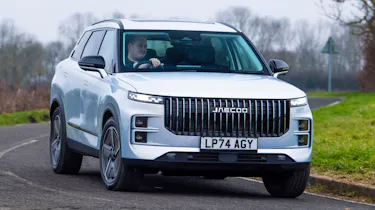
The UK’s electric car sales targets have been accused of “effectively subsiding” Chinese plug-in hybrids (PHEVs). An open letter to the Government published by the Climate Change Committee claims a loophole within the ZEV Mandate provides newer brands, many of which hail from China, with more lenient CO2 requirements which, alongside an outdated view on the ‘greenness’ of PHEVs, results in an unlevel playing field.
Rumours suggest that Prime Minister Andy Burnham may be considering rowing back on the Government’s EV ambitions which, as they stand, will require 80 per cent of all new cars sold by 2030 to be fully electric. Addressing Transport Secretary Heidi Alexander, the Climate Change Committee’s chair, Nigel Topping, claimed that any weakening of the UK’s ZEV Mandate rules would “miss an opportunity to reduce the cost of living for people, undermine Britain’s competitiveness, and leave us more exposed to volatile fossil fuel prices”.

However, while the Climate Change Committee is in favour of retaining the ZEV Mandate’s ambition when it comes to EVs, it also highlights how the current rules not only misrepresent the true environmental impact of plug-in hybrids, but also how they favour manufacturers that have arrived in the UK from 2024 on.
To comply with ZEV Mandate rules, manufacturers must ensure that a certain percentage of their sales – a figure that increases each year – are for zero-emission cars. To avoid fines of up to £12,000 per non-compliant car, brands can earn ‘credits’ by selling other cars, such as plug-in hybrids, that offer emissions which are significantly less than what their fleet-wide emissions were in 2021. Brands that arrived in 2022 or 2023 must work off of an emissions target based on their first year of sales.
However, for those that hadn’t sold a car in the UK prior to 2024, the ZEV Mandate instead utilises a CO2 baseline that’s pulled from an average across the entire car industry for the year prior to their entry. Given pure-petrol and diesel cars still account for almost half of all new car registrations in the UK even now, this has provided many newer car makers with a much higher baseline to work off. With the current system, according to Topping, “effectively subsidising Chinese PHEVs”, newer brands have much less of an incentive to shift EVs when hybrids can generate plenty of compliance credits.
“New competitors are taking an increasing share of UK car sales across all fuel types,” Topping pointed out. “Tightening the baseline for entrants would provide a more level playing field for UK manufacturers.”
Yet while more hybrid cars on the road might not seem like too much of a bad thing, the Climate Change Committee is quick to highlight how this type of powertrain is often a lot more polluting than originally thought. Historically, emissions figures for plug-in hybrids were calculated on the basis (also known as the Utility Factor) of the electrical side of the engine powering the vehicle around two-thirds of the time.

However, it’s since been found that the Utility Factor is typically much lower than this, with a recent study by the International Council of Clean Transport uncovering that the gap between tested and real-world emissions has risen from around two-and-a-half times in 2021 to over four times for cars registered in 2023.
“Real-world data has consistently shown that PHEVs use significantly more fuel and produce significantly more emissions than test standards have assessed,” said Topping. With this in mind, he and the Committee called for an “update [to] the Utility Factor for PHEVs so the mandate credits real-world emissions reduction”.
As you might expect, such a viewpoint on the Government’s ZEV targets has been controversial. Chief executive of EV advocacy group EVA England Vicky Edmonds, said: “The Climate Change Committee is right: weakening the ZEV mandate would be a backwards step. The endless wrangling over targets is distracting from what really matters, and that is getting more people into electric cars.”
On the other hand, the UK’s Society of Motoring Manufacturers and Traders claimed: “The CCC ignores the damaging cost of the targets it defends: billions in unsustainable discounts and millions more in Government incentives, yet even with sky high fuel prices, fewer than three in ten drivers will switch this year. The industry cannot subsidise the transition indefinitely, which is why it is unified in seeking change.”
Auto Express has approached the Department for Transport for comment.
Get even more from Auto Express, follow our channels...
• Google
• Reddit
• Whatsapp