Gov should accelerate Road Safety Strategy as casualty reduction stalls, experts say
In the year leading up to June 2026, 31,853 people were killed or seriously injured on British roads

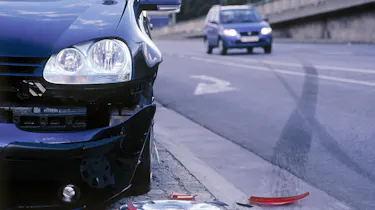
An average of 83 people were killed or seriously injured on roads in Great Britain in the 12 months leading up to June 2026. The statistic represents an incremental increase year-on-year that has prompted calls from road safety experts for the Government to expedite measures announced in its Road Safety Strategy and break the deadlock in the battle to reduce casualties.
In the year leading up to June 2026, 1,579 people were killed and a further 30,274 were seriously injured – a definition that can range from serious fractures to life-altering injuries – on British roads. This marks very little change from the 1,577 killed and 29,604 injured the year prior. While experts concede it is positive that there hasn’t been a significant swing in the wrong direction, they suggest it is further proof that the push for safer roads has stalled.

In early 2026, the Government under ex Prime Minister, Keir Starmer, announced its Road Safety Strategy which proposed a number of measures with the aim to cut the number of people killed or seriously injured on British roads by 65 per cent by 2035. The vast majority of these proposals, such as tougher drink-drive enforcement and measures targeting older and younger drivers, were well-received by safety experts. Almost a year on from the Strategy’s publication, however, many feel lawmakers need to move quicker with its implementation.
“For a decade now, progress in cutting the number of people killed and seriously injured has stalled, with far too many families left having to cope with the devastating consequences of collisions,” said the RAC’s senior policy officer, Rod Dennis.
“What’s needed urgently is for the Government to publish a clear roadmap for delivering the casualty reduction targets set out in its Road Safety Strategy, with firm actions and timescales. Without that, it’s difficult to see how the country breaks out of the cycle of high casualty numbers.”
While the reduction in casualties has stalled in recent years, it's six per cent down on 2016 and 31 per cent down if you also include minor injuries. In fact, with roads now busier than ever, the number of people killed or seriously injured per billion miles travelled has dropped by as much as 11 per cent, possibly providing a more representative perspective on how much safer roads are becoming.
e-Scooters pushing up accident numbers

The biggest leaps in safety have been targeted on car and HGV occupants which have seen fatalities drop by 19 and 28 per cent respectively in the last decade. In fact, all vehicle types, bar motorcycles, have seen occupant fatalities drop, although many have seen a rise in the number of casualties – especially for the ‘other vehicle occupants’ category.
This can be largely attributed to the growing popularity of e-scooters; transport charity CoMoUK estimate that the number of e-scooter rentals rose by 55 per cent between October 2024 and September 2025 to 1.5 million annual users. Subsequently, the number of ‘other vehicle occupant’ casualties in the year leading up to June 2026 rose by 11 per cent year-on-year and by 128 per cent in the last decade.
“It’s disappointing, but perhaps not surprising, to see e-scooters are responsible for a rise in casualty numbers,” said Dennis. “We urge the Government to get to grips with this growing problem.”
Earlier in 2026, the Government stated it would start discussions on potentially legislating the use of private e-scooters “when Parliamentary time allows”; currently, the only way to legally ride an e-scooter on public roads is via a public rental scheme. The Government also recently provided local leaders with greater powers to enforce measures against ‘anti-social’ usage of e-bikes and e-scooters, such as cracking down on poor parking or dangerous riding.
Auto Express has approached the Department for Transport for comment.
Don't miss the best of Auto Express on Google! Make us a preferred source. Click here...