Electric car tax explained: how much will your EV cost you in tax?
EVs no longer qualify for free VED road tax in the UK, but how much will you actually pay to run one?
In the not too distant past, electric cars used to be exempt from paying Vehicle Excise Duty (VED). However, changes to the road tax system in April 2025 now mean that EVs attract the base standard rate of road tax at £200 per year.
But there’s more to taxing an EV than just the Vehicle Excise Duty alone. You also have VAT, potentially BiK and eventually eVED to consider — to name just a few. If you’re confused by these abbreviations, don’t worry because we’re here to explain everything you need to know about electric car tax.
Keep reading to find out more about the different taxes that electric cars are subjected to, and which ones might apply to you.
What taxes do electric cars attract?
Electric cars are now subject to all the same taxes as their combustion and hybrid counterparts, just at different rates depending on:
- The age of the car.
- If it’s privately owned or being run as a company car.
Electric car taxes for private buyers
For private buyers, the most significant tax is Vehicle Excise Duty, also known as VED, car tax, or simply ‘road tax’. This must be paid when a vehicle is first registered, and annually thereafter.
Electric vehicles costing more than £50,000 also attract the Expensive Car Supplement (also known as the luxury car tax) which currently stands at £440 annually between years two and six of ownership.
Electric car taxes for company cars
Company buyers will be familiar with Benefit-in-Kind or BiK taxation, and this has applied to EVs for many years, albeit at a much lower rate than for cars with tailpipe CO2 emissions.
Electric car Vehicle Excise Duty (VED)
Whether you’re buying a new or used electric car, or you currently own one, all EVs are subject to Vehicle Excise Duty (VED).
VED is an annual fee payable from the moment a car is registered, and every year thereafter when a vehicle is kept on the road. If you own an EV registered from 1 April 2017, the standard rate for the 2026/27 financial year is £200.
If you have an EV that was registered prior to 31 March 2017, you still have to pay VED, although it’s currently £20 per year.
New electric cars are now subject to a tax charge of £10 in the first year, which will be hardly noticed by most buyers.
Expensive Car Supplement
If an electric car costs more than £50,000 when new, it will be subject to the Expensive Car Supplement, also known as the luxury car tax. This threshold is higher than that for petrol, diesel and hybrid cars which is set at £40,000.
The luxury car tax supplement now sits at £440 a year and applies for five years from the car’s second birthday, that is years two to six.
This means private buyers will now have to pay a total of £640 per year from year two onwards, including VED and the Expensive Car Supplement.
This is worth bearing in mind for used-car buyers, too. It’s not always easy to find out what the used model you’re buying cost when it was brand new, so it’s worth running a car’s registration through an online car tax calculator to see how much VED might cost in advance.
Owners of EVs registered before April 2025 are at least spared from paying the expensive-car supplement. However, they’ll still have to pay the standard £200 annual rate.
Benefit-in-Kind company car tax
With their employer footing the bill for road tax, the cost company car users are most concerned by is Benefit-in-Kind taxation, abbreviated to BiK.
This works out a tax rate based on three factors: the cost of the car, whether you’re a lower or higher-rate taxpayer (i.e. pay tax at the standard 20 per cent rate, or the higher 40 per cent rate of income tax), and a BiK company car tax percentage rate.
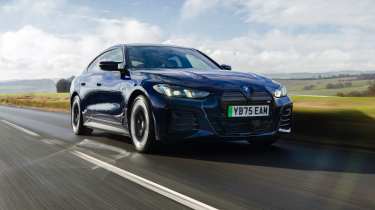
This latter figure has been two per cent for EVs for a few years now, but has now increased to four per cent. This obviously means it’ll cost a little more in tax to run a company car, but given this rate is already far lower than for cars with higher CO2 ratings, running an EV as a company car is still incredibly cost-effective. In fact, the difference between a petrol BMW 3 Series and an electric BMW i4, for instance, is measured in the thousands of pounds.
For more information on company cars, head on over to our dedicated Company Car Tax guide.
VAT
Most things you buy or services you use in the UK attract Value Added Tax, or VAT, typically at a rate of 20 per cent. If a car costs £20,000 before VAT, then the on-the-road price (ignoring registration costs and other peripheral car-buying expenses) will be £24,000.
Some products and services are exempt from VAT – most food and drink (excluding sweets, alcohol, soft drinks and the like), sports activities, gambling, most healthcare products and education are either exempt or zero rate, while things such as domestic energy and heating products are subject to a much lower five per cent rate.
Electric cars get neither exemption, nor a lower rate, so are currently subject to the full 20 per cent whack, just the same as any other car whatever its power source. However, there is an interesting VAT variation for EV drivers when it comes to charging costs: those drivers with home chargers use ‘domestic’ energy VAT rated at five per cent, while anyone using public charging has to pay the standard 20 per cent VAT rate.
This could be set to change as a UK tax tribunal has ruled that public EV chargers should be taxed at the domestic five per cent rate.
What is eVED pay-per-mile tax?
The Government has announced that it is considering the implementation of a pay-per-mile tax scheme for electric cars. This is designed to recoup some of the tax lost as petrol cars are phased out and drivers stop contributing as much in fuel duty.
If this scheme does go ahead, it’ll be rolled out no sooner than 2028, and EV drivers would be charged 3 pence for every mile covered. Plug-in hybrids (PHEVs) are also set to be included at a rate of 1.5 pence per mile.
For more details about this potential new cost, take a look at our dedicated eVED pay-per-mile road tax guide.
Why are electric cars now being taxed?
EV tax changes are being implemented at a time when electric cars are steadily becoming mainstream choices for a wide range of people.
While the Government continues to ramp up sales targets for EVs ahead of its 2030 ban on the sale of petrol and diesel vehicles, adjustments are being made in order to counteract a potential deficit in the public finances caused by heavily-taxed combustion cars being phased out.
Tell us which new car you’re interested in and get the very best offers from our network of over 5,500 UK dealers to compare. Let’s go…