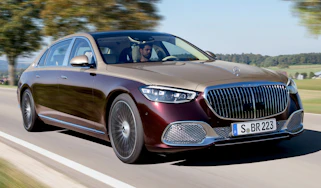
Mercedes S-Class review
The once imperious quality of the Mercedes S-Class may have slipped a little, but the technical highlights are typically eye-catching


Our opinion on the Mercedes S-Class
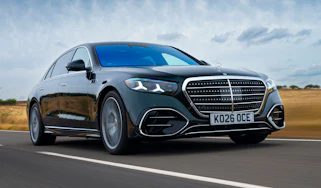
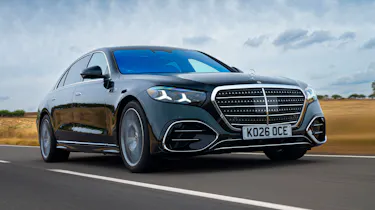
The Mercedes S-Class is synonymous with luxury motoring, and so it remains in this new and heavily revised form that was introduced in 2026. It’s a sumptuous, elegant and serene way of moving about, especially from the privileged position in one of its back seats. But for those wanting to drive themselves, newer and more expressive forms of luxury hold more appeal, and a wider remit of talents.
About the Mercedes S-Class
The Mercedes S-Class is the standard in luxury saloons, and it has been for most of the model’s history. It’s a symbol of success, wealth and taste. But like every corner of the modern car market, customers and their buying habits are changing and as the world keeps moving at breakneck speed, large luxury saloons like the S-Class seem to be standing still.
One look at this ‘new’ generation might have you think this is the case, as it’s largely the same car as the one launched all the way back in 2020. Yet under its familiar skin this is now a whole new entity, according to Mercedes. Time to see if that assertion is true.
Performance & driving experience
Pros |
|
Cons |
|
There are few cars with a clearer mandate than an S-Class. At its core, this car needs to be cossetting, luxurious and effortless above all else. But we’re now in an age where all cars must come with a broader remit, and if you’re a driver as opposed to someone being driven in the back seat, there are better options out there.
Performance, 0-60mph acceleration and top speed
Mercedes offers a curated collection of engine options in the UK, and by and large they are generally excellent units that match wonderfully to the overall driving experience. At the entry-point of the range is the S 350d, a large six-cylinder diesel engine that might sound a bit old-fashioned in practice, but perfectly suits the S-Class and its demeanour.
Used - available now

2019 Mercedes
S Class
98,000 milesAutomaticPetrol3.0L
Cash £38,000
2017 Mercedes
S Class
118,000 milesAutomaticDiesel3.0L
Cash £18,949
2024 Mercedes
S Class
46,774 milesAutomaticPetrol3.0L
Cash £61,290
2019 Mercedes
S Class
15,811 milesAutomaticDiesel2.9L
Cash £35,975Its on-paper figures make for good reading, too. Peak power is rated at 308bhp and 62mph takes just 5.4 seconds, but on the road it’s the 350d’s 650Nm wall of torque gives the S-Class a feeling of effortlessness and calm. The nine-speed automatic transmission is also well suited to the job, and thanks to standard all-wheel drive traction isn’t a problem either.
The existing S 580e plug-in hybrid is still available, packing a combined power figure of 577bhp and 750Nm of torque, which is good for a rapid 4.4 second 0-62mph time. However, new for 2026 is a second plug-in hybrid option in the form of a lower-cost S 450e. This new S 450e drops has reduced figures of 428bhp and 680Nm, but the acceleration is still a perfectly reasonable 5.7 seconds to 62mph.
Both variants share the same battery module. Capacity is rated to 21.96kWh(usable), and it’s paired to an electric motor that can deliver as much as 60 miles of electric range on paper. They’re also capable of 60kW DC charging, so topping up the battery on the go is perfectly possible; it’s also happy to charge on a slower home wallbox in around 2.5 hours.
On the open road there’s just enough get up and go from the 161bhp e-motor to run quite comfortably on electric power. But when the six-cylinder petrol engine needs to get involved, performance is plentiful – excessive, even, on the S 580e. Critically, the engine is both smooth and isolated enough so that you rarely notice its involvement.
The odd one out in the powertrain line-up is the 442bhp S 500 six-cylinder petrol, aided here by a mild-hybrid system. This powertrain is still superbly refined and offers good levels of performance on paper, but it lacks the effortless low-down grunt of the diesel. In overseas markets, Merc’s new flat-plane crank V8 is available with a colossal amount of power, but Mercedes UK will reserve eight-cylinder options for future AMG and Maybach models that’ll soon top the range.
| Model | Power | 0-62mph | Top speed |
| S 350d | 308bhp | 5.4 sec | 155mph |
| S 450e | 428bhp | 5.7 sec | 155mph |
| S 580e | 577bhp | 4.4 sec | 155mph |
Town driving, visibility and parking
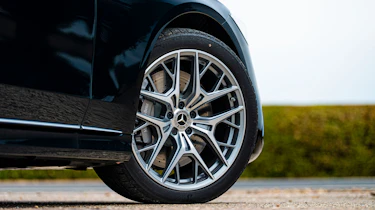
Of all the dynamic attributes an S-Class must be judged against, the most important by some margin is the quality of the ride – and it’s one this generation has a complicated history with. Simply put, the S-Class does not ride properly when fitted with 21-inch wheels. And where previously there were specifications and variants with these fitted as the only option, Mercedes UK has realised its oversight and fitted 20-inch wheels across the range in this new generation. If you really want to larger wheels can be specified for no extra cost, but we’d advise against it. Strongly.
With the correct wheel size fitted, the S-Class is nearly flawless in terms of its ride quality. We say nearly, as there is still a slight reverberation that can funnel its way up the air-suspension; but generally the ride is excellent, and you might find that it’ll get even better over time.
That’s because the new S-Class will recognise, geo-locate and store data on speed humps, major potholes or particularly bumpy road sections as you drive over them, to then prepare the suspension for the next time you drive over that spot. We drove over the same road section back and forth about 10 times to see if we could notice the difference. And we did. The effect is quite subtle over road surfaces, but it’s particularly good at speed humps and mini-roundabouts.
Country road driving and handling
Where the S-Class lacks a bit of range, however, is when you try to get a hurry on. Unlike a BMW i7 or even the now-defunct Audi A8, an S-Class’s superb ride quality does come at the expense of its driving dynamics at high speeds. Put the car into Sport mode and it can hold speed around a bend, control its body roll and accelerate cleanly out of corners, but none of it feels comfortable or natural. At best, it’s uninterested in driving at speed. At worst, it’s a bit soggy.
Motorway driving and long-distance comfort
Enter onto a sliproad leading towards a nice, smooth motorway and you can sense the S-Class is returning to its comfort zone. This is a simply superb cruiser, with incredible high-speed refinement and an effortless gait to its suspension and powertrains.
Powertrain noise or vibrations are nearly non-existent, and the S-Class’s impressive cabin insulation, helped out by extensive work to the aerodynamics, makes this just about the perfect cruiser. Anyone who thinks that a Range Rover can do an S-Class’s job better than the original will see the error in their ways when floating down a highway in an S 350d.
"In many ways the Mercedes S-Class is the original, and the best. But we’re not sure whether ultimate luxury is enough for private buyers in 2026, as its range of excellence just isn’t as wide as some rivals." – Jordan Katsianis, News Editor.
MPG & running costs
Pros |
|
Cons |
|
A Mercedes S-Class is never going to be a cheap car to run on account of different factors, but considering the tech and luxury it offers, it could be a lot worse. Diesel and PHEV powertrains do a lot of the heavy lifting here, thanks to efficiency that defies the S-Class’s size and, erm, class.
S 350d variants are rated to 44.2mpg in the WLTP combined cycle, and while it’ll be hard to match this figure in urban environments, if a majority of time is spent on motorways this figure is much more achievable.
Plug-in S 450e and S 580e consumption rates are a little harder to pin down, purely because it will vary so greatly depending on how much driving is done on the electric motor and batteries. All plug-in S-Class models have an official combined electric range of 60 miles, however this will be almost impossible to match unless you’re exclusively driving in urban areas. From our experience, 30-40 miles is more realistic.
However, once the car’s running in hybrid mode, the MPG figure can vary greatly. On-paper weighted consumption figures of around 97.5mpg can be achieved if a majority of your driving is in electric mode, however once that battery is depleted, expect more like 25-30mpg. The straight-six engine might be a wonderfully smooth ally, but it likes a drink if it’s doing all the work.
Mild-hybrid petrol models are more consistent, and come with a WLTP consumption figure of 33.7mpg. Thanks to a bit of help from the mild-hybrid system, this figure isn’t decimated in urban areas, and you’ll likely match – if not beat – that figure on motorways.
Insurance groups
The Mercedes S-Class sits in high insurance groups of between 45 and 50, depending on the engine choice. Simpler diesel and petrol models are at the lower end of this, while AMG and Maybach variants sit in the top-50 category.
Tax
All S-Class models cost £625 per year for the first five years of ownership as it is well over the luxury car supplement. Beyond this, it’s £220 per year.
If you’re purchasing an S-Class through a business, the only real option are the plug-in hybrids, which sit at a 10 per cent BiK rate. The mild-hybrid petrol and diesel versions sit at 37 per cent, and the soon-to-be revealed AMG should be the same.
Depreciation
All large and expensive saloons typically suffer some fairly shocking depreciation, retaining around 50-55 per cent of its value after three years. With such a high purchase price, this represents a big chunk of value disappearing, but such is the luxury car class. Historically, luxury SUVs like the Range Rover retain their value better.
Interior, design & technology
Pros |
|
Cons |
|
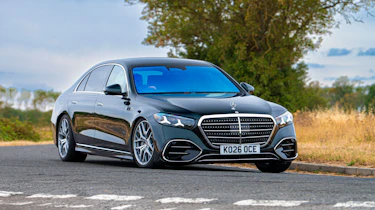
As much as Mercedes Benz insists this S-Class is new, in reality it’s more of a heavy update of the existing car, and this much is obvious just by looking at it. The fundamental body is the same as the W233 generation car that arrived in 2020; it even holds onto that model code. However the changes do a solid job of aligning this otherwise aging design with its newer models.
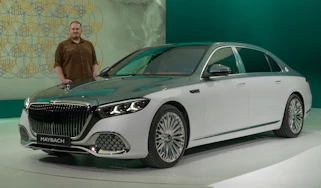
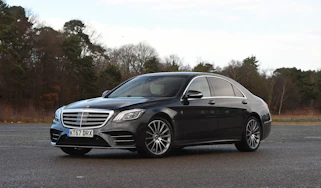
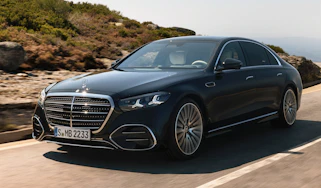
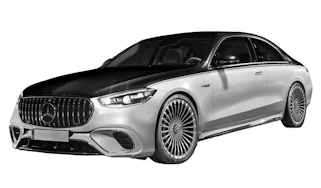
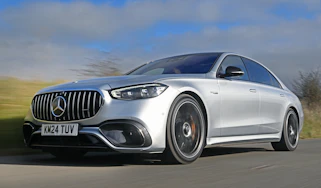
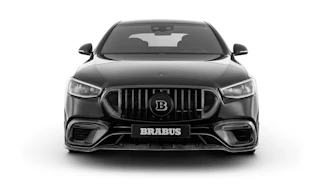
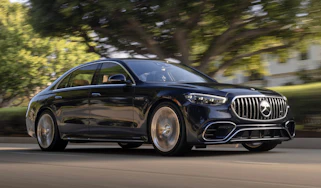
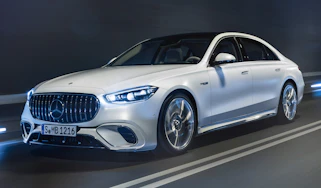
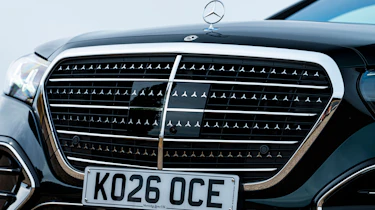
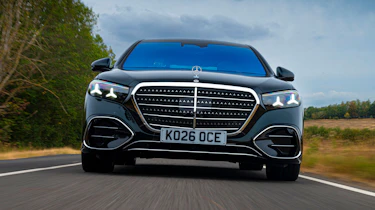
This starts with the new headlights that sit on either side of a larger and deeper grille. In dark colours, which a majority of S-Class’s will be specified, the other main change up front is largely hidden, namely the black mask that connects the lights to the grille. Those headlights feature a double-star motif, and all UK cars will be limited to AMG Line exterior specification, with wheels that are 20- or 21-inches.
There are more stars integrated into the rear lights, with a triple layout that replaces the previous model’s more elegant setup. The shape and placement of the rear lights, however, are unchanged. You’ll also notice new wing-mounted panels which integrate new cameras and sensors that vary depending on the market.
It won’t take a trained eye to pick out the new model from a distance, the new lights will do much of the heavy lifting here, but those hoping for more of a wholesale change compared to the existing generation might be disappointed to see how little the design has moved on.
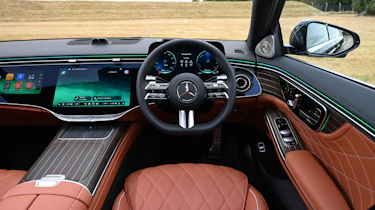
Interior and dashboard design
Whereas the exterior represents a gentle change over the previous S-Class, there’s a mostly new cabin to keep buyers interested. However, the source of this new design isn’t looking at a generation ahead like Merc’s flagship models are accustomed to – instead it integrates a system already available on the lesser E-Class.
From a usability perspective, this is no bad thing. The Superscreen, as it’s termed, features two displays mounted under a sheet of glass, with a main driver’s display propped up behind the steering wheel. The housing and main dashboard aren’t exactly the same as the E-Class; there’s some nicely-integrated switchgear that floats below the main glass and the wider and more generous centre console with twin ventilated wireless phone chargers.
Materials and build quality
The cabin’s materials are typical of Mercedes, which is to say there’s an opulence to their finishes, if not a particularly strong sense of quality. Many of the main control points don’t help this feeling, as things like the steering wheel’s plastic scroll wheels feel a little flimsy. However, the Nappa leather seats of UK models are of excellent quality, and the secondary materials on top of the dashboard and door cards aren’t far behind.
While there were no obvious squeaks or rattles in the cabin during our testing, anyone who’s been in a posh airport transfer will know the S-Class can have a propensity to feel a bit baggy with some miles on the clock. However, there does look to have been some general build and material quality improvements in this latest update.
Infotainment, sat-nav and stereo
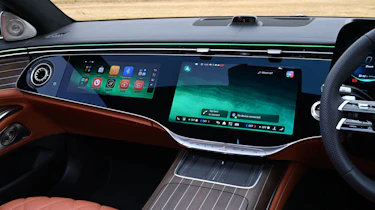
The fundamental reason to switch over to a new dashboard lies largely with the need to integrate more digital real estate – lots more. Gone is the previous rectangular screen and in its place is a combination of three displays that make up the brand’s ‘Superscreen’.
Biggest of the three is a 14.4-inch unit that acts as the main interface, incorporating almost all of the car’s key functions within Merc’s latest MBUX infotainment system. This has a ‘zero-layer’ setup, which has a main navigation view topped with tiles that refer to previously used functions like your media, seating controls or climate. At the screen base is a row of static controls for things like the climate control and more specific seat controls, with a menu control at the centre.
Generally, this new MBUX works well. Despite having a quite incredible depth of capabilities and customisation, it genuinely feels like a system that’s been designed to be used while driving, rather than something put together by people who have never sat in a car.
The navigation is just as good, if not better, than the systems by Google or Apple, and things like live traffic and closed roads are on the money too. This latest update also includes a much more robust connection between the car and the cloud, giving the S-Class excellent AI-integration for things like its voice control.
Beside this sit two 12.3-inch screens, the first being a traditional driver’s display behind the steering wheel. This has all the usual functionality of a Mercedes system, which is generally excellent, although the three-dimensional screen setting has been removed from a majority of trims. In front of the passenger sits the final display, this one acts as a more traditional passenger display with its own capabilities like being able to watch YouTube or enter more sophisticated route mapping.
The 3D Burmester sound system is also worth a mention, as it continues to be one of the best systems in the business, and it’s standard on all but the entry-level model.
However, Where the S-Class used to be at the very cutting edge of design and technology, the new S-Class feels like a version of the smaller E-Class, rather than its own thing. There’s nothing overtly wrong about the system or its capabilities, but Merc’s impressive setup in the smaller C-Class and GLC Electrics feel more advanced and frankly more modern.
Boot space & practicality
Pros |
|
Cons |
|
It’s important to establish exactly what use case you need the S-Class for, before commenting on how practical – or not – it might be. In the unlikely event that an S-Class will be used as a family car, it’s just not as versatile or flexible as estates or more likely SUVs that many well-to-do families would be interested in buying.
However, as a tool to shuttle two people with some expensive luggage between airports, hotels and fancy cocktail parties, the S-Class is almost perfect. Mercedes seems to understand the sorts of people buying its cars in the UK, too, as only the long-wheelbase version is offered.
Dimensions and size
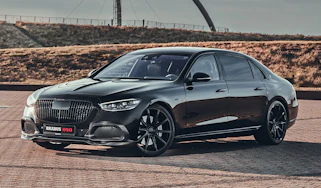
The new S-Class is 5,304mm long, which includes the extra 110mm of the long-wheelbase model that’s sold only in the UK. No short-wheelbase variants are available in the UK, although the forthcoming S 63 AMG typically comes in short-wheelbase version only. For the billionaire class, heads of state or political leaders that are now a few elections past democracy, the Maybach’s 5,484mm length ensures space for both them and their egos.
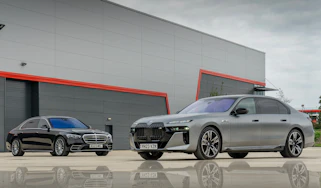
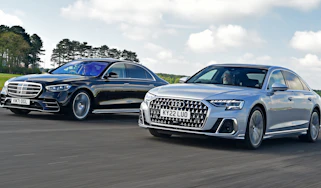
For comparison, BMW’s 7 Series is actually even bigger than the LWB S-Class, and by quite a margin in most areas, as the brand has gone down the route of offering a single body style and length across both combustion and all-electric powertrains.
Dimensions comparison | |||
| Model | Mercedes S-Class LWB | BMW 750e | Range Rover LWB |
| Length | 5,304mm | 5,395mm | 5,252mm |
| Width | 1,921mm (no mirrors) | 1,950mm (no mirrors) | 2,047mm (no mirrors) |
| Height | 1,503mm | 1,558mm | 1,870mm |
| Wheelbase | 3,216mm | 3,215mm | 3,197mm |
| Boot space | 350 litres | 500 litres | 725 litres |
Seats & passenger space
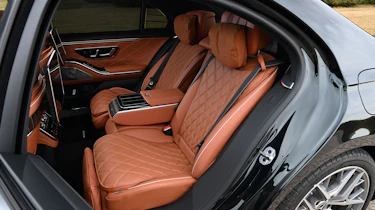
Sometimes experience shows, and in the case of Mercedes its seats, space and general comfort levels are top of the class. The seats are brilliantly comfortable, offer masses of adjustments, heating, cooling, massage and adjustable bolsters. Other cars, especially new-fangled Chinese brands, might offer all these elements on paper, but they actually work in the Merc.
Many of the car’s interior surfaces are also heated, like the armrests and door cards. A world first for the new S-Class – seemingly a prerequisite for any new generation – are its heated seatbelts. Some might equate this to a warm hug from a loved one, but others (including me) might find it a bit creepy.
Space in the front and rear is plentiful, with enough in the second row to stretch out for the outer seats. It does, however, have a large hump in the floor which means the central seat in the second row isn’t as spacious or comfortable.
Things like electric window shades and rear air-conditioning controls are par for the course, but a £7,950 Rear Comfort Package Plus will integrate a motorised footrest and all those same amenities as found in the front row.
Boot space
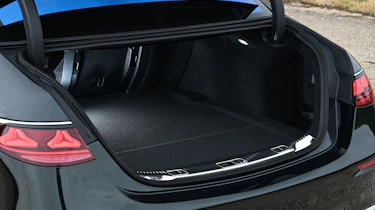
The boot is rated at a relatively average 350-litres, but the actual space is square and relatively wide, meaning you should be able to fit two cases next to one another. It’s not a particularly tall space, though, it’s especially tight on models with a plug-in hybrid powertrain.
Towing
The S-Class is tow-rated at up to 2,100kg with a braked trailer or 750kg without.
Reliability & safety
Pros |
|
Cons |
|
The Mercedes S-Class is not quite a stand-up example of complete reliability, but there’s many reasons for this. It’s not a poorly designed or engineered car, instead it’s actually the opposite. We’ve found that many owners have had issues largely with electronic components, elements that aren’t often found in many other ‘normal’ cars. This includes things like the ultra-complex seats, the air-suspension and the complex infotainment.
However, while so much digitisation could seem problematic, Mercedes has been making its systems more resilient and more open to repair, thanks to its strong connection to the cloud. This means Mercedes will be able to beam down any major updates to make sure the electronics always work as intended.
In terms of safety, the Mercedes S-Class has always been and will continue to be one of the safest and robust new cars on sale. It doesn’t have an official Euro NCAP rating, but this is due to its relatively low volume. It will also be more likely to avoid a crash in the first place thanks to cutting-edge active safety.
| Euro NCAP safety ratings | |
| Euro NCAP safety rating | N/A |
| Adult occupant protection | N/A |
| Child occupant protection | N/A |
| Vulnerable road user protection | N/A |
| Safety assist | N/A |
Buying, prices and deals
Best buy: Mercedes S-Class
The best S-Class is one best suited to your requirements, simple as that. If you regularly do long-winded motorway journeys out of town the frugal diesel, with its superb range and effortless cruising ability, makes it the best buy. However, if your journeys are shorter and more urban, with occasional trips out of town, the plug-in hybrid is certainly preferable. However, we wouldn’t recommend the diesel in town, nor the PHEV for mainly high-speed motorway journeys.
Mercedes S-Class Alternatives
It’s impossible not to mention the S-Class’s electric alter-ego, the EQS. This recently updated model has the longest range of any car on sale in the UK, but it doesn’t make for a great limo on account of its compromised second row. Early iterations were also fairly appalling to drive, and if large wheels are fitted, the ride is pretty average too. However, just like the S-Class, the EQS has undergone a heavy update under the skin, but we’ll have to wait until we drive it later in 2026, before confirming if its improved.
In terms of rivals outside of the Mercedes brand precious few options remain. The key competitor is the BMW 7 Series, which is limited to a single length, but comes with both combustion and all electric powertrains.
The BMW’s lack of a diesel option in the UK does hamper its touring abilities, but the plug-ins are right on the money for range, performance and technology.
The electric BMW i7, however, is arguably the most enticing option in that range, especially with its new 450-mile range, sleek new look and fresh interior. If you need a petrol powertrain, the S-Class is still a compelling choice, but if not, the BMW i7 does that job even better.
Beyond the German pair, there are no other premium-branded full-size saloons on sale. The Audi A8 is effectively dead, and is without a replacement on the immediate horizon. Jaguar’s relaunch will see the flagship model replaced with the Type 01, an electric GT four-door coupe. The Maserati Quattroporte and Lexus LS are also off-sale or out of production, and while the Japanese and Italian brands are keen to replace them, it won’t likely be in the form of a four-door saloon.
Mercedes S-Class pictures
Frequently Asked Questions
Fundamentally yes, it’s one of the very best. But it’s dependent on quite a narrow lens, as actual drivers will find a better ownership experience elsewhere.
Deals on the S-Class and alternatives