BYD is a Chinese car brand, but it wants to be European
It turns out that European and Chinese drivers expect many different things from their cars, so BYD is taking drastic action

Many automotive newcomers from the Far East, such as BYD and Jaecoo, are already seeing strong sales figures over here, and this is at least partly due to their highly competitive pricing. However, even when we’ve tested some of the very best Chinese cars on sale in the UK, we often find quirks that don’t really suit British or European drivers.
While they’re not necessarily bad per se, things like continuous safety chimes and six-seater cars simply aren’t striking a chord with us Brits and our continental neighbours.
But with customer feedback starting to flow in at a much steadier rate than in the early days, a number of Chinese car brands are starting to realise the unintentional errors of their ways.
We’ve already seen some models receive a bit of nip-and-tuck or some light technological tweaks in order to improve their appeal, but BYD is taking a much bolder - and potentially riskier - approach.
A carmaker opening up premises in another country isn’t exactly newsworthy, but it’s BYD’s attitude towards this venture that makes it rather intriguing. Instead of simply tarting up its domestic market cars and hoping for the best, the brand’s bosses have opted to invest a huge amount of money and resources into an exclusive line-up for Europe. This includes a new R&D centre and factory in Hungary, along with a design team based in Milan.
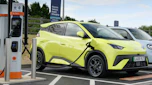
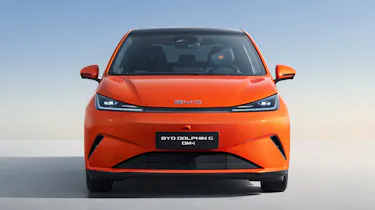
The recently-revealed BYD Dolphin G is the first result of this endeavour, and it’s a sign of things to come with more compact and mid-size models planned. This plug-in hybrid supermini won’t be sold in China at all, which is a first for a Chinese car company.
So why all the effort? BYD’s special adviser for the European market, Alfredo Altavilla, told Auto Express “There’s no doubt that Chinese and European customer needs are differentiating even more. For example, it is now hard to find any Chinese car that’s shorter than 4.8 metres. Also, the typical highway speed limit in China is 90km/h, while Europe has the Autobahn.”
While the Autobahn situation is exclusive to Germany, 90km/h is roughly 55mph, so China’s roads tend to move at a much slower pace than virtually all of Europe’s motorways. “At 90km/h any car is good ” claims Altavilla, “But we need to make cars that are good for the autobahn, cars that are good for the whole of the UK, and cars that are good for the mountain roads in Italy.”
It’s a bit of a double-whammy in terms of the differences between European and Chinese drivers, then. On the one hand, each side has its own preferences in terms of size, space and features, while on the other side, the roads and speeds can differ considerably. By designing bespoke components and chassis set-ups for its dedicated European models, BYD hopes to bring its cars far more in line with the legacy brands. The question now, though, is whether this huge gamble will be a sales success or a financial flop.
Bag yourself a BYD with Auto Express! We have new, used and leasing deals to choose from...