BMW X1 review
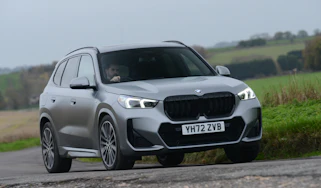
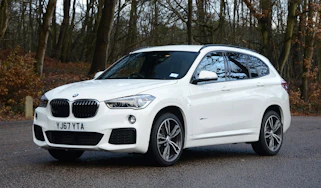
The BMW X1 is a small premium SUV that offers plenty of interior space, excellent on-board technology, and efficient engines


Our opinion on the BMW X1
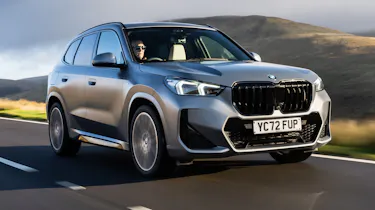
The third generation BMW X1 is the best yet, as this premium small SUV offers numerous upgrades over the old car. It’s more spacious inside, the on-board tech has been significantly upgraded, and hybrid technology helps the petrol and diesel engine line-up to deliver greater efficiency. Plug-in hybrid models are also available, which widens the appeal of the X1 even further, particularly for business users.
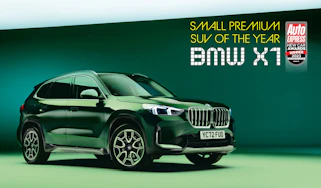
Downsides? Well, the ride can be a little firm, particularly with the M Sport suspension set-up, and there are rivals that are cheaper to buy. The flaws are minimal, though, and we’ve been so impressed by the X1 that we’ve previously named it as our Small Premium SUV of the Year at the Auto Express New Car Awards.
About the BMW X1
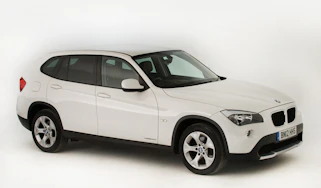
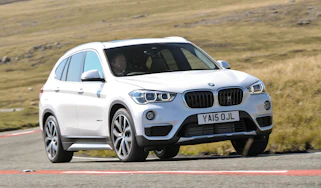
If truth be told, the first-generation BMW X1 didn’t quite deliver the goods. It was rather drab to look at, while its lacklustre interior and dreary diesel engines certainly weren’t of the calibre buyers had come to expect, especially from a brand that took pride in making ‘The Ultimate Driving Machine’.
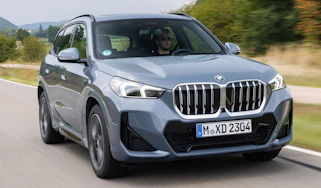
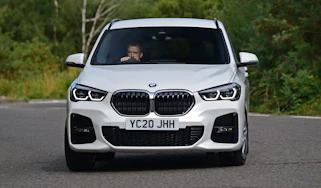
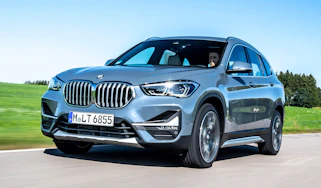
The third-generation BMW X1 has matured into a capable family car that’s come a very long way from its ancestor. This car offers more interior space than before, improved on-board technology and an appealing blend of performance and economy. It’s these attributes that are helping it to win over customers in this competitive market.
Used - available now


For those thinking about switching to fully electric motoring, the iX1 is a very closely related alternative to the regular X1. If that’s the car which appeals to you, we also have a dedicated BMW iX1 review.
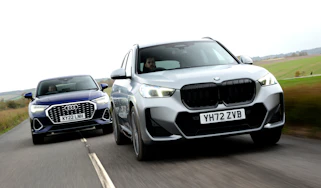
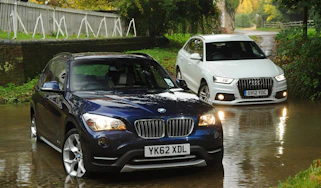
We’ve tested the X1 numerous times over the years, including a twin test against the Audi Q3. The BMW came out on top due to its superior in-car tech and driving experience, not to mention impressive fuel efficiency. However, our road testers believed the Q3 was the more comfortable option for those covering a lot of miles. It’s important to note that a newer-generation Audi Q3 has replaced the Q3 used in this test, so the results might be slightly different if the two were tested together again.
Performance & driving experience

Pros |
|
Cons |
|
BMW has achieved a sweet spot with the X1 whereby, if you’re a keen driver with a growing family, you won’t feel too short changed if you choose this model as your daily set of wheels.
Performance is strong whether you opt for petrol, diesel or hybrid power, although the xDrive30e plug-in hybrid is seriously rapid for a family car. Of course, if you want the very biggest thrills, there’s always the X1 M35i.
| Model | Power | 0-62mph | Top speed |
| BMW X1 sDrive20i Sport | 167bhp | 8.3 seconds | 134mph |
| BMW X1 sDrive18d Sport | 148bhp | 8.9 seconds | 130mph |
| BMW X1 xDrive30e M Sport | 322bhp | 5.6 seconds | 127mph |
Performance, 0-60mph acceleration and top speed
If you’re after the fastest standard X1 model, then either of the two available plug-in hybrids will be your best bet. The 242bhp xDrive25e manages 0-62mph in 6.8 seconds, while the 322bhp xDrive30e is able to cover the same benchmark in an impressive 5.6 seconds.
The entry petrol (sDrive20i) and diesel (sDrive18d) models need 8.3 seconds and 8.9 seconds, respectively, to cover the 0-62mph sprint. The 215bhp xDrive23i petrol and xDrive23d diesel versions sit in the middle of the pack in terms of sprinting ability, with respective 0-62mph times of 7.1 and 7.4 seconds.
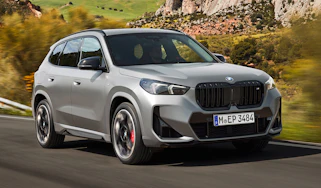
If you have a real desire for outright speed, the X1 M35i is powered by a 2.0-litre turbocharged four-cylinder petrol engine with 296bhp and 400Nm of torque. This performance SUV sprints from 0-62mph in just 5.4 seconds and reaches a top speed of 155mph.
Town driving, visibility and parking
Although it's an SUV, the BMW X1 still feels compact enough to weave through city streets without mishap. The steering also feels notably light, so awkward manoeuvres are easy to deal with. Thanks to its slightly raised driving position and sizable windows, all-around visibility is good, while a standard-fit reversing camera makes parking even easier.
The seven-speed automatic transmission is less impressive because we found it slow to respond when pulling away at junctions or roundabouts. This does make in-town driving more problematic than it should be. However, once the X1 hits more open roads, it’s perfectly fine.
Country road driving and handling
Put simply, the BMW X1 is one of the most engaging small SUVs on sale. Yes, you sit higher up than in the 1 Series hatchback, but the X1 offers plenty of grip through tighter turns, while body roll is kept to a minimum.
However, that aforementioned light steering is a downside here. We’d like a little more feedback from the wheel as it can feel a bit detached at higher speeds. It’s still quick in its operation when you need it to be, though.
Motorway driving and long-distance comfort
The X1’s sporting prowess means it’s firmer than the likes of the Audi Q3, but it’s still a comfortable enough cruiser on the motorway. If you’re planning lots of long jaunts, we’d suggest opting for the smallest possible wheels, because these will help to soften things just that bit further.
Wind and tyre noise aren’t an issue in the X1, and we found none of the engines droned loudly enough to leave our testers’ ears ringing after a long drive. There’s more than enough power on tap from every powertrain for getting up to speed and overtaking, too.
“The gearbox is reasonably smooth on a country road, but very laggy when pulling away from a standstill or at low speeds. You’ll either need to plan well ahead or exercise a lot of patience.” - Dean Gibson, senior road test editor.
MPG & running costs
Pros |
|
Cons |
|
Diesel-powered cars are becoming a rarer sight in the age of electrification, but the X1 diesels offer impressive figures in isolation. All versions deliver 52 to 60mpg on the WLTP combined cycle, with CO2 emissions from 133 to 140g/km. It’s also worth noting that the higher-powered xDrive23d model is actually more efficient than the sDrive18d thanks to the use of mild-hybrid technology.
While the petrol models will probably appeal to more performance-focused buyers, the standard models are still reasonably efficient thanks once again to mild-hybrid tech. The sDrive20i can officially return just over 49mpg on the WLTP combined cycle, and the xDrive23i isn’t too far behind at 44.1mpg. However, during our time living with the xDrive23i, our long-term test car only managed a real-world average of 35.2mpg, which is some way off BMW’s claims.
As you probably expected, the fiery M35i is the thirstiest X1, with an on-paper best of only 36.7mpg. Floor it, and you can expect this figure to take a nosedive.
| Model | MPG | CO2 | Insurance group |
| BMW X1 sDrive20i Sport | 49.6mpg | 128g/km | 25 |
| BMW X1 sDrive18d Sport | 56.5mpg | 131g/km | 24 |
| BMW X1 M35i xDrive | 36.2mpg | 175g/km | 35 |
Electric range, battery life and charge time
You’ll pay more to buy an X1 plug-in hybrid model than a regular petrol or diesel version, although this cost is at least partly offset by improvements in overall economy and lower emissions, provided you regularly charge the battery.
BMW claims that the combined economy figure for either PHEV model is in excess of 100mpg. However, it’s a rule of thumb that a plug-in hybrid’s on-paper figures are notoriously difficult to achieve in the real world. We’d expect the overall fuel economy figure of these cars to be closer to that of the diesels. The X1 PHEVs also claim up to 54 miles of pure-electric driving, which is pretty good. However, the Audi Q3 e-hybrid is even better, with 72 miles of range.
| Model | Battery size | Range | Insurance group |
| BMW X1 xDrive 25e M Sport | 16.3kWh | 52 miles | 31 |
| BMW X1 xDrive30e M Sport | 16.3kWh | 51 miles | 34 |
Insurance groups
Arranging insurance cover for the BMW X1 won’t be particularly cheap. Although the entry-level sDrive20i petrol models start in group 25 (out of 50), the base sDrive18d diesel is a tiny bit lower in group 24. The more powerful petrol and diesel models, meanwhile, sit in groups 30 to 35. If you’re eyeing up one of the PHEVs, these range from group 31 to 33. In comparison, the Audi Q3 will incur similar premiums to the BMW because it resides in groups 22 to 32.
We were quoted £701 when covering our long-term xDrive23i M Sport, based on a 42-year-old male living in Oxfordshire with three licence penalty points.
Tax
Every X1 qualifies for the standard rate of VED road tax, while its premium pricing structure pushes several models into the clutches of the luxury car tax surcharge. The PHEVs offer reduced Benefit-in-Kind (BiK) company car tax rates thanks to their lower emissions, but for the very biggest savings you’ll be better off with the fully electric BMW iX1.
Regardless of whether you opt for the plug-in hybrid X1 or the electric iX1, both of these cars might be subject to the eVED pay-per-mile fee if it comes into force from April 2028 as planned.
Depreciation
Our market data shows that the BMW X1 does a reasonably good job of resisting depreciation. After an ownership period of three years or 36,000 miles, the X1 retains between 46 and 51 per cent of its initial value. The electric BMW iX1 doesn’t fare quite as well, though, at 44 to 49 per cent after the same amount of time. The Audi Q3 is a pretty equal performer to its combustion-powered counterpart here, because it holds on to between 44 and 52 per cent over the same period.
To get an accurate valuation on a specific model check out our free car valuation tool...
Interior, design & technology
Pros |
|
Cons |
|
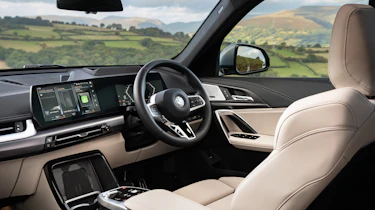
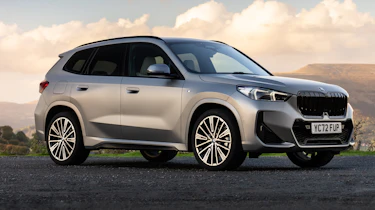
BMW has increased the size of the X1 so it now looks more commanding on the road, and there’s enough interior space for it to be considered a genuine everyday family car. Its 0.27 drag coefficient means it cuts through the air more smoothly, too, which adds to its sense of refinement.
Interior and dashboard design
The X1’s interior design consists of a bespoke fascia with a pair of curved screens taking centre stage, while the quality of the cabin materials has noticeably improved over the previous model.
The layout is ergonomically sound, although there are fewer physical buttons and switches than before. This includes removing the rotary iDrive controller, and we’re not yet convinced it's an improvement. Storage-wise, there’s a small tray located in the armrest with a larger space underneath, while we like the way smartphones are held in place with a useful hinged clip.
Materials and build quality
We experienced a few technical niggles with our BMW X1 xDrive23i long-term test car. After conducting a series of routine software updates via the iDrive infotainment system, the car’s fuel gauge and range readouts started displaying incorrectly, and the interior light often switched itself on for no apparent reason. Apart from these relatively small faults, the technology impressed us overall.
We have no qualms about the X1's general build quality, though; it feels solid and durable.
Infotainment, sat-nav and stereo
While touchscreens are much faster for entering commands when parked, the discontinued click wheel was perfect for minor tweaks to settings on the move, because you didn’t need to take your eyes off the road.
BMW reckons that its voice-recognition tech is now good enough to take this controller’s place. The system will learn your accent and mannerisms over time, and it seemed to be mostly accurate during our testing, only once confusing a radio station request.
As with many other BMWs, the X1’s climate controls have moved to the screen. While we’d prefer physical switches, these are one of the best of their type; the temperature settings are unobtrusive, and the full menu is easily accessible. One minor gripe is that some screen shortcuts are very small.
“The cabin is far better equipped and much higher in quality than I expected from such a relatively humble member of BMW’s model range. It doesn’t feel like a second-class citizen beside an X5, for example. From this specific point of view, it’s a masterstroke of design and engineering.” - Steve Sutcliffe, special contributor.
Boot space & practicality
Pros |
|
Cons |
|
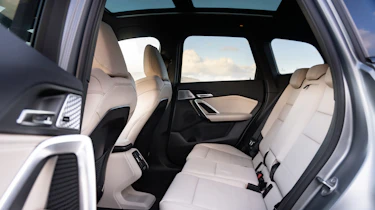
The BMW X1 is a spacious family car, offering lots of practical touches to help make journeys easier and more comfortable. Standard equipment for the entry-level Sport trim includes a power tailgate, dual-zone climate control, cruise control with a braking function and BMW’s Parking Assistant system, which includes a reversing camera.
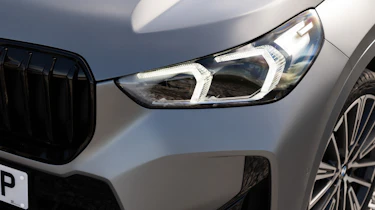
For around £3,500, the Technology Plus Pack adds a little extra practicality with equipment such as adaptive LED headlights, power-folding wing mirrors, BMW’s Comfort Access system (which provides keyless entry to the vehicle and allows you to open the tailgate with a sweeping movement of your foot under the rear bumper) and a head-up display.
Dimensions and size
The latest BMW X1 is bigger than its predecessor, which is why it benefits from so much extra interior space.
| Dimensions comparison | |||
| Model | BMW X1 | Audi Q3 | Mercedes GLA |
| Length | 4,500mm | 4,531mm | 4,412mm |
| Width | 2,104mm | 2,087mm | 1,834mm |
| Height | 1,642mm | 1,588mm | 1,616mm |
| Wheelbase | 2,692mm | 2,681mm | 2,729mm |
| Boot space |
500 litres 490 litres (PHEV) |
488 litres 375 litres (PHEV) |
495 litres 445 litres (PHEV) |
Seats & passenger space
An increase in overall size means the latest X1 is more spacious than an Audi Q3 or Mercedes GLA.
Front passengers didn’t have too many complaints in the old model, and they’ll be able to stretch out in the current car, too. This time, those in the rear shouldn’t find themselves complaining too much, either, with good head and knee room, while the reclining seat backs make things even more comfortable. If you want the flexibility of being able to slide the rear seats back and forth, you’ll need to stump up a further £330.
Boot space
The X1 has a 500-litre boot, which is slightly more than you’ll find in a Mercedes GLA or Audi Q3. All models feature a 40:20:40 split rear seat configuration and, if you fold all the seats forward, you’ll have a huge 1,545 litre cargo capacity. There’s also a handy under-floor area in the X1 where you can store soft bags or oddments.
Towing
If you want your petrol- or diesel-powered X1 to handle regular towing duties, then you’ll want the xDrive23i or xDrive23d models, because both are rated to tow up to a 2,000kg braked trailer or caravan. The sDrive20i and sDrive20d aren’t much weaker, though, at 1,800kg. The plug-in hybrid xDrive30e matches this 1,800kg limit, while the xDrive25e tops out at 1,700kg. The fastest X1 is also the weakest of the bunch, as the M35i can only take on up to 750kg.
If your caravan or trailer is particularly bulky, though, you may wish to look towards the Audi Q3 instead, because this can handle up to 2,100kg.
“The X1 is meant to fit right into your life with surprising ease and, for me, it achieves precisely that. How come? Because it does all the practical stuff far better than I ever imagined it might. It’s also roomier in all directions than I thought it was going to be.” - Steve Sutcliffe, special contributor.
Reliability & safety
Pros |
|
Cons |
|
Industry safety body Euro NCAP awarded the X1 a top five-star rating in 2022, and its impressive scores in each individual category should mean buyers feel reassured when considering the X1, particularly as their next family car.
However, if you want the full array of safety and driver assistance systems, you’ll need to invest an extra £720 in BMW’s Driver Assistance Plus pack. This adds in tech like adaptive cruise control, lane control assist, automatic speed limit assist and lane departure warning. We can’t help feeling that this is perhaps a bit tight considering a number of the X1’s rivals include such technology as standard.
The BMW X1 didn’t appear in the most recent Driver Power owner satisfaction survey, but the brand landed an admirable fifth place out of 30 in the best manufacturer results. Build quality and on-board technology were two particular strengths, but running costs were a predictably sore subject. The only German premium brand to outperform BMW was Mercedes, as it topped the chart.
| Euro NCAP safety ratings | |
| Euro NCAP safety rating | Five stars (2022) |
| Adult occupant protection | 86% |
| Child occupant protection | 89% |
| Vulnerable road user protection | 76% |
| Safety assist | 92% |
Buying, prices and deals
Best buy: BMW X1 sDrive20i xLine
Considering that the base sDrive20i petrol provides ample performance and sensible efficiency, we’d stick with this powertrain as you’ll be able to keep the purchase price under control without making any major sacrifices. This model starts from around £37,000 in base Sport trim. However, we think it’s worth bumping the price up a bit to just over £39,000 for the xLine trim. This helps to make the X1 feel more like a proper premium car with touches like automatic air-conditioning and Veganza upholstery.
Whichever variant has caught your eye, you can save on the list prices by building your new BMW X1 with the Auto Express Buy A Car service. We also have a selection of X1 leasing deals and used X1 models to choose from.
BMW X1 alternatives
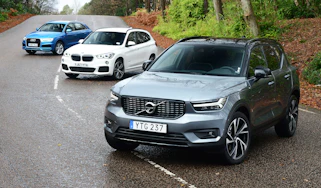
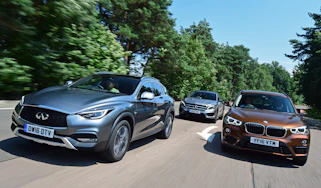
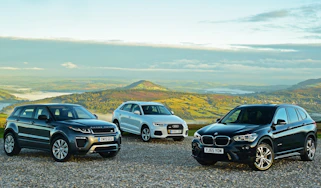
The BMW X1 has no shortage of upmarket small SUV rivals. The Audi Q3 and Mercedes GLA are the entrants from this brand’s long-standing German rivals, while the Range Rover Evoque and Volvo XC40 are equally convincing options from further afield.
For similar money, you could also buy a high-spec SUV from a more mainstream brand, meaning far more fancy kit. The Volkswagen T-Roc, Skoda Karoq, Mazda CX-30 and Peugeot 2008 are just some of the many potential choices here.
Of course, if you’re one of the many drivers considering an electric car, the BMW iX1 is obviously the closest X1 alternative. Elsewhere, though, there’s also the Mercedes EQA, Audi Q4 e-tron, Volvo EX40 and Genesis GV60 to consider.
BMW X1 pictures
Key updates of the BMW X1 review
- 14 October 2026: Latest depreciation and Driver Power data.
- 13 February 2026: Updated powertrain and trim level information.
Frequently Asked Questions
BMW offers a three-year, unlimited mileage warranty for the X1, which also includes a three-year subscription to the BMW Emergency breakdown service. This is better than the 60,000-mile limit provided by Audi. BMW’s paintwork warranty lasts for three years, while its anti-corrosion warranty covers 12 years.
Buyers can extend their BMW warranty after the three-year period with further plans offered at an extra cost via monthly or annual payments.
Deals on the X1 and alternatives