Peugeot 3008 review
There’s no denying that the Peugeot 3008 is stylish, but the EV is flawed, and all versions contain frustrating tech

Our opinion on the Peugeot 3008
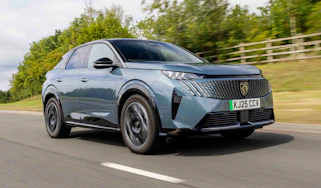
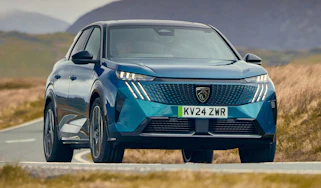
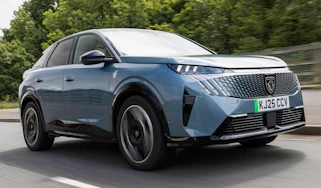
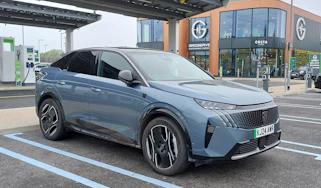
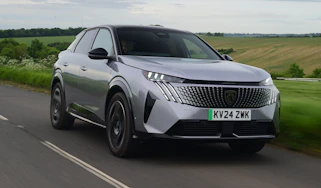
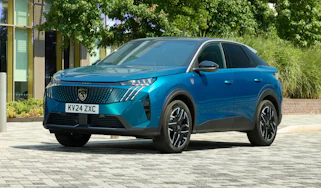
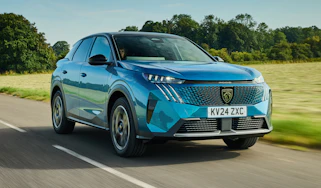
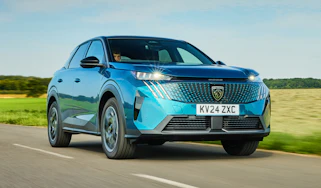
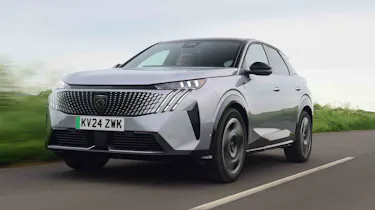
The third-generation Peugeot 3008 looks the part with a rakish, coupe-like profile that’s complemented by a dramatic interior that really stands out against its rivals. Overall quality is also impressive, too.
Sadly, the 3008’s driving experience lets it down, with a jiggly ride and steering that lacks the responsiveness of the best in its class, and the infotainment system is distracting to use while on the move. Those interested in the electric E-3008 are likely to be disappointed by its range and charging speeds, and this particular 3008 loses value more quickly than its petrol and plug-in hybrid counterparts.
About the Peugeot 3008
As your maths teacher would concur, the 3008 is a mid-size SUV that sits between the Peugeot 2008 and Peugeot 5008 in the brand’s line-up. Buyers have the choice of mild-hybrid or plug-in hybrid power, along with the fully electric Peugeot E-3008.
Underneath you’ll find the same platform as the Vauxhall Grandland, but the Peugeot sports a far more striking design both inside and out.
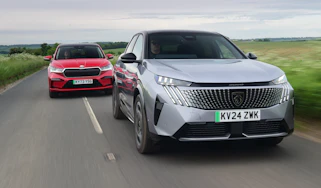
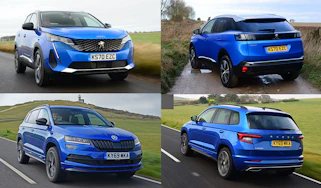
We’ve tested petrol and EV versions of the 3008 extensively in the UK. In our 2024 twin test, the electric E-3008 went up against a Skoda Enyaq Coupe and lost, mainly due to its firm ride. Our 2026 PHEV megatest saw the 3008 plug-in hybrid in 14th place out of 16 cars.
Peugeot 3008 prices and latest deals
The Peugeot 3008 is available in two trim levels and one high-end dual-motor electric model with four-wheel drive. Pricing is toward the premium end of the mid-size SUV market with three trim levels on offer:
Used - available now


- Allure (from £33,000)
- Allure Premium (from £34,000
- GT (from £36,200)
- GT Premium (from £37,700)
These prices reflect the mild-hybrid models, with the equivalent PHEVs adding around £7,000 on top. For those in the market for the Peugeot E-3008, this starts from £35,000 in Allure trim.
Our Buy A Car service lets you spec your ideal Peugeot 3008 and select the best offer from top dealers around the UK. Alternatively, you can lease a Peugeot 3008 or buy a used Peugeot 3008. We can help you sell your car, too.
Performance & driving experience
Pros |
|
Cons |
|
The majority of the 3008 range comes with front-wheel drive, while four-wheel drive is reserved for the range-topping Dual Motor version of the electric E-3008. You can add advanced grip control for £300, which has a dedicated drive mode designed to help out in slippery conditions.
The 1.2 Hybrid uses a six-speed automatic gearbox, while the plug-in hybrid has a seven-speed auto. The electric E-3008 has a single-speed configuration like most EVs and is available with three different power outputs and two different battery sizes of 73kWh and 97kWh in capacity.
| Model | Power | 0-62mph | Top speed |
| 3008 1.2 Hybrid Allure | 145bhp | 10.2 seconds | 125mph |
| 3008 1.6 Plug-in hybrid 195 e-DSC7 Allure | 195bhp | 7.8 seconds | 137mph |
| E-3008 73kWh 210 Allure | 213bhp | 8.8 seconds | 105mph |
Performance, 0-60mph acceleration and top speed
Once on the move, the 145bhp 1.2 Hybrid provides decent mid-range performance, but its 10.5-second 0-62mph certainly isn’t quick by today’s standards. If you need a bit more get up and go, the 195bhp 1.6 plug-in hybrid manages the same sprint in 7.8 seconds and feels a lot faster.
The electric E-3008 range starts with the 213bhp 210 model, which has a decent 8.8-second 0-62mph time. The extra weight of the 231bhp long range version counteracts the additional power it has, so it’s only marginally quicker with an 8.7-second acceleration time. Finally, the 325bhp dual motor model is the quickest E-3008, with a lively 0-62mph time of 6.0 seconds.
Town driving, visibility and parking
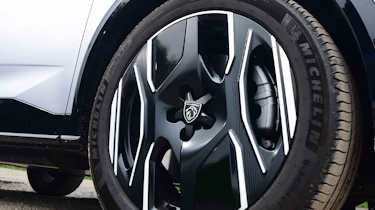
The petrol Peugeot 3008 (particularly on the smaller 19-inch wheels of Allure trim) provides a more tolerable ride than the electric E-3008, which is hampered by a very firm low-speed ride. You feel every facet of the road surface in the electric version, every sunken drain cover, and every impact with potholes.
Some credit should be given to noise isolation, because you don’t hear thuds from the suspension after hitting a bump, and road noise is well subdued. It’s a shame that the 1.2-litre petrol isn’t a bit more refined around town, sounding a little coarse under acceleration for what is supposed to be a premium mid-size family SUV.
The brakes of this mild-hybrid also take some getting used to. During our test drives, we found there’s a long pedal travel and a pronounced switch-over sensation when the system moves between the regenerative braking to the mechanical disc brakes, which robs you of some confidence.
Another annoyance we found with the 1.2-litre is that there’s a significant pause between putting your foot down on the accelerator pedal and the 3008 moving. Now, it isn’t the only modern car we’ve found to be like this, but it’s still something we’d have hoped the small electric motor would have assisted with by giving an initial bump of power off the line that would make merging into gaps in the traffic easier. We also don’t like the lack of an auto-hold function, like you’ll find on a Volkswagen Tiguan, which can hold the car as you transition from the brakes to the accelerator without the vehicle rolling back.
The electric E-3008 also has a slight lag when setting off, but it’s nowhere near as pronounced. Just like the petrol version, there is an obvious transition between regen braking and the mechanical brakes, although you can help the situation by using the steering wheel paddles to adjust the level of regen braking. In its strongest setting, you can do the majority of your slowing down without touching the foot pedal. We’d still like to see a stronger one-pedal drive mode introduced, because you do still have to use the brake pedal to come to a stop below 5mph.
All 3008 and E-3008 models have light steering that makes manoeuvres around town a doddle, although we find the squared shape of the wheel isn’t the best for quickly winding steering lock on when parking.
Country road driving and handling
When we got the E-3008 out of town onto some twisty roads it had a tendency to thud into compressions and there was plenty of side-to-side head toss when going over bumps. It also struggles to contain its near-600kg of extra mass compared with the petrol version over undulations, ultimately feeling a bit unsettled over bumps. The lighter 1.2 version coped better on similar roads, but it still isn’t as comfortable as a Hyundai Tucson would be.
The light steering of this Peugeot, which is quite helpful around town, is less useful at higher speeds. There is a ‘sport’ driving mode, which makes it heavier, but that doesn’t improve the driving experience because we found the steering felt a bit gloopy and imprecise in this mode. Grip levels are high, and there isn’t too much body lean in the bends, so you’re able to confidently carry some speed.
We found it worthwhile to use the ‘sport’ mode at higher speeds in the E-3008 for better accelerator response, which can be a little lacking in the regular ‘normal’ driving mode beyond 50mph.
Motorway driving and long-distance comfort
Motorways are where the 3008 and E-3008 feel most at home. Refinement is very good and the ride is, generally, settled. Only encounters with potholes and expansion joints upset it.
The test cars we tried had the optional Sensation pack, which includes laminated front side windows to reduce the amount of noise caused by wind going over the door mirrors at higher speeds, and we think it certainly helps to lower the amount of disturbance you’ll hear. However, this is only available on GT trim cars. While it does also include a nice uprated Focal sound system, we’re not sure it offers the best value for money at over £1,200. Only consider it if you cover a lot of motorway miles.
“Electric car fans will be pleased to know that the E-3008 remembers the level of regenerative braking you selected every time you restart the car, rather than reverting to a default setting.” – Max Adams, online reviews editor.
MPG & running costs
Pros |
|
Cons |
|
The mild-hybrid technology fitted to the 1.2-litre petrol helps it to return a WLTP figure of 52.3mpg, which is significantly up compared with the equivalent mild-hybrid petrol in a Volkswagen Tiguan and even the full hybrid Hyundai Tucson.
We’d expect mpg fuel economy in the low to mid forties should be achievable in the real world, given that’s what the same engine in the bigger and slightly heavier Peugeot 5008 achieved on our long-term test fleet.
As combustion-powered 3008s go, the 1.6 plug-in hybrid leads the way in terms of official efficiency, with a combined WLTP figure of 112mpg. However, as is often the case with PHEVs, this figure is pretty optimistic outside of a laboratory setting. We saw a real-world average of 42.7mpg during our PHEV megatest.
| Model | MPG | CO2 | Insurance group |
| 3008 1.2 Hybrid Allure | 52.3mpg | 123g/km | 22 |
| 3008 1.6 Plug-in hybrid Allure | 112.9mpg | 19g/km | 32 |
Electric range, battery life and charge time
Our long-term test of an E-3008 yielded an average of 3.9 miles/kWh, while a road test comprising mostly motorway and some spirited driving over the North Yorkshire Moors saw a creditable 3.7 miles/kWh over around 300 miles. We expect that you should be able to achieve around 280 miles from a charge of the 73kWh battery version based on these efficiency figures.
Anyone needing to go further will be looking towards the 435-mile, 97kWh long range E-3008, which is 20kWh and 60 miles more than the largest capacity battery version of the Skoda Enyaq Coupe can manage.
Those likely to use their E-3008 in colder weather should specify the optional heat pump for £700, which is a more reasonable price compared with the Enyaq, where the same thing costs £1,000.
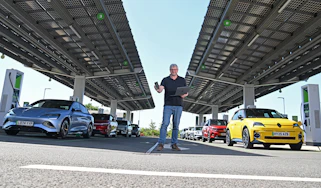
Unfortunately, the E-3008 was a disappointment in our 2025 electric car charging test, because the 73kWh model tested couldn’t reach its peak charging speed of 130kW, only achieving 123kW and even then, only for three minutes. It took nearly 40 minutes to top the battery state of charge up by 60 per cent (Peugeot quotes 30 minutes to top up from 20 to 80 per cent state of charge, the typical amount you might top up by on a long motorway drive). Alternatives like the Hyundai Ioniq 5 or Kia EV6 charge significantly quicker, with a similar top up taking less than 20 minutes on an appropriately quick rapid charger.
We also found that charging is significantly slowed above 80 per cent state of charge, taking 74 minutes to go from 80 to 100 per cent on our 350kW test charger. Our advice is to only top up to 80 per cent when using a rapid charger and then unplug and continue to your next charging stop, if one is needed.
Most EV owners will take advantage of home charging, and a typical 7.4kW home wallbox charger will take around 12 hours to fully recharge the 73kWh model, while the 97kWh version will take 15.5 hours to do the same.
We’re yet to try the plug-in hybrid version, but what we can say is that its smaller 21kWh battery (17.9kWh usable) gives over 50 miles of EV range and will take just over five hours to fully recharge using a wallbox.
| Model | Battery size | Range | Insurance group |
| E-3008 73kWh GT | 73kWh | 326 miles | 33 |
| E-3008 97kWh Allure Long Range | 97kWh | 435 miles | 33 |
| E-3008 73kWh Dual Motor | 73kWh | 303 miles | 40 |
Insurance groups
The petrol 3008 range starts in group 22 for the 1.2 Hybrid, rising to group 32 for the 1.6 plug-in hybrid. Those needing less expensive insurance might want to look at either a Tucson or Tiguan, both of which start in group 18.
The electric E-3008 range also starts in group 32 for the least expensive 73kWh Allure, while the 97kWh long range Allure is in group 33. That’s competitive with the Renault Scenic (group 33-34), but behind the Ford Capri (groups 21-33). The high-performance dual motor model is in group 40.
Tax
The electric E-3008 will be the top choice for company car drivers thanks to it attracting the lowest applicable benefit-in-kind (BiK) tax rates.
Depending on your chosen trim and powertrain, the 3008 is at risk of surpassing the £40,000 combustion luxury car tax threshold. If you do this, you’ll be faced with an additional £440 charge on top of your annual tax bill. The Peugeot E-3008 steers clear of the higher £50,000 bracket for electric cars.
Depreciation
The regular petrol and plug-in hybrid Peugeot 3008 models aren’t the best at holding on to their value when compared with rivals. Our market data shows that the combustion 3008s only retain around 41 to 44 per cent of their original sale price after three years or 36,000 miles.
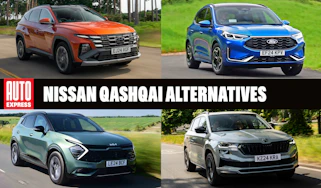
The Nissan Qashqai is a stronger performer in this regard, as it should maintain 46 to 49 per cent over the same period. The Hyundai Tucson is better still, at 47 and 53 per cent.
In contrast, the electric E-3008 suffers a far more costly fate, only being worth between 37 and 39 per cent of its original value after the same three-year period. This places it behind the closely-related Vauxhall Grandland Electric, which should still be worth 43 to 46 per cent after the same amount of time.
Interior, design & technology
Pros |
|
Cons |
|
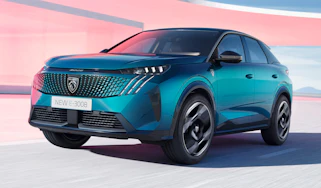
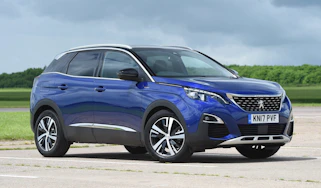
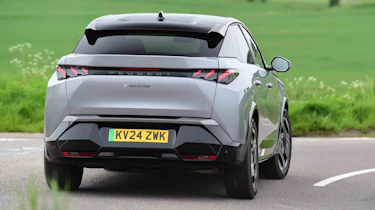
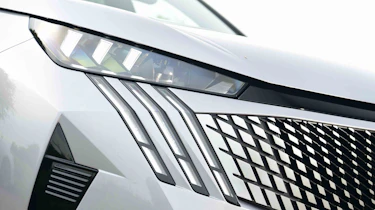
Given that there’s already the practical Peugeot 5008 in the range, the 3008 can take on a more svelte look than its predecessor, hence its coupe SUV styling rather than the more boxy lines of its Tiguan and Tucson rivals.
We’re fans of the standard Obsession Blue paint colour, which really shows off the lines of the 3008 in their best light. There are five further colour choices for £750 each, but they don’t stand out quite as well.
Our preferred trim is the entry-level Allure. It comes with all the basics including:
- 19-inch alloy wheels
- 21-inch instrument cluster
- Rear parking sensors
- Sat-nav
- Wireless smartphone charging
We think the £300 AGR Driver’s seat pack and front seat heating is a worthwhile extra to add to Allure trim in order to get heated front seats and lumbar support for the driver’s seat. You may also want to add the £700 360-degree ‘vision and drive assist pack’ to get adaptive cruise control, blind spot monitoring, rear cross traffic alert and a surround view camera system.
Moving up to GT trim adds adaptive cruise control, front parking sensors, an electric tailgate, and heated front seats. It also has adaptive LED headlights for better illumination at night without dazzling oncoming traffic.
The top-of-the-range GT Premium rounds out the range with blind spot monitoring, a 360-degree camera system, heated rear seats, and 10-way electric front seat adjustment with driver's side memory.
Interior and dashboard design
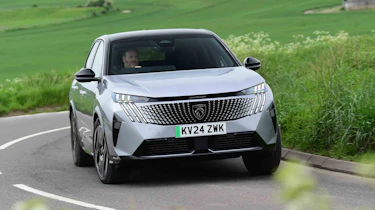
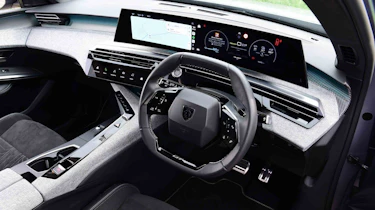
The previous Peugeot 3008 wowed us with its interior design, and the latest second generation 3008 continues to be visually alluring with a swooping dash design and centre console that helps create separate pods for the driver and front seat passenger. A massive 21-inch curved digital display sits atop the dash and links the driver’s instrument cluster to the central touchscreen.
Below the air vents is another touchscreen with the brand’s i-Toggle switches and the gear selector to the right. In our experience, we’re not sure this is the best place for the gear selector because we often had to reach across to where the drive mode switch is when trying to put the car in ‘drive’ or ‘reverse’.
We particularly like the ambient interior lighting of GT trim, which provides subtle illumination of the dashboard and central storage area at night. It makes it look more like a piece of sculpture than something as mundane as a car dashboard.
Materials and build quality
The areas that you come into contact with regularly in the 3008 look and feel as though they belong in a premium SUV, which is just as well given its price. All versions feature a ‘Graphene’ carbon effect dashboard covering that also extends to the front doors. It’s a lot more visually appealing than the acres of piano black plastic you’ll find in rivals, which is likely to lose its lustre over time, collecting an obvious layer of dust, fingerprints, and scratches. We would warn about being careful with spillages in the 3008 to avoid staining this material, though.
Infotainment, sat-nav and stereo
All versions of 3008 feature the brand’s i-Toggles, which were first introduced on the smaller Peugeot 308, and comprise a row of customisable shortcuts on a thin digital touchscreen to help when navigating the infotainment system.
Unfortunately, the infotainment of the 3008 ranked ninth out of the 10 systems tested as part of our test of car infotainment systems. It proved to be one of the more distracting systems to use, with slow response times and a more cluttered menu layout than less perplexing rivals. It’s just not as easy to use as the one you’ll find in the Tiguan or Skoda Enyaq Coupe.
The system has also proven to be glitchy at times, with all the screens in the Peugeot 5008 we ran on a long-term test (which uses the same infotainment system) going blank a few times while driving. The solution is a hard reboot (stopping and switching the car off and on again) in order to restart the screens.
A 10-speaker, 690-watt Focal sound system is available on GT and GT Premium trims as part of the pricey £1,200 Sensation Pack.
“I found that the infotainment system kept dropping its wireless Android Auto connection during one journey, despite it being fine for the days up to that point. It was quite happy, however, when I switched to an iOS phone and used Apple CarPlay instead.” – Max Adams, online reviews editor.
Boot space & practicality
Pros |
|
Cons |
|
The latest 3008 takes on a more sporting coupe-like stance similar to the Peugeot 408 to differentiate itself from the larger and more versatile seven-seat Peugeot 5008.
There’s 34-litres of hidden storage space in the front of the 3008, with the majority of this coming from two big compartments within the centre console. The one underneath the armrest is easily accessible to both front seat occupants, but the driver has to reach over the console to get to the one that houses the two USB-C charging ports, so this is easier for the front seat passenger to get to. The glovebox is bigger on left-hand drive cars because the fuse box hasn’t been moved for the right-hand drive cars we get in the UK, cutting into the available space.
We do like the fact that the door bins are lined like you’ll find on a Volkswagen Tiguan because that means small items are less likely to rattle in them.
Dimensions and size
The latest 3008 sits between the Hyundai Tucson and VW Tiguan in terms of length. It’s not as tall as those rivals, highlighting its coupe-like styling. The 3008 has a longer wheelbase and is wider than both of those competitors, which should make it more spacious inside – although our measurements suggest otherwise.
| Dimensions comparison | |||
| Model | Peugeot 3008 | Hyundai Tucson | Volkswagen Tiguan |
| Length | 4,542mm | 4,570mm | 4,539mm |
| Width | 1,895mm | 1,865mm | 1,842mm |
| Height | 1,641mm | 1,650mm | 1,658mm |
| Wheelbase | 2,739mm | 2,680mm | 2,677mm |
| Boot space | 588 litres | 616 litres (577 litres for hybrid and PHEV) | 652 litres (490 litres PHEV) |
Seats & passenger space
The Peugeot i-Cockpit design continues in the latest 3008, and while some of our testers got on with its small, squared-off steering wheel that you have to look over in order to see the driver’s side digital instrument cluster, others still found that the wheel cut off the view of the display. Our advice is still to try it to find out if it works for you before buying.
The driving position is reasonably high up and gives a good view forward. There’s plenty of adjustment in the seats and steering wheel of a 5ft 11in driver to get comfortable, although it’s a shame that lumbar adjustment isn’t standard until you go for the pricier GT trim (is available as a £300 option on Allure), and there’s no seatbelt height adjustment for differing sizes of driver. Electric adjustment with memory settings for the driver’s seat is standard on GT Premium, or as an option with the £1,000 mistral black Alcantara trim on GT cars. It's also annoying that there's no rear windscreen wiper to improve rear visibility when it's raining. It'll only clear the screen with the flow of air at motorway speeds, which isn't especially useful if you're trundling around town.
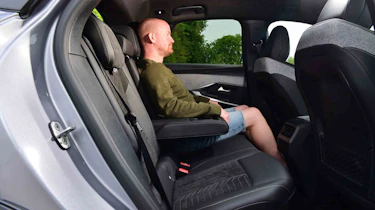
In our testing, a 5ft 11in adult could fit in the back seats behind their driving position, although their head was just touching the roof lining. Our kneeroom measurements for the back seats of the 3008 are 594 minimum and 848mm maximum. That’s a decent amount, but our figures show that both the Tucson (629 - 844mm) and Tiguan (625 - 868mm) offer more space overall. For those who regularly carry taller people in the rear, the more spacious Peugeot 5008 might be a better bet.
On the plus side, the front seats of the 3008 are high enough off the floor to allow those in the back to slide their feet underneath (in this case, wearing size 11 shoes), giving them a chance to stretch out. The 3008 has a flat floor, meaning the middle seat occupant doesn’t need to straddle a large lump in the floor.
A pair of Isofix child seat mounting points are provided on the outer positions of the rear bench, but they’re fiddly to access behind some zips unlike the easily removable plastic covers of a Tiguan or Enyaq Coupe. On GT trim models, a central armrest containing a pair of cupholders that’ll take a regular-sized bottle of water is standard.
Boot space
A family should have no issues with the 588-litre boot, which is handily the same size whether you go for the petrol, plug-in hybrid, or fully electric versions of the 3008. Its uniform shape makes packing easier, and various hooks and straps are provided to keep items in place. There’s also a 12V power outlet should you wish to plug in something like a cool box.
The only downside is that due to its coupe-esque outline, more traditionally shaped rivals like the Hyundai Tucson and VW Tiguan have more boot capacity, at 616 litres and 652 litres, respectively.
The rear seats fold in a 40:20:40 split, which is the same as a Tucson and more versatile than rivals like the Tiguan that only have a 60:40 split. There’s no awkward lump in the floor of the 3008 when the seats are folded down, and only a slight incline in the floor to push longer items up. Total volume is 1,663 litres, which is slightly more than a Tiguan, but behind the 1,795 litre Tucson.
Towing
Towing capacity for the 3008 isn’t particularly outstanding for the class, with the best being the 1,550kg rating for the plug-in hybrid. The petrol only manages 1,200kg, which is significantly down on the 1,600kg of the least capable 1.5 eTSI 130 Volkswagen Tiguan.
For anyone looking at an electric tow vehicle, the best E-3008 is the 1,350kg rating for the dual-motor model, while the long range 97kWh models decrease this to 1,200kg. Neither is all that impressive against the 1,800kg a Kia EV6 can lug around.
“I appreciate that Peugeot has copied VW by providing a latch that holds the boot floor up when accessing the large underfloor storage area, which is easily large enough to store the charging cables of plug-in hybrid and electric models.” – Max Adams, online reviews editor.
Reliability & safety
Pros |
|
Cons |
|
All versions of the 3008 come with a three-year/60,000-mile manufacturer warranty, although that isn’t very impressive given Hyundai has a five-year/unlimited mileage warranty.
The electric E-3008 get an eight-year/100,000-mile warranty for the battery pack, and if you stick with main dealer servicing, you’ll qualify for the brand’s Allure Care extended warranty package that also covers the electric motor and charging system beyond the standard manufacturer’s warranty period up to eight years or 100,000 miles.
Its four-star Euro NCAP safety rating is a little disappointing for a family car given that rivals like the Ford Capri and Volkswagen Tiguan that were tested under the same criteria got the maximum five-star rating.
| Euro NCAP safety ratings | |
| Euro NCAP safety rating | Four stars (2025) |
| Adult occupant protection | 80% |
| Child occupant protection | 85% |
| Vulnerable road user protection | 79% |
| Safety assist | 62% |
The Peugeot 3008 placed 10th overall in the 2026 Driver Power survey with a score of 86.14%, a strong result that puts it comfortably in the top ten of the 50-car study. Its biggest strength is the Exterior category, where it ranked 2nd with owners clearly loving the way it looks. Ride & Handling came in 16th and Interior 6th. The weakest areas were Infotainment in 24th, Quality & Reliability in 27th, and Value in 30th. Peugeot ranked 7th out of 30 brands in the manufacturer standings with a score of 85.90%.
| Peugeot 3008 | Position | Score |
| Overall | 10 | 86.14% |
| Powertrain | 25 | 85.72% |
| Exterior | 2 | 91.95% |
| Interior | 6 | 87.47% |
| Practicality & Bootspace | 8 | 87.23% |
| Ride & Handling | 16 | 89.37% |
| Safety Features | 15 | 84.72% |
| Economy & Running Costs | 15 | 81.71% |
| Quality & Reliability | 27 | 86.74% |
| Infotainment | 24 | 83.58% |
| Value | 30 | 83.17% |
What owners said
- “Stunning design inside and out. The technology is impressive.”
- “Great ride comfort and a beautiful interior. Boot space is a little disappointing.”
- “The exterior design is gorgeous. The infotainment is good but can be slow.”
- “Very comfortable motorway cruiser. Running costs are manageable.”
If you own a Peugeot 3008 or any other car, let us know what you think of it: Take the Driver Power survey today
Buying and owning
- Best buy: Peugeot 3008 1.2 Hybrid Allure
Despite its hesitation around town, we think the least expensive 1.2 Hybrid Allure makes the most sense because it’s well equipped and keeps the price below the £40,000 luxury car tax surcharge.
If you’re planning on going electric, you’ll be better off sticking with the least expensive Allure trim and perhaps adding the £700 heat pump option to better preserve your driving range over colder winter months. The 73kWh model should cover most of your driving needs and saves you a decent amount of money compared with the 97kWh long range E-3008 version.
Peugeot 3008 alternatives
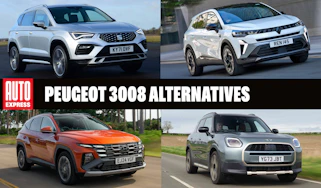
The French brand’s push upmarket means that the 3008 is more in-line with typical premium mid-size SUV like the Volkswagen Tiguan in terms of price compared with the much more affordable Citroen C5 Aircross or Dacia Bigster.
While it isn’t as good looking, the Tiguan is a good all-rounder with better practicality, easier-to-use infotainment, and a smoother petrol engine. It is available in plug-in hybrid form with around 10 more miles of electric range.
Another good alternative is the Hyundai Tucson, which has been an Auto Express award winner on multiple occasions. It’s nicer to drive, and is stacked with equipment, despite undercutting the 3008 on price.
Electric alternatives to the E-3008 include the Skoda Enyaq Coupe (which is more in keeping with the coupe styling of this Peugeot), or, if you can go for something a little less stylish, the Vauxhall Grandland Electric uses the same underpinnings as the E-3008, but costs significantly less. Thanks to a starting price well below £40,000, it not only avoids the luxury car surcharge, but also qualifies for the electric car discount, helping make it even more affordable.
Key updates of the Peugeot 3008 review
- 17 June 2026: Latest driving impressions and pricing data.
- 22 December 2025: New rim level options.
Frequently Asked Questions
The Peugeot 3008 comes with a two-year/unlimited mileage warranty from Peugeot, with an extra year of coverage provided by the dealer up to a maximum of 60,000 miles.
Deals on the Peugeot 3008 and alternatives