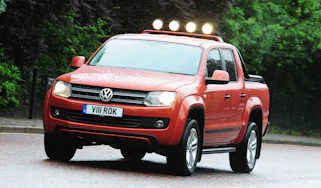
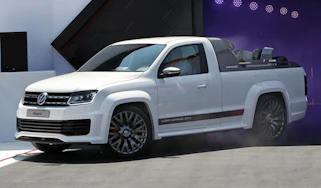
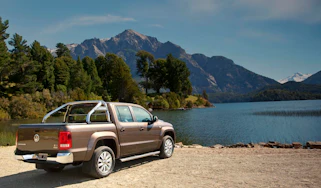
Volkswagen Amarok pick-up review
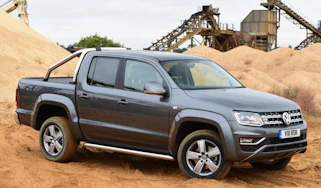
If you’re after a pick-up truck that feels smart and sophisticated, the VW Amarok is one of the best options
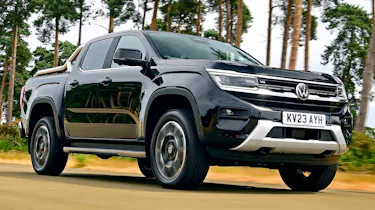
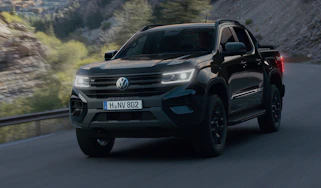
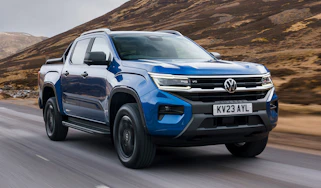
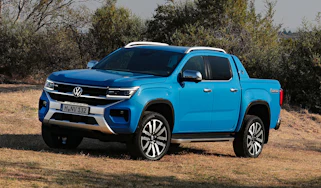
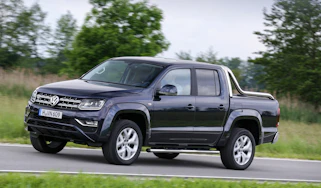
The Volkswagen Amarok has always felt a little more upmarket (both inside and out) than the closely related Ford Ranger, although it doesn’t offer quite enough to surpass our long-reigning Pick-up of the Year.
The Amarok feels more like a car to drive than ever before, and it’s still capable of serving as a workhorse, but the line-up is more limited than its closest rivals. It’s also more expensive to buy, though that might just be the price you pay for a classy and desirable truck like this.
About the Volkswagen Amarok
The current Volkswagen Amarok was unveiled in 2022, and as a result of the VW brand’s partnership with Ford, it shares a number of components with the Ford Ranger. It’s a similar story with the Volkswagen Transporter and Ford Transit Custom vans, along with the Volkswagen ID.4 and Ford Capri EVs.
The Amarok and Ranger use the same engines, suspension, transmissions and electronics, though you’d never tell by looking at them because of their strikingly different designs.
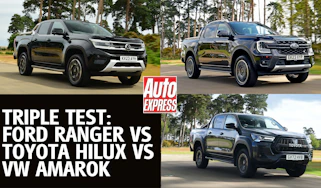
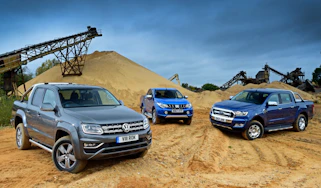
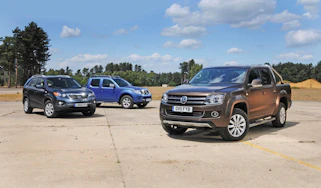
The UK’s pick-up truck market is a small yet competitive one, so we lined up the Amarok against the Ford Ranger and Toyota Hilux in a triple test. The Ford Ranger came out on top due to its superior value for money - something that’s also contributed towards this truck’s numerous Pick-up of the Year wins at our New Car Awards - but the VW finished a close second.
MPG, CO2 and running costs
Pros |
|
Cons |
|
Volkswagen may well be sprinting towards an all-electric future, but the Amarok continues to stick with a trusty 3.0-litre V6 diesel. Considering that the closely-related Ford Ranger now comes with the option of plug-in hybrid power, we find it surprising that this hasn’t found its way over to the big VW.
Used - available now

2017 Volkswagen
Amarok
24,560 milesAutomaticPetrol1.2L
Cash £11,495
2025 Volkswagen
Amarok
27,168 milesManualPetrol1.0L
Cash £12,197
2021 Volkswagen
Amarok
55,995 milesManualPetrol1.0L
Cash £7,676
2025 Volkswagen
Amarok
40,625 milesManualPetrol1.0L
Cash £11,224Volkswagen claims that the 3.0-litre V6 and 10-speed automatic combination can return up to 27.4mpg. That said, we managed to average 28.3mpg from an entry-level Amarok Style during our group test between the Amarok, Ford Ranger and Toyota Hilux. CO2 emissions are high, though, at up to 282g/km.
If you’d prefer to lower your carbon footprint, you’ll need to either look towards the aforementioned Ford Ranger PHEV or a fully electric pick-up like the Isuzu D-Max EV, KGM Musso EV or Maxus eTerron 9. Be careful, though, as some electric pick-ups come with reduced payload capacities compared to their combustion counterparts.
Load space and practicality
Pros |
|
Cons |
|
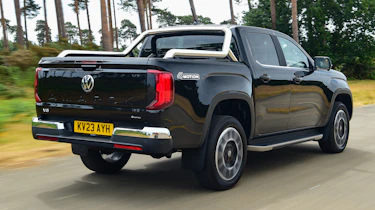
Just like the Ford Ranger, the Volkswagen Amarok only comes in a double cab bodystyle. The size of the load bed hasn’t changed compared to the previous model, but then again it was already one of the largest of any double-cab pick-up truck available in the UK. It measures an almost-square 1.62 metres long by 1.58 metres wide, with a maximum width of 1.22 metres between the rear wheel arches. In other words, the Amarok’s bed is slightly larger than the Ford Ranger’s, and it can accommodate two Euro pallets.
The bed also features six lashing eyes and while the Amarok we tested had the standard painted metal bed, VW offers a roll-top cover, bed lining and more storage to boost its versatility. If you run out of room in the bed, you can add a roof rack or box, plus all but the most basic Amarok has a maximum towing capacity of 3,500kg.
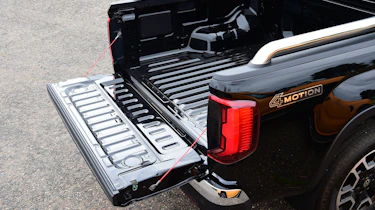
Of course, this being a double cab pick-up, the Amarok will appeal to those who want a truck that can mix duties as a work tool and family transportation. It used to feel like a compromise when it came to rear-seat space, but thankfully there’s more passenger space in the current Amarok than before and it’s pretty comfortable in the back.
Accessing the rear is made easier by grab handles and running boards. There’s room for three, and the base of the rear bench offers good under-thigh support. Rear passengers also get a set of air vents, a 12v socket and plug in back, though no USB ports like they get in the Ranger, although there are Isofix mounting points on the rear outer seats.
Reliability and safety
Pros |
|
Cons |
|
Industry experts Euro NCAP describe the latest Amarok and Ranger as ‘corporate twins with identical structure and safety equipment’, which is why some tests were carried out on both and they share the same rating. The Amarok boasts Euro NCAP’s maximum five-star overall safety rating, receiving an 84 per cent score for adult occupant protection and safety assistance technology, plus 90 per cent in the child occupant protection category.
All Amaroks come with an assortment of airbags, emergency call system, seatbelt reminders, LED headlights, autonomous emergency braking (AEB), lane keep assist, adaptive cruise control, a reversing camera and speed sign recognition. Higher-spec models come with a 360-degree parking camera setup, tyre pressure monitoring, cross traffic alert for the front and rear and Volkswagen’s Park Assist Plus system that allows for hands-free manoeuvring.
Volkswagen’s commercial vehicles are typically covered by a three-year warranty. However, there are various payment plans that tie-in maintenance and servicing expenses too; one of which includes an extra two years’ warranty cover and roadside assistance - designed specifically for vehicles aged three to six years, with an engine of 2.0-litres or less and under 100,000 miles covered (at the point of activation).
Driving and performance
Pros |
|
Cons |
|
The 3.0-litre V6 TDI is now the sole engine option for the Amarok, and it produces 237bhp and a very healthy 600Nm of torque. This unit is paired with a 10-speed automatic transmission and the combo can propel this 2.3-tonne pick-up truck from 0-62mph in a lively 8.8 seconds.
We did notice during our testing that while this engine responds briskly at part throttle, there is some hesitation when you bury it, as the Ford-sourced gearbox has to kick down several ratios before the engine is in its power band. Once you’re at your desired speed, it delivers smooth, almost seamless shifts.
Town driving, visibility and parking
There’s no other way to say it: the Amarok is a big beast, but it is a pick-up truck after all, so it’s not exactly ideal transportation through congested city streets. You do have a commanding view of the road ahead at least, and surprisingly light controls help make the Amarok easy to manoeuvre, even if you’ll struggle to find a parking space that’ll accommodate the 5.3-metre long truck. Visibility is slightly better than the similar Ranger too, because the Amarok’s bonnet dips down slightly at the front.
Motorway driving and long-distance comfort
At higher speeds, the Amarok feels almost as refined and mature to drive as a large SUV, with not much in the way of wind or road noise infiltrating the cabin. The standard suspension setup gives the truck a noticeably harsher ride than those with Comfort system, which is fitted to PanAmericana and Aventura-spec models, as well as the mid-range Ranger Wildtrak. The Amarok Style we used for our group test against the Ford Ranger and Toyota Hilux also tended to fidget on its optional 20-inch alloy wheels.
Cab and Interior
Pros |
|
Cons |
|
The Amarok line-up consists of four trim levels, but the base Style model is already pretty well-equipped a 12-inch instrument display and central touchscreen, matrix LED headlights, a 360-degree parking camera system, park assist with rear traffic alert, wireless smartphone charging, tyre pressure monitors and a roll hoop for the load bed.
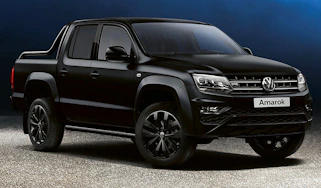
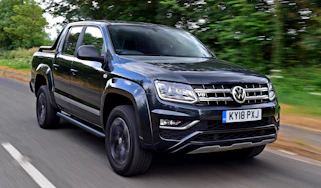
Next up is the Amarok Dark Label, and this comes with unique gloss black exterior touches along with a unique set of 20-inch alloy wheels.
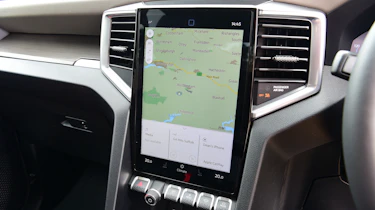
The Amarok PanAmericana has a much more rugged look, with black alloy wheels and exterior trim, silver roof rails and an X-themed grille design. Inside is full leather trim and a Harman Kardon sound system, while a rear diff lock and under-body guard boost its off-road ability.
Finally, sitting at the very top of the range, is the Amarok Aventura. The price bump from the PanAmericana is relatively small, but for the extra money you get 21-inch wheels as standard, softer leather upholstery inside, a heated steering wheel and more chrome and silver trim than other models in the line-up.
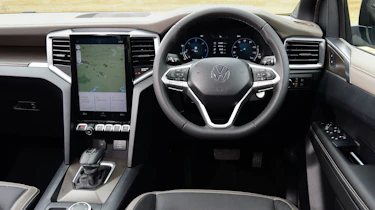
In recent years, VW’s approach to interior quality and technology has been a frequent source of criticism for the brand. So, it’s pleasing to see that its attempt to give the Amarok’s cabin the feel of an upmarket SUV has, on the whole, been a success. There’s plenty of metal-effect trim, and a brown leather dashtop and fake wood trim on display in the Amarok Style we drove, which also gives it a different look from the chunky, more functional Ranger. Only a handful of cabin components are shared with the Ranger, such as the key, the ‘pinch’ door releases, light switches and drive selector.
We did find interior quality was patchy in places on our test truck though, particularly the upper glovebox and dash top vents. There are also no physical climate controls in the Amarok, like you get in the Ranger. You do get a bank of toggle switches that offer handy shortcuts, but full climate controls are still within the touchscreen, along with all the off-road drive modes.
There's a decent amount of storage throughout the cabin thanks to the deep door bins, a twin glovebox and another cubby underneath the armrest, plus a rubberised tray is located ahead of the gear selector where you can place a smartphone to charge it up.
Infotainment, sat-nav and stereo
Being a Ford-sourced unit, the Amarok’s central touchscreen is simple and easy to use. It runs VW’s own software and graphics, although wireless Apple CarPlay and Android Auto are both standard-fit on all Amaroks, in case you’re not a fan of the built-in infotainment or navigation. Meanwhile the 12-inch Digital Cockpit display is fully customisable and can show power distribution and off-road info.
Buying and owning
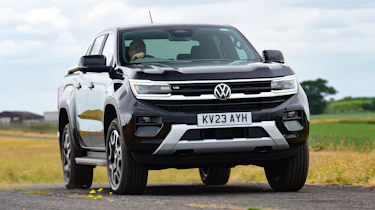
The lack of bodystyle and powertrain options means you’ll only be faced with the trim level and options list when building your new Volkswagen Amarok. In its base Style trim, you’ll be looking at a starting price of around £48,200 excluding VAT. However, In order to get the maximum amount of car-like kit and plushness, we’d opt for the PanAmericana, as this only bumps the price up to £50,500 excluding VAT.
Alternatives
The Ford Ranger shares plenty with the Amarok, so it’s easily the most obvious alternative pick-up truck. However, there are a number of rivals to consider from further afield. The long-serving Isuzu D-Max is often hailed as a truck that focuses on durability rather than plushness, so you might be less precious about getting it dirty. The Mitsubishi L200 has returned to the UK in an attempt to reclaim its share of the market and there’s also no forgetting the tough Toyota Hilux. Another option that’s slightly more left field but worth a look is the KGM Musso.
The electric pick-up market is gaining momentum, too. More familiar names include the Isuzu D-Max EV and Toyota Hilux BEV, but there’s also the KGM Musso EV and Maxus eTerron 9 to take a look at.
Frequently Asked Questions
The Volkswagen Amarok is covered by a special warranty plan lasting for five years or 124,000 miles, whichever comes first.