Best city cars to buy 2026
Conquering the city streets by car? These are the best urban runabouts for the job
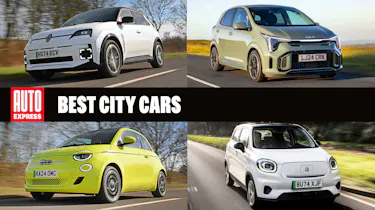
The best city cars have always offered manoeuvrability, value for money and low running costs, but now these compact cars also offer similar levels of tech and refinement to models that are much bigger in both size and price. As a result, while you may be paying a bit more than you used to, you’ll also be able to do a lot more with your brand-new city car.
Perhaps as a consequence of Britain’s love of SUVs, the city car market is a bit smaller than it once was. However, there are signs that it’s on the up again and deciding the best of the growing bunch can prove challenging. Not to worry, though, because we’ve done the hard work and picked out the top 10 city cars to buy right now.
Our road-test team has driven every city car on sale in the UK, and their expert verdicts identify the best options in this sector of the market. Our road testers take all of the important factors into consideration when making their decisions, including price, practicality, safety and standard equipment, so you can be certain that you’re getting a top class city car for your money with any of the models below.
Compare the best city cars
| Best city cars to buy ranking | Name | Prices from | Max. WLTP combined range/MPG |
| 1 | Honda Super N | £19,000 | 128 miles |
| 2 | Kia Picanto | £17,100 | 54.3mpg |
| 3 | Toyota Aygo X | £21,700 | 74.3mpg |
| 4 | Leapmotor T03 | £16,000 | 165 miles |
| 5 | Renault 5 | £23,000 | 249 miles |
| 6 | Dacia Spring | £12,000 | 140 miles |
| 7 | MINI Cooper | £27,000 | 250 miles/47.9mpg |
| 8 | BYD Dolphin Surf | £18,700 | 200 miles |
| 9 | Fiat 500e | £21,000 | 193 miles |
| 10 | Suzuki Swift | £20,000 | 64.2mpg |
Scroll down for the mini-reviews on each of our top 10 best city cars..
1. Honda Super N
- Prices from £19,000
| Pros | Cons |
|
|
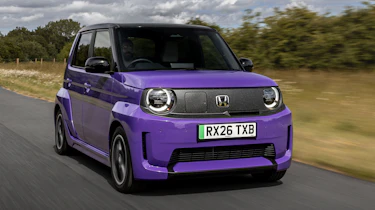
The Honda Super N isn’t the first electric city car priced under £20,000, but it’s certainly the best. Better still, you don’t need to make a purely head-over-heart decision to buy one either, as the Super N stands pretty much alone in the city car class as being an enthusiast’s car, too. The little Honda displays the same kind of spirit as we used to get from the likes of the Volkswagen Up GTI or a Fiat Panda 100HP.
It’s based on the electric version of the Honda N-One ‘kei car’ sold only in Japan, but as a more global car the Super N isn’t subject to the same dimensional restrictions, so it’s a little longer and wider. It’s still absolutely tiny, however, and this immediately makes it brilliant in city driving, especially as the nearly flat exterior surfaces make it dead easy to figure out the car’s extremities.
Kei cars are also well packaged though, so while larger drivers and passengers might end up rubbing shoulders and cabin storage isn’t great, the interior is actually more spacious than you’d expect. Rear legroom is good too, and while the boot is relatively small, access through the tall tailgate and over a low loading lip is excellent.
It’s also great fun to drive. It feels surprisingly grown up, with only some road noise intruding at higher speeds, and a firm but well-damped ride. The steering is accurate and well-weighted though and if you press the Boost button for the full 94bhp, you also get virtual gearshifts and an entertaining (and not too intrusive) virtual engine sound. A claimed combined range of 128 miles doesn’t look huge on paper, but in our experience, attaining the car’s 199-mile city range in town driving shouldn’t be much of a stretch.
“Amazingly in this day and age, these [driver assistance] systems work faultlessly – better almost than any car at any price. The beeps and bongs aren’t overly intrusive, and not once did we have to delve into the sub-menus to switch off the lane-keeping aid.” - Richard Ingram, deputy editor
2. Kia Picanto
- Prices from £17,100
- Auto Express City Car of the Year 2025
| Pros | Cons |
|
|
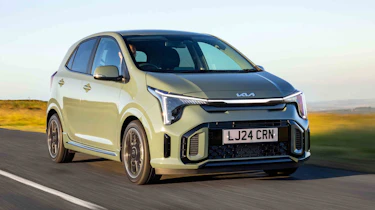
The latest Kia Picanto is good to drive, has a big-car kit list, is spacious and well made, plus it offers a surprisingly grown-up driving experience.
The latest Picanto’s looks are inspired by the Kia EV9, but underneath you’ll find a familiar engine line-up which consists of a 62bhp 1.0-litre three-cylinder or a 1.2 four-cylinder unit that produces 77bhp. Neither of these engines are massive powerhouses, but they don’t need to be.
The baby Kia’s small stature and excellent all-round visibility make it an absolute dream to drive around town, even for first-time drivers. Our road testers are also big fans of the Picanto’s quick steering and generally agile feel, which both make this a truly entertaining car to drive when you want to have a bit of fun.
Small engines mean equally small running costs, with every Picanto variant able to return over 50mpg with very little effort. Even those dreaded insurance premiums are kept well under control, with the whole line-up residing in groups three to seven.
Step inside the Picanto and there’s a surprising amount of space to be found with enough room for four passengers to get reasonably comfortable. The 255-litre boot is also a perfectly decent size for a weekly shop.
The Picanto is a fiercely competitive package and a very likeable little car. It was a very worthy winner of our 2025 City Car of the Year title.
“It didn’t take long behind the wheel for us to be certain that there’s far more to appreciate than the funky, fresh robot look brought about by the new LED lights and updated face. This 3.6-metre bundle of enthusiasm shows us all just how nippy and easy city cars can be to drive.” - Alex Ingram, contributor
3. Toyota Aygo X
- Prices from £21,700
| Pros | Cons |
|
|
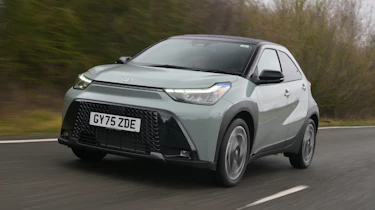
The Toyota Aygo X has been in our best city cars list for a while, but Toyota has made some significant changes to its smallest car - making it a much more appealing vehicle and bumping it up the standings. Notably, it’s gone from being offered with only a 72bhp naturally-aspirated 1-litre three-cylinder engine, to using the 114bhp, 1.5-litre three-cylinder hybrid from the larger Yaris.
The new engine has transformed the Aygo X. For a start, it’s chopped a massive 5.7 seconds from the 0-62mph time, now only 9.2 seconds. Torque has increased too, and with electric assistance it feels more eager everywhere - it’s nippier in town, much happier on country roads, and cruises easily at motorway speeds. With claimed economy of 74.3mpg (up from 56.5mpg), it also uses considerably less fuel.
The tradeoff is that the hybrid model is more expensive than before, though the Aygo X was never among the cheaper city cars to start with. You do get slightly improved equipment compared to the old car, too. The larger 9 and 10.5-inch touchscreens don’t quite sit as neatly in the curvy dash as before but they’re easier to use, and there are still physical climate control switches.
There are some natural compromises due to the Aygo X’s (lack of) size - the rear doors are ridiculously small and the space for rear passengers isn’t much better. The 226-litre boot is relatively small too, even by class standards. On the flip side, Toyota’s reliability reputation and long warranty still make the Aygo X a sound buy.
“The amazing thing about the Aygo X is that it’s not just possible to match the official [economy] figure, you can even pass it with relative ease. On our first encounter with the car on the European launch, we managed as much as 86mpg on a combination of motorways, trunk roads and urban driving, which is frankly incredible.” - Dean Gibson, senior test editor
4. Leapmotor T03
- Prices from £16,000
- Best for running costs
| Pros | Cons |
|
|
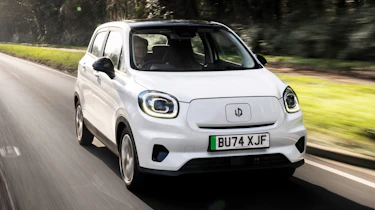
Leapmotor is one of the more recent arrivals on the UK’s shores, but it’s already making headlines with the little T03.
Starting from around £16,000, this is one of the cheapest electric cars on sale in the UK. During testing we managed to find a few slight flaws you’ll need to embrace or overlook if you wish to own a T03 — such as a bouncy ride and some overenthusiastic safety warning chimes — but overall there’s little to dislike if you simply want an affordable zero-emission car for zipping around the city streets.
The best news is that the T03’s low price doesn’t mean a laughably low battery range. The little Leapmotor can cover up to 165 miles on the WLTP combined cycle, and this should be more than enough for the majority of urban trips. When we pitted the Leapmotor against the similarly-priced Dacia Spring in a twin test, the T03 managed a real-world efficiency figure of 4.6 miles per kWh, which equates to around 166 miles of range, making this one of the few cars we’ve encountered where the real-world range was higher than that on paper, albeit ever-so slightly.
If you’re expecting a barebones features list, you may be pleasantly surprised. While the fancier touches are missing here (which is forgivable considering the price), the mod-cons such as a 10-inch touchscreen and air-conditioning are very much included.
“This might seem like a back-handed compliment, but the most important thing you can say about the way the Leapmotor T03 drives is that it feels like a normal car. From the outside, you might have a preconceived notion that it will flop around on its comically thin tyres and have all the balance of a mid-game Jenga tower, but overall, it is decent enough to drive.” - Richard Ingram, deputy editor
5. Renault 5 E-Tech
- Prices from £23,000
- Best for families
| Pros | Cons |
|
|
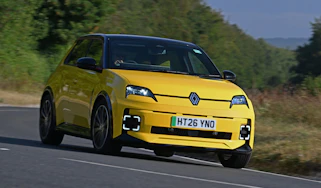
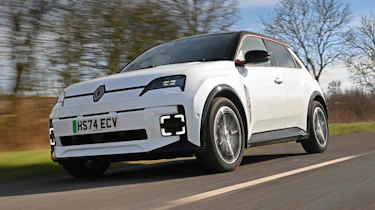
Some people accuse EVs of being a bit boring to look at, but the Renault 5 is a car that’ll easily put this argument to bed.
This retro-inspired supermini is one of the grooviest electric cars we’ve seen to date, and its price is equally appealing. Thankfully, Renault has kept things sensible when it comes down to how the 5 drives. We found the controls very light and easy to control, and the power delivery is delightfully smooth. The ride is a tad on the firm side, but this does mean you can have a bit of fun on the B-roads (although for maximum thrills you’ll want to look towards the Alpine A290 hot hatch version).
You’ll be able to take on plenty of those aforementioned B-roads, too, as the Renault 5 can also cover up to 248 miles on the official WLTP combined cycle. There are two batteries to choose from, a 40kWh or 52kWh unit, but even the smaller pack can cover a claimed 193 miles. When it faced the Fiat 500e in our twin test, the 40kWh Renault managed 164 miles between charges.
The cabin does a good job of maintaining the 5’s funky feeling, particularly in models fitted with part-yellow upholstery. In terms of tech, we think that Renault’s infotainment systems are currently some of the best in the business, and the 5 manages to put a number of pricier cars to shame in this regard.
“Up the pace, and the Renault 5 is quite entertaining to drive. The low centre of gravity provided by the battery pack in the floor limits body roll, but not so much that you can’t feel what the car is doing beneath you. Get bold through a corner, and you can even play with the 5’s balance on and off the throttle.” - Alex Ingram, contribtor
6. Dacia Spring
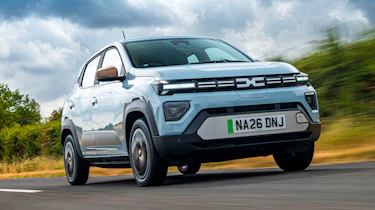
- Prices from £12,000
- Cheapest city car
| Pros | Cons |
|
|
It’s an inconvenient but true fact that plenty of EVs currently carry much higher starting prices than their combustion-powered alternatives, but the Dacia Spring is a huge exception to this rule. In fact, it’s currently the cheapest full-sized electric car that you can buy.
There are some obvious sacrifices that have been made in order to keep costs down — we found the cabin to be very noisy due to a lack of sound-deadening, and the standard-fit tyres don’t cope very well with more strenuous driving tasks — but those who prefer drama-free, lower-speed simplicity are well catered for. For pootling around city streets, the Spring is incredibly easy to drive, and it’ll neatly slot into plenty of tight spaces that many other modern cars will struggle with, too.
The Spring has a single battery option; a 26.8kWh unit which returns a maximum of 140 miles on the WLTP combined cycle. This means regular motorway journeys are probably out of the equation unless you don’t mind frequent recharging (a 20-80 per cent top-up takes 45 minutes at the maximum rate of 30kW). Stay within town, though, and a full charge should last a lot longer than you may think.
While Dacia’s penny-pinching means the Spring is quite humble when it comes to its appearance and features, there’s still a decent helping of modern essentials, including air-conditioning and cruise control.
“The main issue with the way that the Spring drives isn’t with the car itself, but the tyres Dacia fitted. When we first tested a Spring, it was fitted with Linglong tyres, and they’re short on grip – even for a car where performance very much takes a back seat.” - Alex Ingram, contributor
7. MINI Cooper
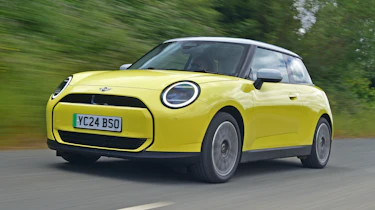
- Prices from £27,000
| Pros | Cons |
|
|
You could say that the original Mini was a city car pioneer, and the latest MINI Cooper continues this legacy of being a small, affordable and appealing model that’s also fun to drive.
The MINI Cooper is one of the larger models on this city car list, coming close to cars in the supermini sector above, but it’s still compact enough to easily tuck away into tiny parking spaces. For years MINIs have been renowned for their excellent ‘go-kart’ handling, and the latest generation is no exception. When you’re not chucking it around, though, the Cooper does feel quite firm, and this could be a deal-breaker for some potential owners.
If your city’s streets are covered by emissions-based charging, you won’t need to worry because the MINI Cooper is available as an electric car. Opt for this variant and you’ll have up to 250 miles of claimed range on tap, depending on your chosen spec.
This being one of the larger cars on this list means there’s a decent amount of space for four passengers within the MINI Cooper, although the 200-litre boot is a bit stingy. There’s no arguing with the level of quality, though, as the materials and tech feel like they’ve been taken over from MINI’s parent company, BMW.
“The electric MINI Cooper has enough agility about it to satisfy most customers. Approach a corner quickly, and the front end tucks in nicely; there’s excellent lateral grip and minimal body roll, so if you’ve enjoyed hugging the inside of a corner in your petrol-powered MINI over the years, you can do the same here.” - John McIlroy, contributor
8. BYD Dolphin Surf
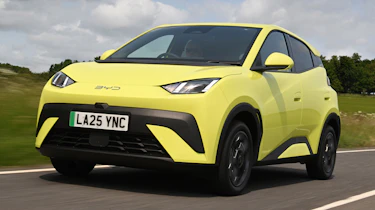
- Prices from £18,700
| Pros | Cons |
|
|
European buyers like small, nippy, affordable cars, and while the BYD Dolphin Surf hasn’t been created for Europe alone, it’s one of the Chinese giant’s most convincing models in this market and packs many of the qualities you’d hope for and expect.
Affordability first, and starting at under £18,700 it definitely scores well there, comfortably undercutting the likes of the Citroen e-C3 or Renault 5 E-Tech. The tradeoff is that performance and range are more in the Dacia Spring league, with an 11.1-second 0-62mph time and 137 miles of range. Step up to a car in Boost trim, with a larger battery and 200-mile range (though a second slower over the acceleration metric) and you’re looking at a £22,000 bill, which puts it right among those European models.
It can’t match them for character or driver appeal, though the Dolphin Surf’s edgy, wedgy styling, curvy cabin, and pleasant road manners are still points in its favour. The motor is refined, forward visibility is good (rearward less so), the ride is smooth, and light steering makes it a doddle to manoeuvre.
We’re not so keen on the weak brake energy regeneration when you lift off the accelerator, but it must still do something as real-world efficiency is pretty good in our experience. 65kW charging on the base model and 85kW on the others is competitive too - faster than a Dacia Spring or Leapmotor T03, if not quite up there with the 100kW of a Renault 5.
“[The Dolphin Surf has] got a splash of sporty character about it, with a sizeable roof spoiler, a strong character line down the flanks, and a sharp nose and quadrilateral headlights that have the vaguest hint of Lamborghini about them” - Ellis Hyde, news reporter
9. Fiat 500e
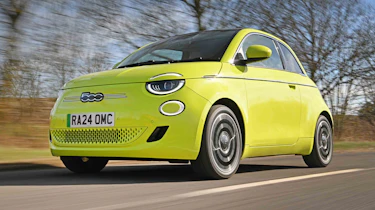
- Prices from £21,000
| Pros | Cons |
|
|
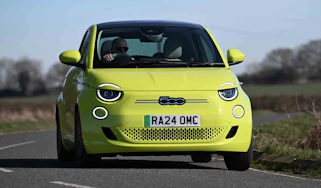
The Fiat 500e is exclusively available as an electric car, but there are still plenty of nods to this retro model’s heritage.
While it’s bigger than its predecessors both classic and modern, the latest 500 is still very compact by today’s standards. This relatively tiny stature combined with the retro design means there’s little mistaking it for any other car, but it also has a practical effect as it’s a breeze to navigate around narrow streets.
The battery tech is pretty good for a small EV, too. Opt for the larger 42kWh pack and the 500e can achieve up to 199 miles of range between charges. It can also be rapid-charged from 10 to 80 per cent in around half an hour.
Take a peek inside and the 500e’s cabin continues the classic overall look. However, there’s more space inside than in previous 500s, and the on-board tech and materials have received a much-needed overhaul. Standard kit is generous, too, with alloy wheels, keyless entry, automatic wipers, cruise control and climate control all included.
“Being a city car, it’s at low speed where the 500e is designed to excel – and it does. Great visibility, tiny dimensions and a tight turning circle make everything from parking to darting in and out of traffic a doddle. Engaging your desired direction of travel is as simple as prodding one of the large buttons on the dash, and the power delivery is smooth and silent.” - Alex Ingram, contributor
10. Suzuki Swift
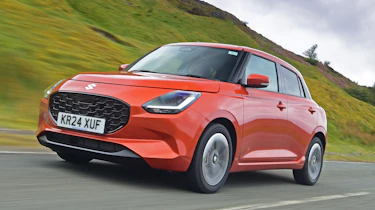
- Prices from £20,000
| Pros | Cons |
|
|
While the Suzuki Swift technically sits in the supermini sector, its efficiency and price are much more similar to those of a city car.
With only 81bhp and 112Nm of torque produced by the 1.2-litre engine, the latest Swift certainly isn’t the last word in performance. You can still have some fun behind the wheel thanks to its low kerb weight, although we had to work the powertrain quite hard to get the very best from it on our tests.
With mild-hybrid tech as standard, the Swift boasts very respectable efficiency. The front-wheel drive models can return over 60mpg on the WLTP combined cycle, while the four-wheel drive version (a rare option in this sector) isn’t far behind at around 57mpg.
If there’s one area where the Swift fails to hide its low-budget ambitions, it’s the cabin. There’s a pretty generous helping of standard features, but low-rent materials can be found by the bucketload. At least the design is easy on the eye.
“In order to get the most out of this engine, carefully timed gear changes are required, so those who stick with the standard five-speed manual gearbox will get an arm and leg workout in hilly areas and while driving around town. Mercifully, the gearbox and clutch are forgiving to use, if a bit vague.” - Shane Wilkinson, senior content editor.
How we choose the best city cars
If you’re in the market for a new city car, here are some expert tips to take into account when building your shortlist and taking test drives.
Costs
It’s a very reasonable assumption that smaller cars should mean smaller costs, especially with an increasing number of fully electric city cars being introduced to the market. Our testers take the price range of every model into account, along with its real-world efficiency, applicable insurance groups, Vehicle Excise Duty rates and company car Benefit-in-Kind tax rates.
Practicality
City cars are small, but they’ve come a very long way from the compact models of the past. In today’s market, plenty of these cars offer an admirable helping of passenger and luggage space. Our expert road testers carefully measure head and leg room for every occupant, as well as the usable capacity and accessibility of the boot space.
If you’re considering a city car for family use, we also pay very close attention to how easy it is to fit a child seat, as well as the number of ISOFIX points
Driving
While outright performance might not be at the front of your mind when buying a city car, driving enjoyment and power output still play a role in determining what a car is like to live with.
A healthy dose of power will make pulling away from junctions and keeping up with traffic into much less of a chore, as well as making long-distance runs far easier. There’s no harm in enjoying your time behind the wheel, either, so a car that’s capable in corners and generally refined is all the better.
Try to take a test drive in an urban setting to get a feel for the all-round visibility in the car as well as the turning circle and the weight of the steering. If you’ll do most of your driving in town, a nippy, manoeuvrable feel makes all the difference.
Our expert road testers give every city car a thorough shake down on various types of road, ranging from the narrowest urban streets to massive motorways. The best cars are those that manage to blend comfort and refinement with performance and handling, which can be a difficult task for carmakers to achieve.
Best city car deals
Don't miss the best of Auto Express on Google! Make us a preferred source. Click here...