The UK government’s electric car strategy is right! It should hold firm in 2026
Phil McNamara thinks the government’s handling of the electric car transition is broadly correct and it should resist calls for change

The UK government’s electric car strategy is broadly right. There I said it, something positive about prime minister Keir Starmer’s omnishambles administration. But, on EVs, it is leading among the big European economies.
There’s a big picture target: that sales of pure combustion cars should be banned in 2030. Leading is about giving a clear sense of direction, spelled out by the ZEV mandate which ratchets up the proportion of EVs brands must sell. The 2026 target is 33 per cent, rising to 80 per cent in 2030.
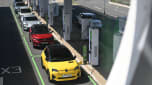
This mission is supported by measures to boost demand: EV grants ranging from £1,500 to £3,750 are available on cars costing less than £37,000. Cleverly, Chinese EVs with opaque low-carbon production credentials are excluded, but have been forced to match the grant out of their own margins to compete.
Don’t let anyone tell you this isn’t working: from January to November 2025, electric car registrations climbed 26 per cent year-on-year. And petrol car sales declined by eight per cent.
Not everything is rosy: electric vans are running miles behind their target. Understandable: these workhorses must do high-mileages with no strings attached, but the ambition to get dirty diesels out of city centres is bang on. Could hybrid vans be the happy medium, assuming no load bay compromise?
And it’s baffling that the government refuses to lower the 20 per cent VAT on public charging to the five per cent paid for home-charging, especially with the UK having one of the world’s highest energy costs. Just do it, Labour, and create a posthumous legacy for the brilliant TV presenter and campaigner on this issue, Quentin Willson.
But I’m not going to castigate the Labour government’s intention to introduce EV pay-per-mile charging from 2028. By then, ZEV mandate should demand 52 per cent of new car registrations to be electric: the treasury needs to wargame for the loss of fuel tax revenue. Politics has sadly become a short-term game but we should applaud this rare example of forward planning.
Will the UK remain equally far-sighted on forbidding combustion engine sales past 2030? Under pressure from its homegrown car makers, the EU has axed its outright ban on combustion sales, replacing it with emissions targets that will allow a mix of powertrains. It’s ludicrous that car companies calling for certainty have ushered in more uncertainty: will they ask the Commission to fold again if the going gets tough?
Critics say the UK is a powerless satellite that must toe the EU’s line on automotive matters. But there’s a European country that, like Britain, has no official EU vote but whose policy has sent EV market share soaring to 97 per cent. To all you naysayers out there, take a look at Norway to see what can be done. Perhaps we as a nation should stop wasting time talking about what can’t.
Get even more from Auto Express, follow our channels...
• Google
• Reddit
• Whatsapp