Tyre test 2012
We test eight of the latest tyres to the limit to reveal which is best for your car

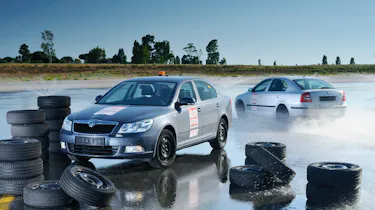
How we tested them
Wet handling
The 1,555-metre wet handling circuit at Aprilia has fast sweeps, hairpins and elevation changes. Grip is consistent, so you can focus on feeling how the tyre copes with the flooded surface. The lap starts with a falling then rising 270-degree sweeper that tests a tyre’s front to rear balance on and off the throttle. Our results are based on average lap times.
Wet braking
This is a key part of the new tyre labels, with makers conforming to strict criteria. In our test, we slow from 20mph to 12mph to get a true picture of braking ability without the variations triggered by braking to a halt. Our scores are taken from an average of up to a dozen tests. The anti-lock braking was triggered each time and we let the brakes cool between runs.
Wet cornering
Here we do up to 10 laps of the 42-metre circle on the soaked skid pad. The surface is like a medium-grip road, so we do this in second gear in our Skoda Octavia – slow enough not to aquaplane or lose traction. With the inner wheel close to the inside edge, we accelerate until the line can’t be held, and take an average from 10 laps.
Straight aquaplaning
Aquaplaning is the loss of grip as you hit standing water at speed. Tread can’t pump out water fast enough, and rides over the surface instead of cutting through it. This test rates the speed at which tyres can’t cope by accelerating hard with one wheel in 7mm of water. Instruments gauge the difference in spin between the two wheels – and again, we take an average.
Curved aquaplaning
The tread pattern is key to how much water a tyre can pump out. The more efficient it is, the higher the speed before it rides up on the surface. This test rates how tread works in corners, which distort the grooves and channels. We drive along a curve, flooded to 7mm, at increasing speeds, and measure lateral forces until grip is lost.
Dry handling
Like the wet handling track, this dry circuit has elevation changes to test our tyres. It’s 1,888 metres long and offers fast sweepers – entered up and down hill – hairpins and fast direction changes. We set our lap times using the same braking points, and let the speed come through carrying more pace into turns and accelerating earlier.
Dry braking
We measured our Skoda from 62-0mph, using cones to ensure we went over the same tarmac. GPS-based road test kit measured our distances, and the result is based on an average of six runs.
Rolling resistance
One of the tyre labels’ criteria, but they put tyres in bands; we give a precise measurement. Rolling resistance is key to fuel economy, as it measures the power needed to turn a loaded tyre – the easier it rolls, the less fuel is used. A five to six per cent difference in rolling resistance gives around one per cent change in consumption. We took an average from two tyres.
Noise
Specially equipped cars with sealed engine bays are used to get the tyre labels’ noise ratings. However, cabin noise is far more crucial for drivers – so we coasted from 50mph in neutral on special noise, vibration and harshness tarmac. We took average readings of noise levels at tyre-generated frequencies to get the result.
Price
You shouldn’t choose tyres on price, so it plays a small part in our ranking. We got prices from lovetyres.com – which won our test of online tyre retailers in Issue 1,222. It sends tyres for you to get fitted, so add around £10 for fitting and £3 for delivery.
Finding a winner
This is mainly a case of adding up the percentages – but we weight them to ensure the scores count for the same in the overall result. Some tests see big differences in performance – the best and worst tyres can be separated by 30 per cent in aquaplaning – while in other tests, like dry handling, all our tyres are covered by three per cent. Our weighting keeps it fair.