How to drive on a motorway
There’s no dark art to motorway driving. Simply give yourself the space and time to react

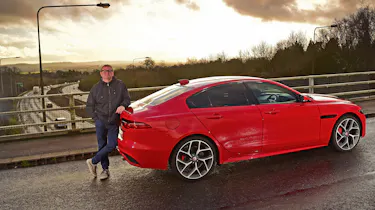
It’s a somewhat mystifying fact that the first time you legally drive on a motorway in the UK, you could be doing so on your own, in the dark, when it’s raining or in fog, or even when it’s snowing, if the gods are being particularly unkind. But driving on a motorway needn’t be as terrifying as some drivers believe it to be, because as ever there are a few golden rules to abide by.
Always give yourself plenty of room in which to operate, not just by leaving lots of room to cars in front, but also those to the sides and rear. Remember that you can control the amount of space behind you by allowing a tailgating vehicle to pass and have its own accident, one that doesn’t involve you.
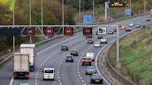
Look as far down the motorway as you can to anticipate what might be about to happen, long before it actually does. You can spot the drivers who are better at this than others by looking at their brake lights. Drivers who are aware of what’s going on further up the road don’t brake as hard or as often, whereas drivers whose eyes aren’t focused beyond the end of their own bonnet brake harder and more frequently, often for no reason whatsoever.
Try not to do anything sudden or unexpected when driving on a motorway, unless it’s absolutely unavoidable. The rules that are applied on any other road still stand on the motorway, only they’re more important because the speeds are that much higher. Inevitably we’re talking about good anticipation and smooth inputs, not just at the wheel but also on the brakes and accelerator. The ultimate aim is not to present other drivers with unwanted surprises, because when things go wrong at motorway speeds, they can go wrong very quickly. The key is to try and do everything you can to prevent things from going wrong in the first place.
Pay attention
How do you do this? Well, if there’s a crisp packet in the road, or something similarly insignificant, don’t brake and swerve to avoid it because drivers around you will think something far more dramatic is happening. If it’s safe to do so, simply run over it. That’s when motorways sometimes grind to a halt and no one can understand why: three miles up the road, someone who wasn’t paying attention thought a packet of cheese and onion was something much more threatening, just for a moment, so swerved and braked hard to avoid it. Then they carried on driving, entirely unaware that they might have just caused an actual pile-up further behind them.
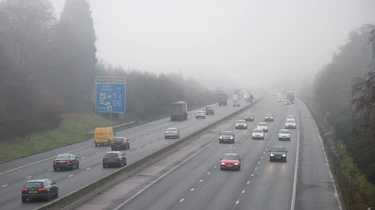
Similarly, try not to lose your patience with other drivers. They might well be driving like a you-know-what, and could be putting other drivers at risk by tailgating, undertaking or, at the other extreme, sitting in the overtaking lane at 60mph while the lanes to their left are empty. But the only way you can control the situation is with your own actions.
Sometimes this is easier to say than do. But the moment you start to lose your patience with another driver is the moment you begin to lose control, not just of yourself but of the situation. And that’s not a good place to find yourself in on any road, let alone one on which there are hundreds of tonnes of metal around you, all travelling at a mile a minute or more.
So stay calm and alert, and stick to the rules while being quietly aware of what’s going on around you. Do this, and motorways can be wonderful ways of getting from A to B. Remember that statistically they are still our safest roads by far, as well as our quickest and most efficient routes.

Pull in, take a break
Statistics show that you are significantly less likely to have an accident when driving on a motorway if you take regular breaks, even just for five minutes to climb out, stretch, grab a coffee or take a socially distanced walk around the car park for some fresh air.
The moment you start to get tired isn’t the first sign that you should take a break, it’s proof that you have been very lucky not to already have had an accident.
In other words, make sure you take a break every couple of hours. Don’t wait until you need one, because by then it could already be too late.
What are your top tips for motorway driving? Let us know in the comments...