Toyota Yaris 2005 review
When it comes to superminis, overall running costs and refinement are key considerations.
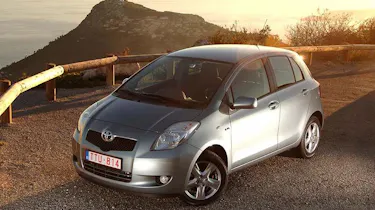
There's no doubt the new Yaris is one of the best superminis on sale. It has lots of space, generous kit and good build quality. But while the new D-4D engine is more powerful than before and almost as economical, it's noisy and struggles for pace. Add in the fact that the 1.3 petrol versions cost £1,000 less, and we can't recommend the D-4D.
Diesel may be the choice of fuel for the long distance driver, but when it comes to superminis, overall running costs and refinement are key considerations.
Small diesels have always been seen as noisy and - with short service intervals - potentially expensive to keep on the road. But, with one of the most advanced small oil-burners in the world wrapped up in a practical bodyshell, does Toyota's new Yaris D-4D offer a convincing alternative to petrol models?
The all-aluminium 1.4-litre derv sipper produces 89bhp, and accelerates from 0-62mph in 10.7 seconds. It delivers a top speed of 109mph and feels relatively happy when cruising at the limit on motorways.
The figures are impressive when you consider the second-generation Yaris is heavier than its highly regarded predecessor. And while this also means there is a fuel economy penalty to pay, and the supermini drops 1.2mpg to record a combined figure of 62.8mpg, the new D-4D is still a very clean car, emitting only 119g/km of CO2. The engine gets off to a good start, feeling torquey and responsive at low revs, but power trails off quickly above 3,000rpm. In order to make rapid progress, it's necessary to constantly stir the five-speed gearbox.
Even more disappointing is the lack of refinement. With too much noise, the D-4D is outclassed by many of its competitors, such as Fiat's smooth 1.3-litre Multijet. The bad news doesn't end there. As the diesel engine weighs more than the Yaris's petrol units, the Toyota suffers in corners, lacking the agility, balance and fluid steering of the other models in the line-up.
By comparison, not only does the 86bhp 1.3-litre VVT-i handle better, but it also feels livelier and more refined - and still manages to return an ex-tremely respectable 47.1mpg.
The D-4D powerplant aside, the Yaris is a great package. There's lots of versatility thanks to sliding rear seats, and although the boot itself is small with the bench moved back, an underfloor storage area increases capacity. The digital dashboard is easy to read, visibility is good, as a result of a high driving position, and there's a quality feel to all the materials and switches.
It's a safe car, too, with a five-star Euro NCAP crash test rating. Pricedat £12,795, the range-topping T-SpiritD-4D variant we tested had keyless entry and climate control. But although it's well equipped, it's certainly not the best model in the range.
That mantle belongs to the 1.3-litre VVT-i T3, which comes with alloy wheels, air-conditioning and a CD player which is capable of playing MP3s, and costs only £10,795. If you're in the market for a Yaris, this petrol option is the one that we would recommend.