Aston Martin’s plan to beat Ferrari and save itself from a £189m loss
Exclusive CEO interview: Adrian Hallmark reveals the product strategy and restructuring plan to get the Brit brand in the black

How do you turn around a perennial loss-making business like Aston Martin? By rolling out more powerful, more dynamic and costlier versions of the current SUV and sports car line-up, expanding the options list to boost revenue and restructuring the business’s operations, CEO Adrian Hallmark has told Auto Express.
The former Bentley Motors boss is approaching two-years in the Aston hotseat, and he’s under no illusions about his mission: “It’s a turnaround,” he says emphatically.
New, more dynamic S versions – and a Vantage GT3
The first step has been unleashing a stream of enhanced variants of the existing line-up. More dynamic S versions of the DBX, Vantage and DB12 – with more power, snappier gearshifts and a more aggressive look – have already landed. “When I joined, we had two versions of the Vantage planned over five years: Porsche might do 15 to 24,” explains the CEO.

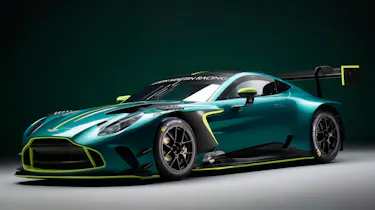
Given a Vantage GT3 finished third in its class at this year’s Le Mans 24 Hours, does it make sense to capitalise with a stripped-out, more powerful, road-legal GT3? “That’s not a bad idea,” the boss ventures with a big grin. “I can’t give you dates but believe me, it’s all coming. We've got seven or eight things happening per year for the next few years, before we get to the next generation cars, so we are raining the innovation down.”
Overhaul the options list – to boost revenue
It’s happening on the options list too. The boss kicked off a review, only to discover that Ferrari, Lamborghini, Rolls-Royce, Bentley, McLaren and Porsche combined offered 199 options that Aston didn’t, probably losing some customers and certainly crucial revenue. As a result, titanium wheels and exhausts and high-end audio systems are coming on stream. The focus on finesseing current models will give more customers a reason to renew after two or three years, and boost used car values.
Restructuring is the final element of the masterplan. Beguiled by the luxury brand boom and peak Chinese demand, Aston predicted a 10,000 annual volume when Lawrence Stroll, the Canadian apparel billionaire, and his Yew Tree Consortium bought into the company in 2020. Ferrari delivered 13,752 cars in 2024, its record year; Aston 5,448 last year. And that’s despite a £2.2-billion investment: “big money for a little business.”
Restructuring has taken costs down by 30 per cent
The problem is, as the CEO colourfully describes it, “Aston turned up to the biggest ever party just as the lights were coming on. We were launching all these cars into luxury’s hangover phase.” He cut production by 1,000 in his first month, enacted two rounds of redundancies, and rightsized the business to around 6,000 cars a year. Hallmark reckons he’s taken out 30 per cent of the cost base.

“We’ve got 26 programmes [focusing on] costs and profits and cash improvement, and we’re nine months in. You’ll start to see the benefits at the back end of this year and into the next.”
It can’t come soon enough. Aston was recently forced to sell the naming rights to its Formula 1 team in perpetuity (to its owner Stroll), raising an additional £50m. A string of profit warnings has plagued Hallmark’s time, with last year’s US tariff crisis contributing to a £189-million pre-tax loss. Does Aston need new investors?
“No,” the CEO replies. “If we deliver the plan we generate our own money. It’s the number one priority to get us to a point where the company is profitable and growing the cash position – instead of burning it. The shareholders have been amazing. But even I get embarrassed going back and asking them for money.
“We thought it would take 18 months to flick the business into [the black],” concludes Adrian Hallmark. “Probably it’ll take more like two years. Watch this space.”
Did you know you can sell your car through Auto Express? We’ll help you get a great price and find a great deal on a new car, too.