Chip shortage averted! China lifts export ban on vital semiconductors for cars
A ban on product exports from Dutch-Chinese semiconductor firm Nexperia has been lifted

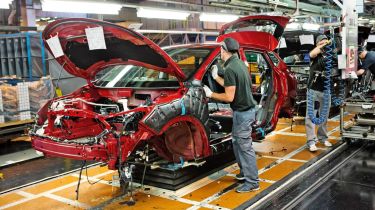
Car manufacturers can breathe a sigh of relief as China has lifted export restrictions on computer chips, as well as the materials used to make them. The move alleviates concerns that limits on supply could result in a disaster for the automotive industry.
On Sunday the Chinese government confirmed that it will allow exports from Dutch-Chinese firm, Nexperia, whose semiconductor computer chips are integral to car production. The firm’s products make their way into models from the likes of Volkswagen, Mercedes-Benz, Nissan and BMW to mention a few and are used to power things from the car’s ECU to safety systems and infotainment touchscreens.
A post on X from the EU’s Commissioner for Trade and Economic Security, Maroš Šefčovič, stated that the Beijing has agreed to simplify export procedures for Nexperia chips and will “grant exemptions from licensing requirements to any exporter, provided that it is declared that the goods are intended for civilian use.”
So what does all this mean?

Well, all of this comes in the midst of the trade war between the US and China following the introduction by the US of huge tariffs on foreign states. With China controlling the vast majority of the world’s vital semiconductor chip supply, limiting resources integral to production has been Beijing’s biggest bargaining chip up until this point.
As mentioned, Nexperia supplies much of the European car industry with semiconductors, however its parent company Wingtech Technology is partly owned by the Chinese government. More than two-thirds of Nexperia’s chips are made in Europe, however, a large proportion are sent via China for final preparations and reshipment.
With this in mind and amidst growing concerns surrounding the “availability of semiconductor products critical to the European industry”, the Dutch government took control of Nexperia in September 2024, with the courts replacing CEO, Zhang Xuezheng, with a non-Chinese executive.
As you might expect, this caused some anger back in China, with Beijing banning Nexperia chip exports – a move which has caused even more anxiety within the industry.
Now, however, following a successful meeting between Trump and Chinese President Xi Jinping, this recent announcement appears to indicate that trade disputes appear to have softened somewhat. Not only will the supply of Nexperia chips be restored, but an export ban on rare minerals for both civilian and military chip production has been lifted until late November 2026, providing even more certainty.
Nevertheless, the situation highlights how as cars become more software-oriented, chip shortages are becoming increasingly problematic. For example, the original Volkswagen Golf had around 30 semiconductors, while the current edition has around 8,000; the all-electric ID.7 has roughly 10,000 more.
Volkswagen Group and Rivian Technologies recently announced a partnership that will result in a “secure supply” of “high-tech semiconductors” – although this will be for cars produced in the future rather than any current models.
The previous semiconductor shortage, which started during the Covid pandemic, was exacerbated by geopolitical factors and affected most electronic goods – from PlayStations to washing machines. Chip shortages caused several car firms to halt production; factories such as MINI’s Oxford plant, Renault’s Flins factory in France and even General Motors’ facilities in North America all paused their production lines.
you know you can sell your car through Auto Express? We’ll help you get a great price and find a great deal on a new car, too.