Long-term test: Polestar 3 Long Range Single Motor
Final report: six months on, and our car has been superseded by new tech


Verdict
The Polestar 3 is a high-quality way to carry people and luggage, proving itself as a capable, comfortable companion. There are frustrations around the tech and it’s now competing against strong rivals, such as BMW’s iX or the smaller but higher-tech Volvo EX60 and Mercedes GLC electric models, but it’s still a smart choice.
- Mileage: 12,623 miles
- Efficiency: 3.0mi/kWh
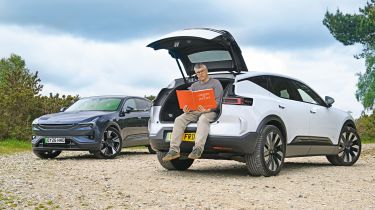
Evolution – staying fresh in the face of new challenges – is vital to stay competitive. And Polestar is a brand embracing it, with a number of evolutions of pricing and spec during our 3’s time with us. This has culminated in a 2026 Model Year update (the blue car in our picture) that steps up both performance and charging speed, as well as standardising the upgraded core processor, already retro-fitted to our car at a dealer. That means later evolutions are secure, because it will power more ambitious over-the-air updates in the future.
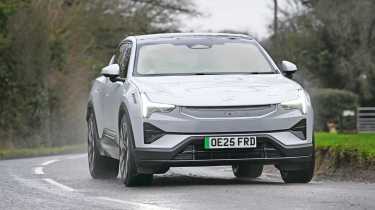
But back to the present. Our Long-Range Single Motor Polestar 3 is now extinct, with a revised line-up removing the 400-mile-plus model. That’s a shame in terms of the headline range, but being able to (just about) hit a real-world 300 miles on a charge is plenty practical enough, even if it doesn’t sound as impressive.
Used - available now

2025 Polestar
3
8,000 milesAutomaticElectric
Cash £44,983Our efficiency over several thousand miles was pretty good for a big car, at a shade over 3.0 miles per kWh, with decent consistency between cold and warmer weather; the latter liberated perhaps 20-plus miles of extra range. On petrol cars, we’ve found 75 per cent of the official economy figure is a fair return, so the Polestar’s in the right ballpark by comparison. There’s a lot to like about the Polestar 3.
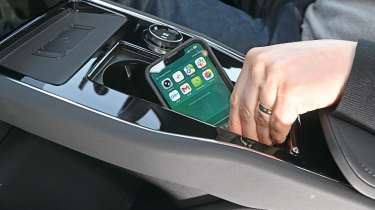
The elongated estate-meets-SUV styling sets it apart, and is complemented by a high-quality cabin with good use of materials, big door bins and great seats. There’s a surplus of space, so four adults will be very comfortable, while the big, square boot – complete with recess to stow the charging cable if you don’t use the frunk – doesn’t seem impacted by the room devoted to passengers. The only real moan about the cabin quality was the plastic around the cup-holder, meaning any phone or keys in there rattled horribly on the move.
Our car’s 295bhp never felt inadequate (and the MY26’s extra 34bhp didn’t feel like much of a lift), even though it’s the lowest of three power levels that now rise as high as 670bhp. That said, the more powerful cars get air suspension that smooths out the low-speed ride, the main area where our ‘entry’ Polestar 3 could do better. It’s not a fan of urban lumps and bumps.
It’s also not a car without its frustrations. In a couple of places, it seems like the engineers don’t understand how people, especially families, actually use cars. Having a button-less key fob, so you have to be standing next to the car to open it, frequently caused frustration. While the digital key on my phone worked flawlessly, having to dig your device out and open the app to unlock the car, rather than using the key that’s in your hand, is plain annoying.
I presume the same person also decided that it’s easier to go a couple of menus deep on the touchscreen to open the glovebox, rather than having a physical handle. And it would be lovely if the Apple CarPlay connected quickly and consistently.
Polestar has revamped the 3’s pricing and spec, so it starts at more than £75k, but some formerly optional equipment is now standard, making it look expensive but well specified.
Polestar 3 Long Range Single Motor: fleetwatch report
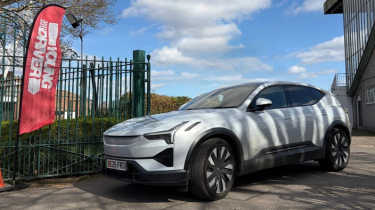
The Polestar 3 is so easy to drive that editor Paul Barker's children think they could do the job
The Polestar is a hop-in-and-go car. You just flop into the driver’s seat, flick the gear selector into Drive and you’re off. After taking the Young Driver course recently, my kids now think they could drive the Polestar. Which has prompted fun chats about which I’d pick to drive me to hospital in an emergency.
Polestar 3 Long Range Single Motor: fleetwatch report
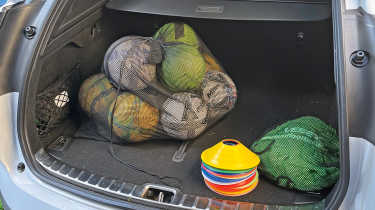
The Polestar’s practicality looks modest on paper, but my son’s football equipment shows just how usable it can be
On paper, the Polestar 3’s boot isn’t that big for a car that’s almost five metres long, but the 484 litres is a decent square space that feels bigger – handy when I’m lugging around the pile of stuff needed for coaching my son’s U12 football team.
The balls, bibs, cones and other paraphernalia can be stored in the load bay rather than cluttering up the house, yet there’s still room for the weekly shop.
The charging cables tend to live under the boot floor; although there is technically enough room in the ‘frunk’, it’s a bit tight and it’s easier to lob them in the back without having to fastidiously roll them up neatly after a charge.
Reports from the rear seats also reflect favourably on the panoramic roof. The glass lets in so much light, but the electrochromic film that can shut it out at the touch of a button is a £1,600 option and there’s no sun blind, so we’ll see whether the kids are still so dazzled by it when the sunny weather kicks in.
Polestar 3 Long Range Single Motor: second report
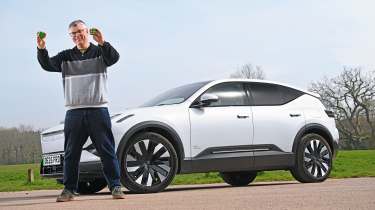
Just like the Rubik’s Cube, our man’s cracked getting the best out of SUV
- Mileage: 10,869 miles
- Efficiency: 3.1mi/kWh
I feel like I’ve cracked the code! Familiarity is breeding anything but contempt between the Polestar 3 and me, with the passing of time helping me learn and understand how to get the best out of it. That’s because the 3 is the perfect example of how modern cars are no longer a hop-in-and-go device, and the tech can seem overwhelming to begin with.
Initial significant frustrations are now starting to fade away a little, helped by a variety of factors. The single biggest is the game-changer of adding the key to my Apple wallet. By the time you’d read my first report, I’d already had enough of the key fob, which seems to have the battery power retention of a 10-year-old iPhone – but is harder to charge. Adding the key to my phone wallet means the car actually unlocks when I walk up to it. Amazing what counts as progress… I’m now comfortable enough to not even take the key fob with me when I go out.
A recent return to Polestar to replace the car’s core processor – as the firm is doing for all 3 owners – is designed to aid future over-the-air updates, but has also added a couple of handy new features. The biggest of these is a distance control for the adaptive cruise control, a baffling omission now rectified and easily accessible on the touchscreen main menu.
The basic cruise control functionality still defies logic, though. When every other brand has a simple way to set, cancel and resume, Polestar really did try and get too clever in putting cruise features on the drive stalk.
It’s nowhere near intuitive enough, and the steering-wheel buttons also reek of trying to reinvent something that worked fine the way everyone else does it, and are much poorer from a usability point of view as a result.
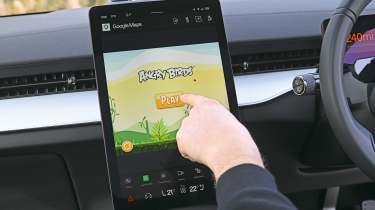
Despite all the tech, I’ve gone back to 2010 for a favourite feature. During weekly waits to collect my daughter from volunteering as a Brownies leader, I’ve been working my way through the classic game Angry Birds, which was one of the first smartphone smash hits more than 15 years ago. The touchscreen works well for this sort of gaming while I’m waiting, and there are plenty of other options available via the Google Store, when I get bored of aiming birds at little green pigs.
I’m also enjoying how clever the Google-based navigation system is, especially when combined with voice activation, and have got to the point where I’m normally using it over either of the Apple CarPlay or Google Maps functions. The days of needing postcodes are gone, with the in-built set-up having a so-far faultless record, and because it’s connected to the car’s systems, you can also see the expected battery level when you arrive, and plan any charging stops.
It’s also a real result that the Google system is so good, because the wireless CarPlay connection is frustratingly glitchy and can take several minutes to work out that it does know my phone after all – one of the tech complaints I am yet to find a solution for.
Getting to know the Polestar 3 better has reinforced its strengths – it’s spacious, plush inside, has a good boot and is comfortable – as well as weaknesses such as a less-than-cosseting ride quality on this entry-level car’s non-adaptive suspension set-up.
Although matching the official 438-mile range is proving too much of an ask, especially before the weather turns towards summer, I can at least guarantee making the 230-mile-plus round-trip from my Sussex home to our Bedford office on a single charge, which has been too close for comfort in previous EVs. There’s enough range in-hand to not worry about keeping my speed down or switching off the climate control. Driving normally at motorway speed, I got home with a heady 14 per cent of the battery intact last time.
Overall, I’m averaging 3.1 miles per kWh, which is around three-quarters of the official figure. Experience across petrol, diesel and electric cars says below 70 per cent of the official mpg or miles/kWh figure is poor, and above 80 per cent is good, so we’re about right with an efficiency that gives the Polestar 3 around 300 miles on a fully charged battery.
Polestar 3 Long Range Single Motor: fleetwatch report
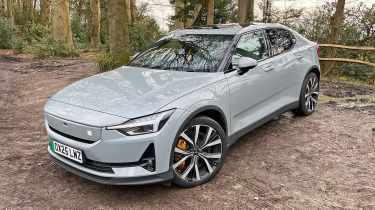
A week in the Polestar 3’s baby brother showcases the upgrades customers can expect across the current model range
The observant among you will have spotted that the car above isn’t a Polestar 3, but its little brother, the Polestar 2. It’s with us for a week while ‘my’ 3 goes home for an upgrade. As well as all new models getting a faster core processor, the Swedish brand is retro-fitting it to existing cars so current owners also benefit. It will allow bigger over-the-air tech updates in the future, but the upgrade should also bring changes such as new functionality on the steering wheel buttons, and auto-folding mirrors.
Polestar 3 Long Range Single Motor: first report
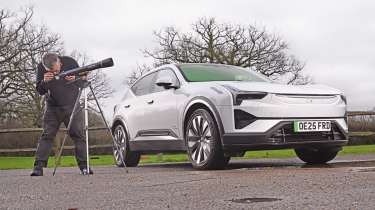
At the risk of starting an argument with our testers, who prefer a different edition, the editor welcomes long-range SUV to our fleet
- Mileage: 8,963 miles
- Efficiency: 2.8mi/kWh
We’ve kind of gone against our own advice when picking which Polestar 3 to run. But we’re playing the long game with the Long Range Single Motor edition that joined the SUV’s line-up last year, dropping the entry point to below £70,000 and pushing the official range out to a heady 438 miles.
That makes this the longest-range electric car we’ve ever run on the Auto Express test fleet, and it’s going to be interesting to see if over 400 miles of range is enough to silence the EV sceptics over the next six months.
I’m lucky because I can charge at home, and I’m expecting my clever Ohme chargepoint will soon come into its own, taking advantage of cheaper rates of supply where possible, while still making sure the car is ready to go at the time I’ve set. Without home charging, the argument for electric cars falls apart, I reckon.
Given that the latest EVs are edging out to 500 miles of range and beyond, my suspicion is that we’re reaching numbers that might be more than most drivers actually need. I’m also fascinated to see if the Polestar’s range is enough to minimise pricey public charging stops on longer trips. Previous EVs I’ve run have hovered below the 250-mile mark at best in the real world, and sometimes that meant a rapid charge to make sure I got home.
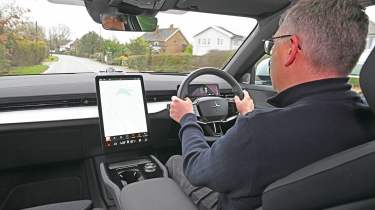
Which is why we’ve gone against our own advice when picking which model to test. When the Long Range Single Motor was added to the line-up, we concluded that the Dual Motor alternative’s extra performance and brilliant adaptive air suspension were worth the £6,000 price jump and the reduced range.
But I was attracted to the potential extra 43 miles of driving on a charge, taking the claimed range to well over the 400-mile mark, and that was the clincher compared with the Dual Motor’s official 395 miles. True, its 7.5-second 0-62mph time is a little on the relaxed side, but this is a big SUV, so almost 300bhp should be enough to keep me happy.
And going for the entry car doesn’t mean any compromise in kit. My family and I are enjoying the likes of a head-up display, heated seats all-round, panoramic roof, three-zone climate control, and what seems like every safety system ever invented.
Beyond that, we were a little extravagant with the options list, ticking boxes for various packs that add just over £12,000 to the list price, but give us a chance to assess the value of the various extras. One place we didn’t add any cost, though, was the Magnesium paint. As the standard colour, it’s the only one that doesn’t add £1,000 to the price, but I think it suits the car better than the blue, black, white or lighter grey options.
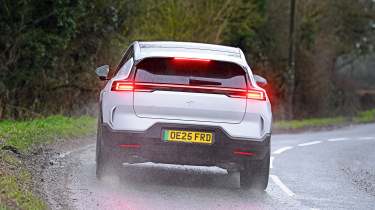
It’s early days with the car, so we’re still waiting for the predicted range to settle down in line with my driving style. The figure is hovering around the 240-mile mark on an 80 per cent charge, which means 300 miles or so from a full battery. As soon as I start doing some longer trips, I’m expecting that to rise.
What has been getting a rise out of me from day one, though, is the key. I can’t fathom Polestar’s decision-making, and assume it’s a case of style over logic, but there’s no unlock button on the fob – the car opens as you walk up to it with the key in your pocket. Which is fine until one of your children remembers they’ve left their phone behind and runs back to the car to get it.
With a normal car, you’d get the key out and hit the unlock button, but Polestar didn’t think of such scenarios, so you either have to call said child back to give them the key, or grab your phone and use Polestar’s app to unlock the car. Occasionally, the 3 has even decided it doesn’t want to open. I never knew I’d miss an unlock button so much.
Having every operation deep in touchscreen menus is also taking a bit of getting used to. The screen itself is excellent, but it’s not easy to find some functions. At least the climate control and other important settings are fairly easily accessible across the bottom bar.
| Rating: | 4.0 stars |
| Model tested: | Polestar 3 Long Range Single Motor |
| On fleet since: | December 2025 |
| Price new: | £69,910 |
| Powertrain: | 107kWh battery, 1xe-motor, 295bhp |
| CO2/BiK: | 0g/km/3% |
| Options: | Plus Pack (£5,000), Pilot Pack (£2,300), Pro Pack (£1,800), HD LED Headlights (£1,600), Animal Welfare wool interior (£1,000), Rear privacy glass (£400) |
| Insurance*: | Group: 50 Quote: £1,602 |
| Mileage: | 12,623 miles |
| Efficiency: | 3.0 miles per kWh |
| Any problems? | Keyfob’s flat battery locked us out |
*Insurance quote from AA (0800 107 0680) for a 42-year-old in Banbury, Oxon, with three points.
Did you know you can sell your car through Auto Express? We’ll help you get a great price and find a great deal on a new car, too.