On-street electric car charging gets £55million Govt. funding boost
The UKs National Wealth Fund invests government cash in Connected Kerb

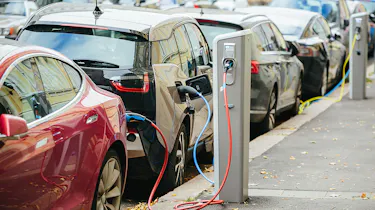
On-street EV charging is getting a boost, thanks to an investment announced by Chancellor Rachel Reeves as part of her package of growth measures for the UK economy.
The money is slated to come from a £65 million investment in car charging firm Connected Kerb, £55 million of which comes from the Treasury’s National Wealth Fund (NWF), with another £10m from Aviva. The NWF is financed by taxation and government borrowing, and its purchase of an equity stake in on-street charging firm Connected Kerb is expected to quadruple the firm’s number of on-street chargepoints to 40,000.
“This is a game-changing investment that will give individuals and businesses the confidence to make the switch to driving electric, dramatically reducing carbon emissions and air pollution,” says Connected Kerb chief executive Chris Pateman-Jones. “We are delighted to have such high profile investors who are deeply aligned with our sustainability and ethical goals.”

The Connected Kerb investment has been welcomed by industry, with Renault UK’s managing director Adam Wood saying it’s a critical requirement to give people without a driveway an easy, affordable way to charge an electric car.
“Today’s announcement gives confidence that legislators are ready to back their ambition with investment,” he says. “Providing more access to charging points for customers is critical to speeding up the transition to zero-emissions vehicles."
But there are plenty of signs suggesting that more needs to be done. On the day of the Chancellor’s speech, data revealed from a survey of 1,000 drivers conducted by insurance platform Quotezone, suggested that 90 percent don’t believe the UK is ready for EVs, while four fifths of drivers think the planned 2035 ban on new petrol and diesel vehicles is coming too soon.
The survey also suggested that more than half of drivers think the government should be providing more grants and tax incentives to support the EV transition, while 48 per cent reckoned a free electric car charger at home would be the most significant factor when it came to considering a switch to an electric car.
Tell us what you love (and hate) about your car. Take the Driver Power survey now and you could win a £100 Amazon voucher