BMW iX3 review
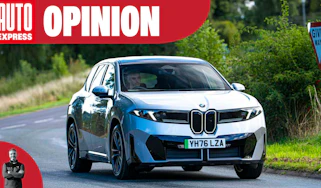
The BMW iX3 is a quantum leap in EV design and engineering, and a multiple award winner in our 2026 Car of the Year awards

Our opinion on the BMW iX3
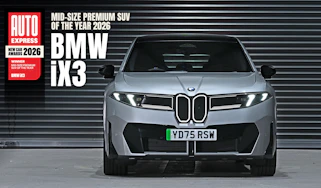
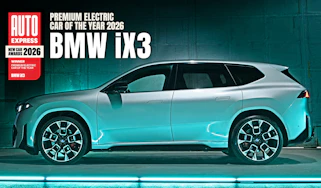
The BMW iX3 is the Munich brand's most important car in 20 years, but don’t let that high-pressure statement get in the way of enjoying all the huge steps forward in design and engineering this car offers. As a high-end, family-friendly electric car with brilliant tech, performance and design, this is now the pinnacle – and the fact it doesn’t cost the earth just makes the package even more impressive. BMW’s Neue Klasse really is worth the hype – so much so that we've awarded it both our 2026 Premium Electric Car and Premium Mid-Size SUV Car of the Year trophies.
About the BMW iX3
There’s been a lot of hype around ‘Neue Klasse’, which is BMW speak for a new era of design and technology that will feature on 40 (yes, 40) new and updated models BMW plans to launch by 2027, and the iX3 is the first to enter production. It sits alongside the existing petrol and hybrid-powered X3 in the BMW range.
The iX3’s enormous range comes from the dual-motor 50 xDrive powered by a massive 113kWh battery, but the entry-level 40 sDrive with its 87kWh battery still manages 395 miles to a charge. More versions should arrive soon, including a high-performance M model that will sit at the top of the range. An iX4 coupé-SUV is also coming soon.
Used - available now


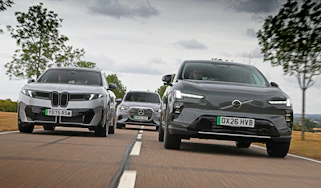
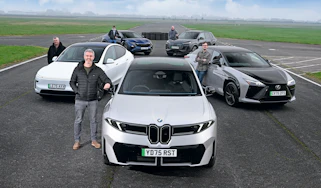
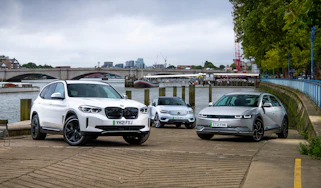
We've tested the 50xDrive M Sport version of the BMW iX3 against its main rivals, including the Audi Q6 e-tron, Tesla Model Y, Lexus RZ and Alpine A390 – all of which the iX3 beat in our premium electric SUV supertest.
Performance & driving experience
Pros |
|
Cons |
|
The Neue Klasse revolution begins at the fundamental layer, because the iX3 introduces a brand-new battery and electric motor layout. The battery’s cylindrical cells are designed to enhance cooling and power density, while the top side of the pack serves as the cabin floor, aiding packaging.
The iX3 40 is rear-wheel drive, with the 50 xDrive being powered by a dual-motor layout. The electric motors in the latter aren’t symmetrical, meaning BMW’s classic rear-biased driving style can still be felt through the all-wheel-drive system, with the more powerful rear motor providing the bulk of the drive under normal circumstances. The front motor only provides drive to the front wheels when required and is decoupled from the drivetrain when not in use to reduce frictional losses and improve efficiency and, therefore, driving range.
Controlling this hardware is the brand-new and rather cheesily-named Heart of Joy software package that’s been designed and developed from scratch by BMW. This consolidates all the car’s computer systems into a single central brain.
This has many benefits across all aspects of the car’s driving, safety and infotainment systems, but perhaps the greatest is its control of the braking system. Most EVs use some form of regenerative braking, but BMW has developed a system that can bring the iX3 to a complete stop, rather than bleeding off onto the friction brakes at the last minute.
As well as recuperating more energy, it has also allowed BMW to engineer what it calls a ‘soft-stop’ system, which eliminates the small jerk that often accompanies coming to a complete stop – whether it's done by the driver or an active cruise control system. The system represents just the tip of a technological iceberg that covers almost all the elements drivers come into contact with in day-to-day use, and makes sure it’s all executed superbly.
Performance, 0-60mph acceleration and top speed
BMW quotes a 0-62mph time of 4.9 seconds for the 462bhp 50 xDrive, but in the real world, it feels quicker than that. The peak 650Nm of torque is accessible from a standstill, and no matter the road speed, the iX3 can build pace faster than any reasonable family car should. Top speed is limited to 130mph, which is a definite improvement on the 112mph maximum of the previous iX3, making it just as capable on high-speed autobahns as it will be on the UK’s 70mph motorways.
This isn’t the high-performance model, but you definitely won't be searching for more, even when fully laden. The raw pace doesn’t feel unnatural or out of control, as some electric cars occasionally can. There’s a rearward bias to the power, which gives the car a pleasant balance under hard acceleration out of corners, and there’s nothing scrabbly or messy about the way in which power is sent to the wheels.
There’s a small amount of fake engine noise in the default drive mode, but Sport will add a further layer of computerised energy to the system, plus an extra level of rear-bias to the power delivery. There’s also a ‘Silent’ mode, which creates a more serene experience.
We're yet to try the entry-level iX3 40, but its 315bhp electric motor propels it from 0-62mph in a still rather rapid time for a family car of 5.9 seconds, while a top speed of 124mph is plenty.
| Model | Power | 0-62mph | Top speed |
| iX3 40 | 315bhp | 5.9 seconds | 124mph |
| iX3 50 xDrive | 462bhp | 4.9 seconds | 130mph |
Town driving, visibility and parking
One surprise with the iX3 is how easy it is to see out of the driver’s seat. We found the driving position to be almost perfect for this sort of car, thanks to plenty of adjustment.
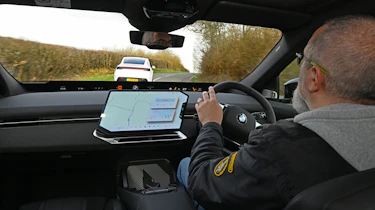
The Panoramic iDrive takes up about 2-3 inches of space on the base of the windscreen, but this sits in an area that previously would be taken up with the dashboard, so the view out doesn’t feel obscured. The side windows are very large, so even over-the-shoulder visibility is good.
Piloting the iX3 down narrow streets and in car parks is easy, made simpler by the crystal-clear 360-degree parking cameras, and there’s a clever parking assistant that can complete entire parking manoeuvres whether you’re sitting in the cabin or not.
Country road driving and handling
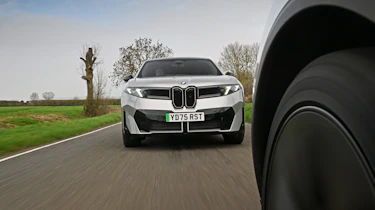
The iX3’s steering has a distinct accuracy, right from the straight ahead. The initial steering weight feels almost too light, but from the moment the wheels are turning, BMW has engineered in some weight to give the impression of solidity without making the car feel cumbersome.
There’s a quality to the way an iX3 travels down the road – it feels expensive and totally comfortable. That unfortunate feeling of car-sickness that some high-riding EVs elicit is also non-existent. Somehow, BMW has cracked the required geometry to almost completely hide the mass of the batteries that sit a few inches below you.
Razor-sharp turn-in and beautiful body control, especially on 22-inch wheels, mean the ride quality is a touch firm, even in its ‘normal’ setting, but the quality of the damping is such that it never feels uncomfortable. You’re aware of the road surface and any dips and crests, but lots of the granular noise is filtered out, making for an easygoing driving experience.
It’s not as overtly sporty as a Porsche Macan Electric, but it’s also more comfortable. It’s more accurate than an Audi Q6 e-tron and on a different planet from the comfort-oriented Mercedes GLC Electric.
Motorway driving and long-distance comfort
Of the many rivals we tried during our supertest, only the Audi Q6 e-tron came close to the BMW in terms of ride comfort at high speeds. The GLC Electric, by comparison, is much softer and at times a bit too floaty over undulations. Refinement could be a little better at high speeds in the iX3, though, with some wind and road noise being heard.
The BMW relies on technology to take the difficulty out of long-distance cruising. There’s a new hands-off active cruise control at Level 2+ autonomy – meaning the system will no longer prompt you to hold the steering wheel as you’ll find on a Tesla or Ford with BlueCruise fitted. What’s unique to BMW, though, is the ability to change lanes when prompted just by looking in the door mirror. It’s a system that doesn’t just feel competitive, but that actually works reliably.
“The greatest compliment we can give the iX3 is that it drives like a very well sorted BMW. Not too sporty, but not dull or disengaging, this will be a perfect balance for most buyers.” – Jordan Katsianis, news editor.
Range, charging & running costs
Pros |
|
Cons |
|
If there was a compelling combination of elements that sold the BMW iX3 on paper, it would be its range and charging. BMW quotes a range of up to 500 miles on a single charge for the 50 xDrive, a headline figure that will no doubt be whetting the appetites of customers as well as worrying rivals. That figure is for Sport models with the 19-inch aero wheels, but even M Sport variants on the more desirable 21- and 22-inch options will only see this drop to around 460 miles. Meanwhile, the iX3 40, with its smaller battery, has a quoted range of 395 miles.
When testing the BMW against its close rivals here in the UK, we found the iX3 50 xDrive only came second to the Tesla Model Y for motorway efficiency – suggesting 391 miles at a steady 70mph. More difficult urban and rural roads at rush hour saw the BMW return a 2.7mi/kWh efficiency, equating to around 300 miles on a charge, which was better than every other car on test, with the exception of the Lexus RZ.
During our first drive of the car abroad, BMW explained in detail all the reasons why it’s so efficient, but the key technology that stood out to us was its expanded regenerative braking system that rarely, if ever, uses the friction brakes. Once again, this is a talent of its Heart of Joy brain.
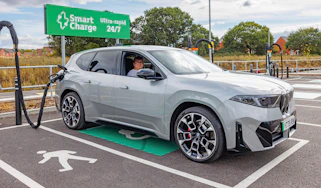
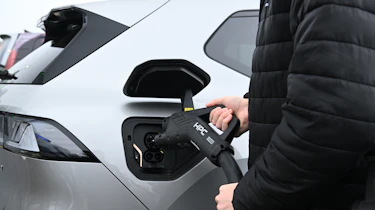
BMW also quotes a peak DC fast-charge rate of 400kW for the 50 xDrive – the highest in the class. This will be hard to achieve in the real world at the moment, largely because chargers capable of producing such high figures are few and far between in 2026. However, this will change, so the iX3 will be ready when those ultra-rapid chargers become more common. At its peak, the iX3 will replenish 231 miles in just 10 minutes. The iX3 40’s smaller battery has a slower peak charging rate, but 300kW will still add 186 miles of charge in 10 minutes, and it’ll do the 10-80 per cent top-up in 21 minutes.
Utilise a typical 7.4kWh home wallbox charger, and you can expect it to take around 16.5 hours to fully recharge a 50 xDrive, while the smaller battery in the 40 will take just over 13 hours to be fully replenished.
| Model | Battery size | Range | Insurance group |
| iX3 40 | 87kWh | 395 miles | 39-40 |
| BMW iX3 50 xDrive | 113kWh | 500 miles | 43-44 |
Insurance groups
The new-generation iX3 falls into insurance group 43 or 44 (out of 50), depending on which trim you go for, which is exactly the same as the previous-generation model. Compared to its key rivals, the Audi Q6 e-tron sits in groups 44 to 50, while the Polestar 3 sits in the highest group possible, 50.
However, the iX3 also features the latest safety systems that are designed to reduce the risk of accident damage in the first place. These next-generation occupant and hazard-detection systems could be what keeps insurance costs down, even if repair costs are higher than for previous generations.
Tax
Beyond the first year of ownership, the iX3 will incur both the flat £200 base VED road tax, plus the supplementary luxury car tax of £440, bringing the total to £640 per year. As with all EVs, the Benefit-in-Kind (BiK) company car tax rate is currently set at four per cent for the '26/'27 financial year, rising to five per cent in '27/'28. Electric cars are exempt from ULEZ charges, but are subject to a discounted Congestion Charge fee compared with their regular petrol, diesel, and hybrid rivals. Regional traffic-free zones such as the one in Oxford have no distinction between EV- and ICE-powered vehicles.
Depreciation
According to our market data, the iX3 will retain up to 56 per cent of its original value after three years of ownership and 36,000 miles. For comparison, the Volvo EX60 is expected to retain between 52 and 57 per cent of its original value, the Mercedes GLC Electric 50 and 54 per cent, and the Audi Q6 e-tron 45 and 50 per cent. The iX3 is also supposed to retain slightly more value than the combustion-powered X3, too.
To get an accurate valuation on a specific BMW iX3, check out our free car valuation tool...
Interior, design & technology
Pros |
|
Cons |
|
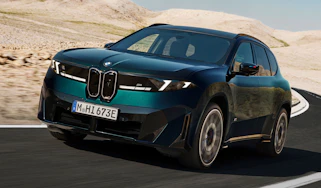
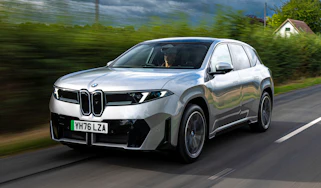
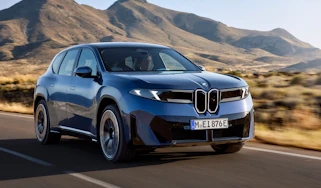
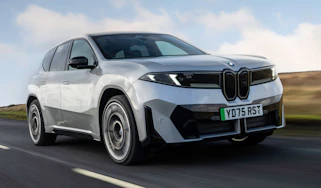
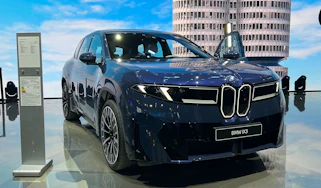
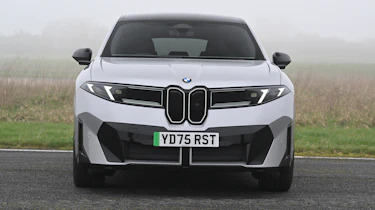
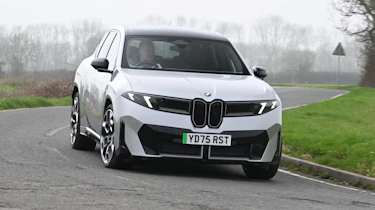
The next element of the ‘Neue Klasse’ ideology can be found in the car’s styling, where the team has totally reimagined the BMW aesthetic. Up front is a new ‘mask’ made of black glazed panels that also house the headlights. Future saloon models will have just two of these elements that, in effect, take up the mantle of being classic ‘kidneys’, but SUVs such as the iX3 feature a different layout, with two small and upright kidneys at the centre with more black glazing on either side.
In the flesh, this, combined with the sharp and simple bodywork, makes the car look modern and sleek – like the generation ahead that it is. Other elements also show how much progress is being made, such as the seamless door panels that do without a lower window gutter and the flush door handles. These are another highlight, as they feel robust in a way no other ‘presenting’ door handle has felt so far.
Sport may be the entry-level specification for the iX3, but it comes with all the equipment most people will want, including:
- 20-inch wheels
- Pillar-to-pillar Panoramic iDrive display
- 17.8-inch touchscreen
- Heated seats
- LED headlights
- Keyless entry
- Powered tailgate
- Dual-zone climate control
- Adaptive cruise control
Key options for those interested in the Sport model include metallic paint and a leather interior upgrade, which both cost less than £1,000.
But while even the base iX3 comes loaded with tech, stepping up to M Sport only costs £2,500 and injects some attitude into the car’s look courtesy of more aggressive bumpers and snazzier wheels, while the interior gets a few upgrades, too. M Sport Pro goes further by adding sports seats, plus a Harman Kardon sound system and a head-up display.
If the glowing grilles are a little much, you’ll be glad to hear they’re optional, but the panoramic roof is worth ticking the box for.
Interior and dashboard design
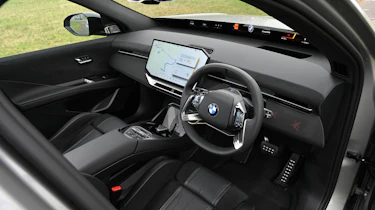
Every couple of decades or so, a BMW comes out that totally changes the rules of cabin design. The E65-generation BMW 7 Series did this in 2001, and the iX3 has done it again. The cabin’s architecture has been completely reimagined, and rather than being different for the sake of being different, it all just works.
The first element that catches your attention is the Panoramic iDrive, which replaces the traditional dial pack in front of the steering wheel. At the base of the windscreen is a big black bar built right onto the glass, which reflects a huge, unbroken and high-resolution display underneath. Because it’s not a direct-vision screen, BMW has been able to give it the effect of living about halfway down the bonnet, meaning that you need less time to adjust your eyes to looking out of the windscreen.
Directly in front of you are your speed, battery and range readouts, with the centre and passenger side of the screen customisable with widgets dedicated to navigation, economy or dynamic element readouts. Beyond this, when you have the embedded navigation in use, it’ll also throw up a small map view of your next turn.
There is very little physical switchgear, but the centre console features a collection of key buttons, including a gear selector, front and rear demisters and a volume knob. Also worth mentioning are the seats, which are fantastically comfortable.
Materials and build quality
The materials used inside the iX3’s cabin don’t feel sumptuous, but they are modern, robust and have a high-quality feel. Most specifications of iX3 will feature leather-like inserts on the doors, centre console and dashboard, and the good news is that there’s not a single piece of fake or surplus stitching to be found. The lower dash has a contrasting fabric insert that adds a nice touch of warmth, and M Sport models further this with alcantara-like fabrics on the dash and doors, too.
Build quality also seems top-notch, although we’ll have to see how cars fare in the UK once children and pets are brought into play. The doors shut with a great thunk, and there are no gaps or missteps in the interior construction. BMW interiors have impressed with their solidity in the past two generations or so, and this latest one is no different.
Infotainment, sat-nav and stereo
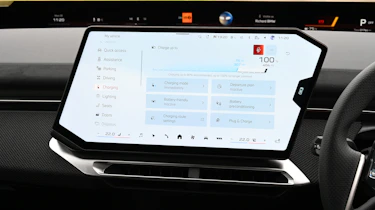
Joining the Panoramic iDrive is a 17.8-inch touchscreen that’s not so much angled towards the driver, but leans towards you in an eight-sided oblong shape. While this might seem purely for style’s sake, after the best part of three days at the wheel, we found it greatly improves usability. The top corner closest to the driver is only a few inches away from your hand and features static elements that you’ll most often come into contact with. These include shortcuts to the speed limit sign warning and lane-keep assist functions, plus a little pull-out tab that’ll shortcut you straight to the car’s internal and external settings.
At the base of the screen is a collection of static climate controls. Some larger toggles for key elements like temperature or fan speed would be nice, but so fast and responsive is the screen that it’s not really an issue. The main menu structure is also far more resolved than previous BMW systems – despite them often being considered among the best in the industry.
Key functions are available on a consistent set of tabs closest to the driver, with nav functions built into the other side. Apple CarPlay and Android Auto are fitted as standard, and fill the bulk of the screen, but we found the embedded system better to use. The same goes for the sat-nav, which has the added bonus of being connected to online services for accurate traffic and public charging information on trips. If you prefer Apple or Google maps, it would be nice for the next-turn info to be piped onto the Panoramic iDrive, but we’re splitting hairs in an otherwise superb user interface.
In an unusual move, BMW has placed the two spokes on the steering wheel at the 12-o’clock and 6-o’clock positions, decoupling the haptic controls from where you hold the wheel. But there might be some sound logic behind this unconventional decision. This will vary depending on preference, but we found that the annoying part of this type of haptic control isn’t a problem here – you’ll never accidentally press a button on the steering wheel because they’re not attached to where your hands are placed.
The system also lets BMW ‘hide’ some controls based on what can and can’t be used at any given time. For example, when on a motorway, the parking assistance controls disappear to avoid crowding the wheel. The volume control is a little fiddly, but again, we’re really splitting hairs here.
Then there’s the voice command system. Compared to its electric SUV rivals, we found the BMW the most impressive, completing all our tasks without fault and offering plenty of suggestions for what else it can do. The iX3 even told us a joke… so if you want to know what cars put on their toast, the answer is ‘traffic jam’.
“Screen resolution of the BMW’s Panoramic Vision display is superb, and if you set it up to have your speed and navigation instructions ahead of the driver, it makes the optional £1,700 head-up display seem a little redundant.” - Dean Gibson, senior test editor.
Boot space & practicality
Pros |
|
Cons |
|
The iX3 is right on target when it comes to practicality, offering plenty of space for five people and their luggage in the well-formed but not excessively large cabin or boot. It’s within a whisker of its two key rivals, being slightly lower and narrower. At 2,890mm, its wheelbase is long for its overall length compared with non-EV rivals, but on the same page as the Mercedes GLC Electric and Audi Q6 e-tron. There are no further body shapes for the moment, but a sleeker iX4 will be coming in 2027.
Dimensions and size
Compared with the GLC Electric, the BMW is around 60mm shorter, a touch narrower and a little lower, too. The wheelbase is also around 70mm shorter, but the boot space on the two is the same. Audi’s Q6 e-tron is the shortest of the trio, but also the widest and tallest, making it feel a little larger than its contemporaries.
The iX3 is an SUV, but it doesn’t feel too high off the ground, and its largely upright shape and large windows make seeing out easy.
| Dimensions comparison | |||
| Model | BMW iX3 | Mercedes GLC Electric | Audi Q6 e-tron |
| Length | 4,782mm | 4,845mm | 4,771mm |
| Width | 1,895mm | 1,913mm | 1,939mm |
| Height | 1,635mm | 1,644mm | 1,648mm |
| Wheelbase | 2,897mm | 2,972mm | 2,899mm |
| Boot space | 520 litres | 520 litres | 526 litres |
Seats & passenger space
Space up front feels good, with nicely shaped door cards and a dashboard that doesn’t seem to intrude on your space, or sit too high in relation to the windscreen base. In fact, due to the iDrive system, the dash is actually quite a bit more compact than most key rivals, and even with the touchscreen right at your fingertips, it feels more spacious and modern than they do, too.
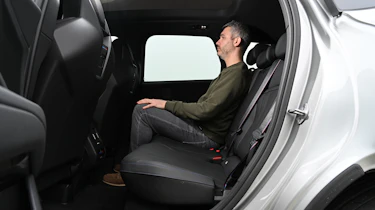
The second row is also great for passengers, with plenty of leg and foot room. Headroom is good with or without the panoramic sunroof, and the seats are comfortable. Even with the batteries under the floor, BMW has mounted the seats at such a height as to avoid a knees-up position, and a flush sill with the battery floor also makes it very easy to get in and out. One odd element is the lack of pockets on the back of the front seats, and while you can fit clever tablet holders, it’s a little short on full child-friendly storage.
Boot space
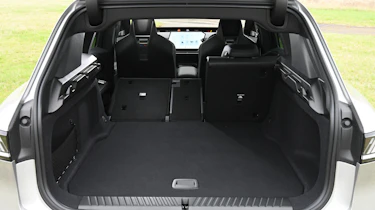
The boot is typical for the class at 520 litres, but there is also some underfloor storage. The space is wide and flat, but there’s only a standard rolling load cover and no clever additions such as dividers or nets. The rear seats fold in a 40:20:40 split, and these can be lowered individually or together.
There is a 58-litre front-mounted boot which sits in a covered section, making it fully weather-proof. This isn’t a huge space, but it is big enough for the car’s charging cables.
“Every bit as big as it needs to be, you’ll have to wait for the forthcoming iX5 for a surplus of room inside, but don’t worry, it’s not far away.” – Jordan Katsianis, news editor.
Reliability & safety
Pros |
|
Cons |
|
This early in the car’s model cycle, it’s difficult to give an accurate account of the newcomer’s reliability and safety, although we expect it to score highly on both counts.
The BMW brand improved upon its 2025 Driver Power score, jumping from 10th to fifth in the 2026 Driver Power Best Car Manufacturer rankings. Owners liked the powertrains, interior, technology and quality of their cars, but had a few grumbles about their cars' running costs.
Safety experts at Euro NCAP have awarded the latest iX3 their maximum five-star rating. It's one of the first cars to be assessed under an updated testing regime that includes more on-road testing to assess the accuracy of its driver-assist systems and determine how distracting or not a car's infotainment system is.
As standard you get adaptive cruise control, blind spot assistance, lane departure warning and centring assistance, and speed limit warning. You can add a Motorway Assistant for £925, providing an additional level of driver assistance such as lane change assistance and expanded steering and lane control assistance. The downside is this only provides four-year's worth of these services, and you'll need to pay a subscription to maintain them afterwards, which we think is a bit cheeky considering a number of those features are provided as standard on the Volvo EX60 as part of its Pilot Assist system.
| Euro NCAP safety ratings | |
| Euro NCAP safety rating | Five-stars (2026) |
| Safe driving | 73% |
| Crash avoidance | 83% |
| Crash protection | 86% |
| Post crash safety | 95% |
Buying and owning
Best buy: BMW iX3 50xDrive M Sport
Even with its class-leading electric performance, the iX3’s starting price is quite reasonable compared with the Mercedes GLC Electric and Volvo EX60, with the entry-level iX3 40 costing a little over £53,000. The 40 M Sport comes in at just under £56,000, while the slightly better-equipped 40 M Sport Pro costs a little over £57,000. The longer-range 50 xDrive starts at just over £60,500 – but bear in mind you'll need to specify the £550 20-inch bicolour aerodynamic wheels in order to get the full 500-mile range between charges.
While all variants offer strong performance and kit, we'd invest a bit more money into the 50 xDrive due to its superior battery range. The specific trim level is largely down to personal taste, but at this stage there are no must-haves or better-to-avoid elements from the options list. While bigger wheels will adversely affect the car’s range and new tyres will cost more, the larger rims also add some real attitude to the design – and in the case of the aerodynamic ones, better overall range.
If you're interested in purchasing BMW’s latest and greatest SUV, we can help. Configure your ideal BMW iX3 now to get top offers from local dealers, and check out the latest BMW iX3 leasing deals with our Buy a Car service. You can even sell your existing car for a great price with Auto Express Sell My Car.
BMW iX3 alternatives
We’ve consistently referred to two main rivals in this review, and it’s these that BMW has to beat. The Audi Q6 e-tron is a known quantity, but it felt a little average at launch, which is disappointing, given that it came with a whole new vehicle architecture. The largest battery version runs 100kWh, and despite offering a range of up to 360 miles on paper, our testing found the Audi’s range estimates to be too pessimistic, and we’ve often beaten that figure. The Q6 also doesn’t seem particularly well-geared for town driving, being most efficient at higher speeds.
The real test will be the Mercedes GLC Electric, though. As with the BMW and Audi, this model introduces a completely fresh digital platform, interior technology package and – to the dismay of many – a new design language. On paper, the Merc isn’t quite able to match the BMW’s range and efficiency, but it does have more power, faster acceleration times and a near-identical price point. It'sthe one to go for if you value refinement and comfort above all else, because its soft driving experience isn't a patch on the BMW, and its technology isn't quite there either.
Then there's the Volvo EX60, which also represents a major leap forward for its maker, offering a colossal range of up to 503 miles, lightning-fast 400kW charging speeds and a brand-new interior design featuring the next evolution of the Swedish brand’s Google infotainment system. Trouble is, while it is an excellent all-rounder, you have to get the most expensive P12 AWD version to get that magical range, which is pricier than our preferred iX3 and won't charge as quickly.
For something sportier, the Porsche Macan Electric drives with more engagement and offers an impressive tech and design package, but to reach the performance and kit levels that BMW offers, you’ll be spending quite a lot more money, needing to jump to the Macan 4S. The Alpine A390 is arguably even sweeter to drive than the Porsche, but the cramped cabin, so-so quality and unimpressive technology package make it for dedicated enthusiasts only.
BMW iX3 pictures
Key updates of the BMW iX3 review
8 July 2026: Added Euro NCAP safety results
2 July 2026: General update to include mentions of the best premium mid-size electric SUV and best premium electric SUV wins for the BMW iX3 in the 2026 Auto Express Car of the Year awards.
Frequently Asked Questions
BMW offers a three-year, unlimited mileage manufacturer's warranty.
Deals on the iX3 and alternatives