3D gel and 4D numberplates: what are they and are they legal?
You’ve probably seen drivers displaying versions of numberplates with three-dimensional characters – we discuss their legality and whether you should get one, too

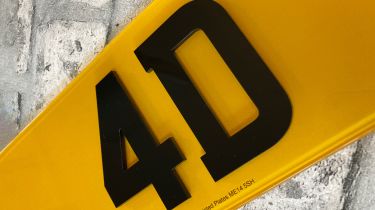
Driving a car on the road in the UK comes with the legal requirement to display a valid numberplate. Some purchase personalised registrations to lighten up this rather dull fact of existence, others are now taking to modifying the number plate itself with so-called ‘3D gel’ and ‘4D’ number plate designs.
In short, these increasingly common plates feature raised lettering that stands out further from the background of the plate; 3D gel plates have a soft, liquid-like appearance, while their 4D counterparts utilise sharp-cut acrylic to create 90-degree edges and a more prominent profile.
Despite the popularity and widespread availability of 3D and 4D plates, police frequently stop and fine drivers who display them. Is this simply a grey area or are 3D and 4D numberplates illegal?
What are the rules for number plates?
In the UK, number plates have to meet the following criteria set out by the Driver and Vehicle Licensing Agency (DVLA):
- Number plates must be made from a reflective material
- Number plates must display black characters on a white background at the front and black characters on a yellow background at the rear
- Number plates must not have a background pattern
- Number plates must be marked to show who supplied the number plate
- Number plates must be marked with a British Standard number - this is ‘BS AU 145e’ for plates fitted after 1 September 2021

That’s not all, as there are also strict rules governing the size and shape of the letters on a number plate. These must be printed in Charles Wright font, with characters 79mm in height, 50mm in width and with a space between them of 11mm.
The DVLA also states that, in addition to having a choice of national identifier for the strip on the left-hand side of the number plate, drivers behind the wheel of an electric car can choose to adopt a green strip to denote their environmental stewardship – this is not the case, however, for hybrids.
Finally, and perhaps most confusingly, drivers can choose to have what the DVLA describes as “3D (raised) characters” and this opens the door to 3D and 4D plates.
Are 4D number plates allowed?
In spite of the DVLA specifically stating that number plates can have raised lettering, the rules are more complex in reality.
As Sergeant Dan Pascoe from Surrey Road Policing Unit explained to us, although there is no law against a number plate having raised lettering in itself, the characters can’t stick out so much as to obscure the registration from being legible from an angle.
Another issue with so-called ‘3D’ and ‘4D’ plates is that the characters aren’t always built into the structure of the number plate and are instead stuck on with adhesive. This means they can actually fall off over time, leaving the driver with an incomplete, and therefore illegal, plate.
As such, the advice is for drivers to stay on the safe side and stick with conventional 2D number plates in order to avoid a potential fixed fine of £100 – something that can rise up to £1,000 if the matter is taken to court.
More on car number plates...
- UK car number plates explained
- Banned car number plates: too rude for the road
- Personalised number plates: how to cash-in
- Green car number plates
- UK's most expensive number plates
- The world's most expensive number plate
Get even more from Auto Express, follow our channels...
• Google
• Reddit
• Whatsapp