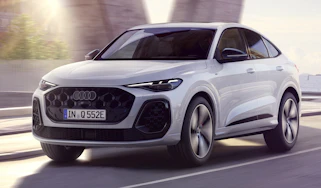
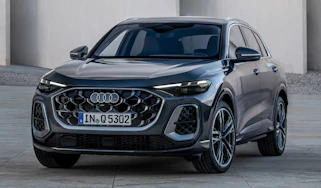
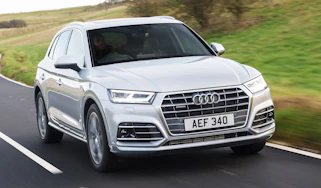
Audi Q5 review
The Audi Q5 builds on a proven formula with strong comfort, tech and all-round polish

Our opinion on the Audi Q5
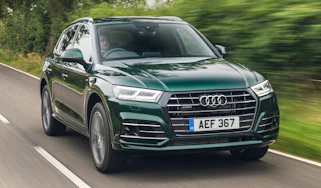
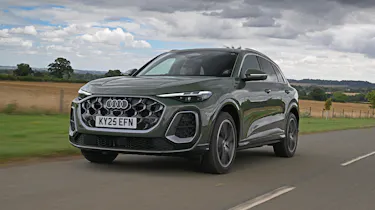
The third-generation Audi Q5 delivers comfort, refinement and a tech-filled interior in a compelling premium mid-size SUV package. It’s a soothing car to drive, and ideal for long motorway journeys, and its hybrid technology helps to boost efficiency in urban use. But while the interior looks fantastic, the quality could be better in places, and key rivals offer greater practicality and driving pleasure.
We much prefer the diesel engine over the noisy and lacklustre petrol that chips away at the Q5’s otherwise impressive levels of refinement. However, the plug-in hybrid versions are likely to make up for the shortcomings elsewhere in the line-up.
About the Audi Q5
Predictably, Audi hasn’t held back with the latest version of its most popular car. The Q5 makes use of the German brand’s Premium Platform Combustion (PPC) architecture, which is designed to accommodate a range of electrified powertrains, from mild hybrid to plug-in hybrid. As you’d expect from a car with four rings on the nose, the marque’s quattro four-wheel drive is available – it’s standard on every model, as are automatic gearboxes.
Buyers have a choice of 2.0-litre TDI diesel and TFSI petrol engines, along with an e-Hybrid plug-in petrol model. At the top of the range is the SQ5, which this time around comes with a V6 petrol engine.
Used - available now


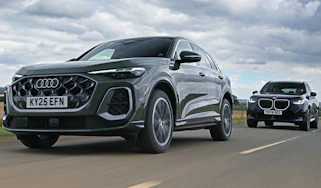
We’ve tested various versions of the Q5 and SQ5 on UK and European roads and also completed a full head-to-head examination of the 2.0 TDI diesel model against the BMW X3.
Performance & driving experience
Pros |
|
Cons |
|
While it’s a comfortable and refined SUV, the third-generation Audi Q5 doesn’t really feel outstanding in any one area.
| Model | Power | 0-62mph | Top speed |
| Audi Q5 2.0 TFSI quattro | 201bhp | 7.2 seconds | 140mph |
| Audi Q5 2.0 TDI quattro | 201bhp | 7.4 seconds | 140mph |
| Audi Q5 2.0 e-Hybrid quattro | 295bhp | 6.2 seconds | 155mph |
| Audi SQ5 3.0 TFSI quattro | 362bhp | 4.5 seconds | 155mph |
Performance, 0-60mph acceleration and top speed
The Q5 comes with a fairly strong line-up of engines, with TFSI petrol and TDI diesel units both with 201bhp. The 2.0 TDI has marginally slower off the line acceleration than the 2.0 TFSI, with the diesel taking 7.4 seconds to get from 0-62mph compared with 7.2 seconds for the petrol. The 295bhp plug-in hybrid variant dispatches the same acceleration sprint in 6.2 seconds, while the high-performance SQ5 takes just 4.5 seconds.
For many buyers who aren’t going through a company-car scheme, the diesel model will probably make the most sense. This uses a 2.0-litre turbocharged unit that offers 400Nm of torque, which is sent to all four wheels via a seven-speed automatic transmission.
Both petrol and diesel Q5s come with a 48-volt mild-hybrid boost. On paper, the 24bhp output is more substantial than some rivals’, but we’d like it to be a little more punchy off the line.
When pulling out of a junction, there’s quite a delay before the diesel model actually gets going, so unless you put the drive selector into Dynamic mode and mash the accelerator, it’s not an engine that’s up for showing much urgency. Flat out, performance is strong, but it doesn’t feel quite as flexible as competitors’ powertrains in-gear.
While the engine is fairly hushed, we found that the diesel in the BMW X3 is a little more refined than the Q5’s, both under hard acceleration and at a more settled cruise. But we are being picky here, because it’s still a strong powertrain with impressive refinement; it’s just that the competition does things slightly better.
That said, we still believe that the diesel powertrain is the best option for the Q5. The 2.0-litre TFSI petrol engine offers marginally better on-paper performance, but the diesel’s extra torque makes it feel more lively in the real world. It’s quieter, too.
Town driving, visibility and parking
We’ve only tested the Q5 with air suspension so far, and this has its benefits and drawbacks, and it’s around town where it tends to display more of the latter. That’s because the air springs tend to struggle to deal with shorter, sharper bumps over potholes and drain covers, clunking into them more clumsily than a car riding on coil springs and dampers.
The Q5’s high seating position contributes to good all-around visibility. While the car’s size can make narrower streets and parking a bit tricky on occasion, a standard-fit array of sensors and a reversing camera help to minimise any potential problems.
Country road driving and handling
At higher speeds out of town, the Q5 achieves what it needs to. It’s not exciting to drive, but it’s reassuring, predictable and stable, with strong grip. The steering is among the Audi’s best traits, because it’s nicely geared to match the response of the car, and the weight feels natural without being unduly heavy.
The air suspension set-up feels resistant to body roll, and the ride settles down nicely. Sport mode lowers the Audi’s ride height, which trades a little of that smoothness for tighter body control in bends.
Motorway driving and long-distance comfort
The Q5 is at its best when on a motorway, with only a distant rumble of road noise interrupting the peace. However, while it’s comfortable, it doesn’t quite offer the effortless, gliding sensation you get in the latest Audi A6 – in both its internal-combustion engine and electric forms. If you don’t need the SUV bodystyle, then the A6 saloon is the superior motorway cruiser.
“The throaty 3.0-litre, twin-turbo V6 in the SQ5 is smooth and has plenty of power. But more impressive to me was the howling note when you put the hammer down, with the occasional pop and crackle when you lift off the throttle.” - Ellis Hyde, news reporter.
MPG & running costs
Pros |
|
Cons |
|
During our time at the wheel of the Q5 2.0 TDI, we averaged 43.2mpg on a wide mix of roads. For a biggish SUV with four-wheel drive, that’s a fairly impressive return, but it is a little off the 47mpg it is rated to get, and it’s behind the even more frugal BMW; the X3 xDrive20d managed almost 47mpg in the same conditions.
The entry-level 2.0 TFSI petrol isn’t as economical at 40.4mpg, while the 3.0-litre SQ5 is even more thirsty at 34mpg. The plug-in hybrid has a much higher efficiency figure of 122.8mpg, or a figure similar to the standard petrol of 40.4mpg if you drive the car with a flat hybrid battery.
| Model | MPG | CO2 | Insurance group |
| Q5 2.0 TFSI quattro | 40.4mpg | 159g/km | 37 |
| Q5 2.0 TDI quattro | 47.1mpg | 157g/km | 38 |
| Q5 2.0 e-Hybrid quattro | 122.8mpg | 53g/km | 43 |
| SQ5 3.0 TFSI quattro | 34.0mpg | 188g/km | 45 |
Electric range, battery life and charge time
The Q5 e-Hybrid comes with a 25.9kWh battery that offers up to 62 miles of range, which is a decent figure for a PHEV. Unlike some rivals, Audi offers DC charging on the Q5 e-Hybrid, with a maximum rate of 150kW. This can take the battery from zero to full capacity in 11 minutes, while an AC home wallbox will do the same job in under four hours.
| Model | Battery size | Range | Insurance group |
| Q5 2.0 e-Hybrid quattro | 25.9kWh | 62 miles | 43 |
Insurance groups
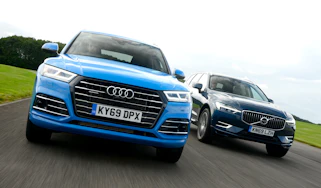
The Q5 sits between insurance groups 37 and 45 out of 50, so premiums will be about what you’d probably expect from a premium SUV. The BMW X3 can be a bit cheaper to cover, because this starts from group 32. The Volvo XC60 is also a little bit lower than the Audi in group 34.
Tax
Every Audi Q5 sits above the £40,000 luxury car tax threshold for combustion-engine vehicles, so you’ll face a particularly high VED road tax bill between the second and sixth year after the car is registered.
The plug-in hybrid does bring some company car tax relief, but business buyers will save considerably more by opting for an electric car instead. There’s no electric Q5, but the Audi Q6 e-tron may be a suitable alternative. If you’re not committed to buying an Audi, it’s also worth considering the BMW iX3 or Volvo EX60.
Depreciation
According to our market data, the Audi Q5 holds up pretty well against depreciation. After three years or 36,000 miles, it’ll retain between 45 and 52 per cent of its original value. The BMW X3 does a little better (47 to 55 per cent), while the Volvo XC60 trails behind, retaining between 42 and 47 per cent.
To get an accurate valuation on a specific model check out our free car valuation tool...
Interior, design & technology
Pros |
|
Cons |
|
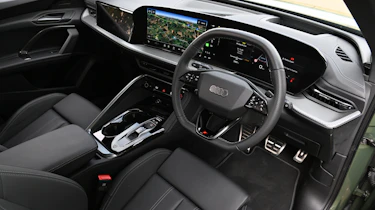
While the Q5’s cabin isn’t short on smart technology, it lacks the wow factor of BMW’s latest models or even some of Audi’s past models.
The basic kit included with the entry-level Sport consists of an 11.9-inch Virtual Cockpit display, a 14.5-inch central OLED touchscreen, heated leather seats, three-zone climate control, ambient lighting, a powered tailgate, full LED lights front and rear, and a full suite of safety kit including a 360-degree parking system.
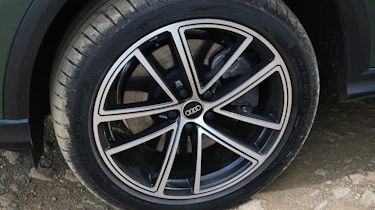
Our preferred S line trim adds a subtly sportier bodykit, bigger wheels and different interior trim, while the Black Edition adds even larger wheels, black exterior details and a heated steering wheel. Finally, the range-topping Vorsprung gets matrix LED lighting along with a Bang & Olufsen audio system, panoramic sunroof and 10.9-inch passenger touchscreen.
Interior and dashboard design
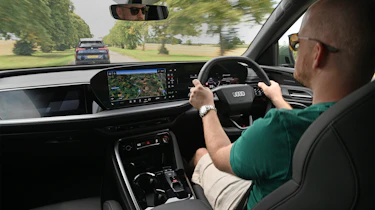
The Q5 follows Audi’s current interior design theme and is hard to tell apart from the A5, A6 and Q6 e-tron, among others. Most of the dash real estate is occupied by up to three screens: a digital driver’s display, the main touchscreen, and, on top-spec models, a 10.9-inch touchscreen on the passenger side. The main infotainment screen looks sharp, but its square shape fits a little awkwardly into the curved edges of the panel it’s set into.
Physical buttons are in short supply, and annoyingly, the steering wheel has fiddly touch-sensitive ones. These aren’t the most responsive, and we inadvertently skipped tracks as our hands rested on the keys.
Materials and build quality
Audi models of recent years seem to have lost the impeccable finish of their predecessors, and the third-generation Q5 is no different. It’s not cheap and nasty by any means, but some of the panel gaps don’t come up to the standards of past Audis. The same can be said of some of the materials too (despite some suede-like coverings on a few panels). It can’t compare with the finish of the BMW X3 – a car which has its own quality oversights.
Infotainment, sat-nav and stereo
Audi hasn’t held back with its infotainment technology, and the Q5’s dashboard is dominated by a vast 14.5-inch display. The graphics on the OLED screen are superbly sharp, which shows off the model’s built-in Google Earth mapping to its very best.
We like the fact that there’s a shortcut panel that remains a permanent fixture on the driver’s side of the screen, but unlike older Audis, the driver can’t display the navigation page on the 11.9-inch Virtual Cockpit digital instrument panel that sits directly ahead of them.
“I like the animated tail-lamp design that sees the Q5’s 266 individual OLED segments gently twinkling. A special high-level brake light can also project icons on the rear window, warning people behind when the driver is opening a door. However, this layout also means that braking at night creates a big, red glare in the rear window.” - Alex Ingram - special contributor.
Boot space & practicality
Pros |
|
Cons |
|
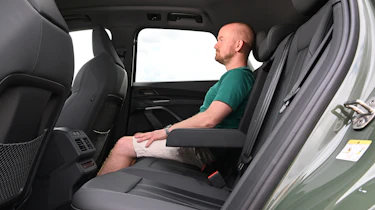
For a 4.7-metre-long SUV, the Q5 isn’t mind-blowingly spacious inside. While rear headroom is great, the manufacturer’s A5 saloon offers similar legroom.
Dimensions and size
A gradual increase in size across the generations has seen the third-generation Q5 outgrow the Mercedes GLC, but the BMW X3 is significantly longer, resulting in a larger boot than the Audi. Elsewhere, the Q5 is bigger than the Lexus NX and Volvo XC60, too.
| Dimensions comparison | |||
| Model | Audi Q5 | BMW X3 | Mercedes GLC |
| Length | 4,717mm | 4,755mm | 4,716mm |
| Width | 2,155mm | 2,132mm | 2,075mm |
| Height | 1,662mm | 1,660mm | 1,640mm |
| Wheelbase | 2,828mm | 2,865mm | 2,888mm |
| Boot space | 520-1,472 litres | 570-1,700 litres | 620-1,680 litres |
Seats & passenger space
As with most current Audis, we found it easy to get comfy, thanks to plenty of adjustment in the driver’s seat and steering wheel. A cooled charging tray keeps your phone’s battery temperatures in check while it tops up wirelessly, and deep door bins add extra storage.
Slip into the back of the Q5, and the seats are very comfortable. The back bench offers a little more under-thigh support than the X3’s, but kneeroom isn’t outstanding for this class. Yet headroom and foot space under the front seats are excellent, and the reclining backrest lets occupants choose a more relaxed position. While the middle seat is nicely sculpted, there’s a very high centre tunnel the middle-seat passenger has to straddle, which means it isn’t quite as comfortable for three as it could be.
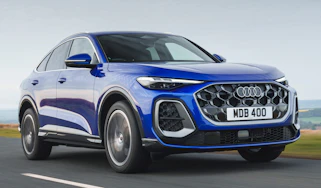
There’s also a Q5 Sportback version with a more sloping coupe-like roofline. It wouldn’t be our choice, because our measurements show it loses a full 80mm of headroom when compared with the regular SUV version.
Boot space
Boot space in the Mk3 Q5 trails its predecessor, dropping from 550 to 520 litres. That is on a par with the Lexus NX, but the latest X3 has a 570-litre boot, while the Mercedes GLC boasts 620 litres.
Go for S line trim or above, and the Q5’s back seats can slide forward to create more boot space, but this leaves a big gap in the load floor for smaller items to fall into. One useful touch is the lack of a load lip, plus there’s enough space underneath the floor to store the parcel shelf.
The rear seat backs can be dropped either by levers on the seats or handles in the boot, and this expands the capacity to 1,473 litres. The area it leaves slopes upwards at the seat backs, which makes loading larger, heavier items trickier. However, the optional air suspension helps, because you can drop the rear of the car by roughly 50mm via a button in the boot. The 690mm figure we measured is with the rear in its lowest position.
Towing
With a braked towing capacity of 2,400kg, the Q5 TDI diesel will be a good choice for hauling trailers. Quattro four-wheel drive and standard automatic gearbox will help with power delivery, as will its strong torque figures.
The 2.0 TSI and high-performance SQ5 also have a towing capacity of 2,400kg, while the e-Hybrid version is slightly behind the others at 2,000kg exactly.
“The touch-sensitive panel mounted on the door, which controls functions for the lights, door locking, electric-seat memory and the adjustment of the door mirrors, is positioned right where you would naturally want to grab the door to pull it shut.” - Alex Ingram, special contributor.
Reliability & safety
Pros |
|
Cons |
|
Euro NCAP tested the Q5 in 2025 and awarded the SUV five stars, with strong scores across the board and lots of standard safety equipment.
The firm isn’t quite as impressive when it comes to customer satisfaction, though. The Q5 didn’t appear in the most recent Driver Power survey, but the Audi brand ended up in 23rd place out of 30 in the best manufacturer rankings. Meanwhile, the Mercedes brand managed to top the table, while Alfa Romeo followed closely behind in second place.
| Euro NCAP safety ratings | |
| Euro NCAP safety rating | Five stars (2025) |
| Adult occupant protection | 85% |
| Child occupant protection | 86% |
| Vulnerable road user protection | 79% |
| Safety assist | 77% |
Buying, prices and deals
Best buy: Audi Q5 2.0 TDI S line quattro
Prices for the Q5 start from just under £52,500 for the TFSI petrol in Sport trim, climbing to around £55,000 for an S Line model, a little over £58,000 for a Black Edition, or over £63,500 for a range-topping Vorsprung version.
Due to the 2.0-litre petrol being a bit unrefined and not particularly efficient, we’d suggest that the 2.0-litre TDI diesel is the pick of the range, and this starts from £54,000. We’d also fork out a bit of extra cash for the S line trim due to its sporty touches and useful extra kit, so you’ll be looking at a little over £56,500 for this model.
You can save on the list price by configuring your new Audi Q5 through the Auto Express Buy A Car service. We also have Q5 leasing deals to choose from, along with used Q5 models which are in stock and ready to go.
Audi Q5 alternatives
The Audi Q5 has several rivals in the premium mid-size SUV segment, the biggest being the BMW X3. Elsewhere, the Lexus NX is one of our road testers’ favourite mid-size SUVs, while the Volvo XC60 has been refreshed with a revised infotainment screen and greater electric range for the plug-in hybrid version to keep it competitive as it gets on in years.
If you’re considering switching over to electric power, there’s the Audi Q6 e-tron if you still want your new car to wear four rings. We also recommend taking a look at the BMW iX3 and Volvo EX60, because they both are available in versions with up to 500 miles of driving range per charge.
Key updates of the Audi Q5 review
- 25 September 2026: Latest pricing and depreciation data.
- 24 March 2025: Latest driving impressions.
Frequently Asked Questions
The Q5 comes as standard with a three-year/60,000-mile warranty (whichever comes first). The X3 and Mercedes GLC also get three years’ cover, but without mileage limits, while the Lexus NX has a three-year/60,000-mile warranty. But Lexus owners receive a further 12 months’ cover each time the car is serviced at a Lexus Service Centre – up to a total of 10 years or 100,000 miles.
Deals on the Audi Q5 and alternatives