Bentley Continental GT review
Bentley’s Continental GT is a smash hit in any of its forms; whether you’re after luxury or sports, few combine it as well as this

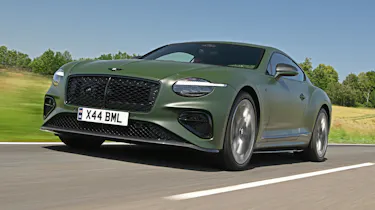

Our opinion on the Bentley Continental GT
Drive fifty yards in the new Bentley Continental GT and you soon realise just how incredibly special this large and luxurious car really is. Bentley has done a superb job of focusing its traditional appeal through a modern lens, building on its performance, efficiency and charisma in equal measure thanks to its plug-in hybrid powertrains. Only a relative lack of space inside the cabin and in the boot, plus the long-distance credentials of its small-ish fuel tank, count against it.
About the Bentley Continental GT
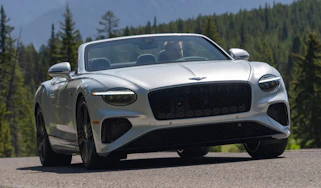
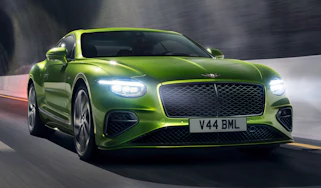
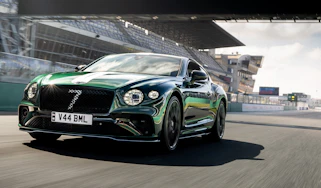
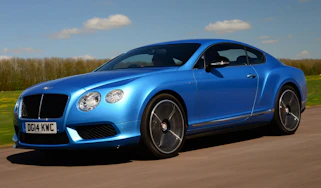
Think of a modern grand tourer and the Bentley Continental GT might just be the first car to spring to mind. The four-seat luxury coupe and convertible first arrived in its contemporary form in 2003, but now some 20 years later this newest iteration might just represent the biggest leap in its genealogy so far.
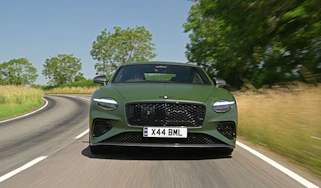
Technically speaking, this is just an update to the third-generation Continental GT launched in 2018, but its changes don’t just introduce fresh interior technology and styling, but a wholesale change to the powertrain by introducing a new plug-in hybrid powertrain. It most definitely brings this most traditional of models, right up to the 21st century.
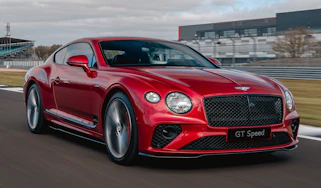
The Continental GT range kicks off with a base V8 hybrid priced at a little more than £200,000, above which sits the more performance focused GT S (£215,000) and luxurious Azure (£240,000). The GT S comes with a few choice additions, such as the electronically controlled limited-slip differential, plus a few other options not found on other variants, such as the Akrapovic exhaust. The Azure, meanwhile, features some unique styling details and new leather and cabin options – this is at the more glamorous and luxurious end of the spectrum.
Used - available now

2021 Bentley
Continental GT
33,950 milesAutomaticPetrol4.0L
Cash £134,995
2017 Bentley
Continental GT
39,100 milesAutomaticPetrol6.0L
Cash £48,495
2017 Bentley
Continental GT
70,000 milesAutomaticPetrol4.0L
Cash £32,350
2014 Bentley
Continental GT
32,000 milesAutomaticPetrol6.0L
Cash £43,000Packing the more powerful Ultra High Performance powertrain is the Speed, also priced from around £240,000. On top of its extra power, it also features the electronically controlled limited-slip differential and a unique medium-grey finish to the grille and window surrounds. At the top of the tree is the Mulliner, which is closer to £280,000 before options. All of these different variants have their own look and feel, owners can then dip into a huge range of personalisation options including an additional Mulliner programme.
In fact, Bentley says that 75 per cent of all of its orders now dip into the bespoke Mulliner program, whether that be for specific paint, leather or stitching. At its extreme, Mulliner is now in the comprehensive coachbuilding business with the Batur and Bacalar model lines, but this enthusiasm for personalisation on the more mainstream Continental GT is largely what’s driving up Bentley’s average sale price, much to the delight of the company and its partners.
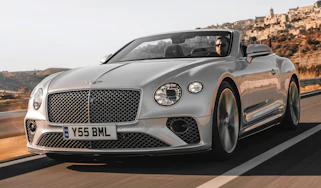
The GTC Convertible has also been released alongside the coupe, and more recently an updated Flying Spur saloon. Each body style features the same range structure, but unique to the Coupe is the new Supersports. This is the only variant to do without the plug-in hybrid powertrain, and comes with a huge weight reduction alongside.
Performance & driving experience
Pros |
|
Cons |
|
Almost all Continental GT variants are now exclusively powered by a V8 plug-in hybrid powertrain, available in two specifications depending on the model. The exception to this rule is the low-volume Supersport, which ditches the plug-in hybrid components in more of a GT3-in-tweed character, but this model is both prohibitively expensive and rare.
For the more usual Continental GT buyer, though, the new PHEV arrangements are wonderful parings with the overall car, with the added bonus of improved metrics on environmental friendliness during urban or low-speed driving. If you’re worried that it lacks any gravitas without the W12 engine of its former generation, don’t be. This is a far better fit for the Continental and all of its various derivatives.
| Model | Power | 0-62mph | Top speed |
| High Performance Hybrid (base, GT S, Azure) | 671bhp | 3.5 seconds | 168mph |
| Ultra High Performance Hybrid (Speed, Mulliner) | 771bhp | 3.1 seconds | 208mph |
| Supersports | 657bhp | 3.4 seconds | 199mph |
Performance, 0-60mph acceleration and top speed
Two specifications of plug-in hybrid are available, the first being a 671bhp combined variant that powers the ‘base’ GT, Azure and GT S models. Bentley produces this power by combining a 484bhp 4.0-litre V8 with a 187bhp e-motor mounted within the eight-speed dual-clutch transmission. This is backed up by a total torque figure of 930Nm, which is good for a 0-62mph time of 3.3 seconds and a 191mph top speed
However the Speed and Mulliner variants take this one notch up, thanks to an increase in power from the V8 to 584bhp, bringing total power up to 771bhp and torque to an even 1,000Nm. This drops the 0-62mph time to 3.1 seconds and ups the top speed to an incredible 208mph – it’s not called Speed for nothing.
In both models, the e-motor draws energy from a 25.9kWh battery pack mounted under the boot floor, and is capable of driving the GT solely on electric power for up to 50 miles. But the story goes beyond just having an impressive electric range, because this powertrain is more multi-dimensional than most run-of-the-mill plug-ins.
This new type of plug-in hybrid system has been designed to do more than reduce fuel-use, instead it’s also a method of increasing the car’s overall performance. On start-up, a default ‘B’ mode will run the car in e-mode for a majority of the time, keeping the engine idle until a high load is requested. The same is true for ‘Comfort’ mode, and both drive just like any high-end electric car. That is to say that the powertrain is near-silent, and still offers just about enough performance to feel effortless. But it’s in ‘Sports’ mode where the GT feels its best.
Twist the drive mode selector to its extreme left and the V8 engine will fire instantly. It’s now that the plug-in module will act more as a boost to the engine, adding in a sizable chunk of power and torque to the powertrain. In this mode, the battery will retain its state of charge through regenerative braking and charging directly from the engine, and ensure that the maximum power and torque is available at any point.
Put your foot down and the electric motor’s punch is able to fill the lower part of the rev range, making the V8 engine feel supernaturally torquey and responsive right from tickover. Despite the considerable mass it has to shift, performance across both variants is off the scale, and seems to shrink the big GT as it rips through the relatively short ratios of the eight-speed transmission.
But there’s a further benefit to introducing electrical assistance to the V8 engine, because this has allowed Bentley’s engineers to give it an even more brutish character. The engine is simpler than the existing pure-ICE variant since it does without fuel-saving elements like cylinder deactivation, and with help from the torque-filling ability of its e-motor, the turbochargers are now single rather than twin-scroll.
This reduction of fuel-saving trickery within the combustion engine itself has given the V8 a cleaner and more authentic engine note – both inside the cabin and out. Where the previous Continental GT V8 S would elicit a distant ‘woofle’, the latest car’s louder baritone bark makes more of an impression. For the full effect the base, GT S and Speed models can be fitted with an Akrapovic exhaust system that ups the volume and the drama. In any drive mode, the system is on the edge of being slightly anti-social, yet the ability to drop back into a silent BEV mode seems to nullify any worry in this regard – it’s one of the most satisfying combinations of menacing-yet-not-antisocial exhaust systems we’ve ever tried.
Traction is not a consideration, because the all-wheel drive system is able to efficiently deliver all the power to the road without any drama, even in slippery conditions. A full-throttle standing start on slippery tarmac during our test led to a brief moment of slip from all four wheels before they hooked up and the car felt every bit as rapid as Bentley’s claimed 3.2-second 0-62mph time on Speed and Mulliner models – lesser powered variants only take an extra tenth at 3.3 seconds.
Stopping so much mass at high speeds is a critical factor, so the standard 420mm cast iron front brakes and 10-piston calipers are suitably sized, but optional 440mm carbon-ceramic brakes are available on GT S, Speed and Mulliner models.
Town driving, visibility and parking
There’s no getting away from the fact that this is a big, wide and intimidating car to drive in towns and villages. The narrow glass and long bonnet can limit the view out, but at parking speeds this is largely mitigated by the excellent camera system. We found the rear-wheel-steer system to be helpful at giving an extra layer of manoeuvrability, but it’s likely anyone buying a Continental GT will probably have a second car in the garage for short outings if the Bentley’s size gets a little too much.
Driving a PHEV Continental GT around town is otherwise a serene affair, with wonderful opulent surroundings matched to silent all-electric running. Of course, if you burn through all the battery, the engine will fire up, but it does a very good job of retaining just enough battery capacity even when empty to avoid too much idling.
Brake feel at low speeds is often an issue in early plug-in hybrids, but the Bentley’s system – derived from one developed by Porsche – is superb at allowing for soft and consistent stopping. This is relevant to both steel and ceramic options.
In both cases, Bentley has introduced new hardware between the brake pedal and the calipers, largely solving the often tricky job of blending regenerative and friction braking systems into the one motion. There is some variation to brake feel between drive modes; ’Comfort’ and ‘B’ modes will both regen the brakes when off the throttle, compromising pedal travel, but when driving in ‘Sport’ mode, pedal feel and consistency are good.
Country road driving and handling
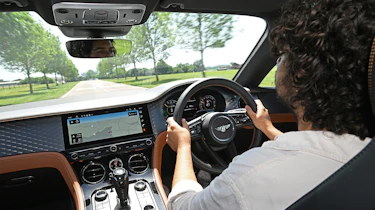
All this performance is pointless if it’s not able to be controlled, however, and this is where Bentley’s full arsenal of chassis tricks come into play. Stick to the more dynamic-leaning GT S and Speed models and Bentley will pair the standard 48-volt active anti-roll system and four-wheel steering set-up with an electronically controlled limited-slip differential.
These systems are all derived from the previous generation and do an admirable job of keeping the body level and controlled, but new for this latest iteration is the suspension, which has seen a considerable upgrade best experienced in high-speed and motorway driving.
Motorway driving and long-distance comfort
The Continental is a GT by name and by nature, so long-distance cruising is right at the heart of its stupendous talents. Even with the PHEV system adding weight, the V8 is more than capable of having the GT ticking along breaking barely a sweat, even in treble figures (on derestricted German Autobahns, of course).
Helping this along is a new level of ride quality and control, thanks to a new suspension hardware set-up. This replaces the previous triple-chamber air springs with a set-up of dual-valve dampers and double-chamber air springs. Bentley told us this isn’t so much for the benefit of roadholding, rather to make this edition more comfortable than previous models.
The effect is subtle, but there’s definitely more compliance to the ride in this new generation, especially in models fitted with carbon ceramic brakes (these lower the car’s unsprung mass). In previous Continental GT models, the suspension could sometimes struggle with sharp potholes and intrusions, often sending vibrations up through the cabin. Yet on this new one, we felt that the Continental was able to control its body brilliantly regardless of the wheel size. Unlike many of its counterparts, we found little difference in terms of overall ride quality between different wheel options.
The steering is precise and well weighted, with a Bentley-typical heft at low speeds that suits the size and scale of the car. There’s not a huge amount of true feel, but it combines well with the rear-wheel steering which itself feels very well calibrated and largely transparent – a best-case scenario for such a system. However, there is one element to consider for grand touring and that’s the limited range due to reduced capacity of the fuel tank. Filled to the brim and with battery topped up, you’ll struggle to travel more than 350 miles on a tank. However, the previous W12 wouldn’t have done much better in all truth.
"I can think of no car I’d rather cross continents in. But the Continental GT in all its forms is an extraordinary experience regardless of how glamorous your journey is, or not. This car even makes a quick drive to the dentist feel like a once-in-a-lifetime experience." - Jordan Katsianis, News Editor.
MPG & running costs
Pros |
|
Cons |
|
Bentley quotes an on-paper efficiency rating for the Ultra High Performance powertrain of 27.4mpg on the combined WLTP cycle, which has recently been fiddled to better represent real-world figures for plug-in hybrid powertrains. Oddly, there are no ‘harmonised’ figures for the lower-spec 671bhp variant available yet, but we’d suggest they’re similar if not identical.
This new test puts a higher reliance on the petrol engine in testing, and is reflected in the 27.4mpg figure quoted – for context, a similarly powerful Porsche Panamera Turbo S E-Hybrid on the old system has an on-paper figure of more like 200mpg. CO2 emissions are closer, though, rated at just 29g/km, which will have an impact on tax implications.
Over the course of many miles in different conditions, we’ve experienced how much the overall MPG can vary. In the romance of remote alpine roads, high in the Alps, the car’s on-board computer showed 19mpg; but the car was largely in Sports mode at the time, which does not prioritise efficiency.
Back in the UK, the car’s figures markedly improved in more mixed conditions. Over the course of about a week’s driving and around 300 miles on a combination of motorway and city driving, with two battery top-ups after starting with a full battery at the point of a trip reset, we averaged a pretty good 37.6mpg.
If you have access to low-cost charging, and run the car in the more efficient modes, there’s no reason this figure won’t rise yet higher.
Bentley’s quoted 50-mile BEV range is ambitious – you’ll only reach this in urban conditions. But the realistic combined range of around 30 miles is still more than the average daily driver’s commute. Even on longer journeys, the electric motor’s ability to drive the car without the V8 engine’s input makes driving effortless – with the added bonus of being totally silent.
If you’re planning on driving the car between the country and London or any other big cities, it’s easy to hold the battery charge when driving on motorways leaving you with enough battery power to meander around town. It’s a genuinely useful capability, and unlike some other plug-in hybrids is easy to activate through only a couple of button presses.
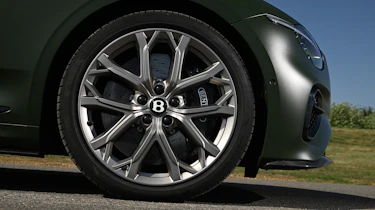
Fuel aside, though, running costs will be high. Expensive 22-inch Pirelli P Zero tyres are the original fitment, and consumables like brake pads and discs are also a consideration, however the excellent regenerative braking function will negate much of the traditional wear ratings. The optional carbon-ceramic brakes ‘should’ last the life of the car, but they still are susceptible to wear.
| Model | MPG | CO2 | Insurance group |
| Bentley Continental GT | TBC | TBC | 50 |
| Bentley Continental GT Speed | 27.4mpg | 29g/km | 50 |
Insurance groups
All Bentley Continental models will bump right up to the maximum group, but then so will all its key rivals. This is a Bentley, so all of these associated expenses will add up, but then if you have £250,000 or more to drop on a car, the insurance premiums won’t likely be of too much concern.
Tax
Unsurprisingly, the Continental GT’s asking price means you’ll have to pay the luxury car tax surplus on your VED road tax every year, amounting to £625 per year. It is ULEZ compliant, however you’ll still need to pay the Congestion Charge.
Depreciation
Bentley’s don’t quite have the same percentage level of depreciation as they used to, with most models being on the right side of retaining 50 per cent value after three years.
The sometimes excessive cost of options and the high base price still make this an eye-watering exercise, though, as it’s possible to lose literally hundreds of thousands of pounds for a particularly high-spec example after a three year period.
Convertibles in general will depreciate more, while the sportier models, like the Speed and GT S typically depreciate less.
Interior, design & technology
Pros |
|
Cons |
|
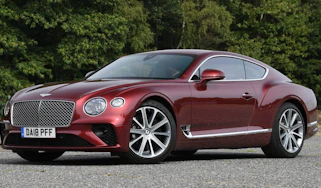
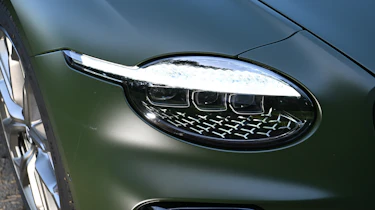
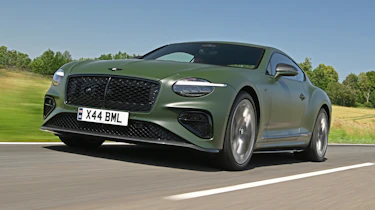
In this illustrious class, design is a key consideration for many buyers and Bentley knows it. This is a brand that’s synonymous with luxury and the classic notion of grand touring, and the design language of the Continental GT is absolutely on the money for representing prestige, power and sleekness. Its brilliance begins with the inherent proportions, which features a long bonnet, short front overhang and long dash-to-axle ratio – that’s the points between the centre of the front wheel and the base of the windscreen.
The latest facelift builds on those foundations with an elegant and simple design, but while we prefer the fact it’s a little less glitzy than the original 2018 model, it’s also less congruent – the round lights of the old car were more retro, but they did look more in keeping with the general ethos.
Interior and dashboard design
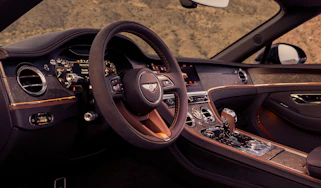
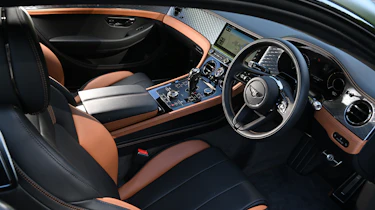
Another of the Bentley Continental GT’s best attributes has typically been its beautifully crafted interior, and the same is true with the latest iteration. Given that this is a considerable update of the previous car, rather than an all-new model, the cabin’s architecture is largely the same as before, yet comes with more than enough small updates to keep it fresh and desirable.
There’s a good mix of digital interfaces and physical controls, with a main control suite situated around the transmission lever on the centre console. This represents a material change from the last generation, with its high-gloss black and metal combination of buttons replaced for a more subtle matte-grey finish. This small change might lack the sparkle it once did, but it also eliminates fingerprint marks and the occasional reflection of bright sunlight in the previous car.
Materials and build quality
The simply stunning build quality and wide palette of materials are still second to few in the industry, with a mixture of leathers, fabrics, metals and woods that each bring a sense of wonderful tactility to the experience. These overlay tremendous build quality with bank vault-like solidity to every moving part, be that the doors, glovebox or even the cup-holder lid.
Each of the models are available with a bespoke interior colour split. In the case of sportier options like the Speed and GT S, the main colour can be offset by small highlights of brightly contrasting leather around the seat edges and under the dash top’s leading edge. You can specify some truly wild combinations, including the blue and orange combo of our original test car, but it’s so customisable that one can also choose something much more demure.
The veneer options have been expanded, too. You’re able to specify everything from a classic selection of gloss veneers like dark-stained burr walnut or fiddleback eucalyptus, to technical finishes like turned aluminium, carbon fibre or even gloss-painted panels if you wish to do a full-colour block effect. If you wish, there’s even veneers of stone that can be applied to the dash.
Infotainment, sat-nav and stereo
A majority of the digital interfaces have been rejigged in this latest generation, both the main infotainment screen and digital driver’s displays have been revamped. The main infotainment system is a light update on the system that came before, borrowing much of its menu structure and functionality with various Porsche models.
The good news is that screen response is still excellent, the graphics clear and integration of smartphone mirroring very well executed. Wireless Apple CarPlay and Android Auto are standard, but if you do rely purely on the embedded system, you still have full online traffic support.
Outside of the screen there are still lots of physical shortcut buttons, plus a full bank of controls for the climate and seat functions. The rotating screen is also still around, and it’s just as much of a party piece as it was back in 2018.
Bentley’s reputation for superb high-end audio also continues, with three levels of system available. The first upgrade is a Bang & Olufsen system with 16 speakers, but for true audiophiles, the full Naim system with its 2,200W 18-speaker set-up is just about the biggest and most powerful in the business.
Our test cars were fitted with such a system and the sound quality was fantastic, as you’d expect, with rich tones and warm, enveloping bass.
The other digital interface, and the one that makes an even bigger impact, is the driver’s display. This is now both more variable in its customisation and its resolution far higher than before. Unlike the central screen, which uses a reskinned Porsche set-up, the driver’s display is closer in structure to high-end Audi models. Once again, this is no bad thing, because Audi does these things well, and the same is true for the Continental GT.
Bentley’s nailed the balance of traditional craftsmanship and technology, and wrapped it in some exuberant materials and extraordinary detailing." - Jordan Katsianis, Auto Express.
Boot space & practicality
Pros |
|
Cons |
|
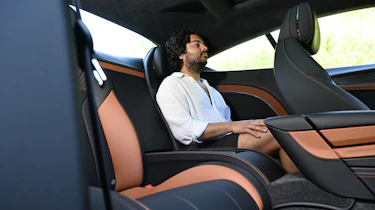
Despite a relatively large footprint, the Continental GT isn’t the most spacious four-seat coupe in the class. The second row can be a little tight on both legroom and headroom for tall passengers. However, the accommodation here is just as opulent as in the front, with top-class materials and plenty of places to store small items.
Dimensions and size
The Continental GT is a big car, especially in terms of width. At a touch less than 4.9 metres long, its length isn’t really the issue, but the 2.2-metre width can be a problem. It’s also a relatively tall coupe, but this doesn’t particularly help with cabin space.
| Dimensions comparison | |||
| Model | Continental GT | Maserati GranTurismo | Aston Martin DB11 |
| Length | 4,895mm | 4,966mm | 4,725mm |
| Width | 2,187mm | 2,113mm | 2,135mm |
| Height | 1,397mm | 1,353mm | 1,295mm |
| Wheelbase | 2,851mm | 2,929mm | 2,805mm |
| Boot space | 260 litres | 310 litres | 262 litres |
Seats & passenger space
Overall comfort across both rows is excellent, since the changes to the suspension have been focused on making the Continental GT (particularly the Speed version we drove) more comfortable, rather than more dynamic. This can be felt in the supremely impressive ride comfort and excellent sense of refinement.
Road noise is close to completely absent, as is wind noise. Noise suppression is another highlight, although there is still plenty of burble from the V8 engine that enters the cabin, and none of it is acoustically augmented, as Bentley was keen to point out.
The seats are also wonderfully comfortable, and come as standard with heating, cooling and a very good massage function. There’s also a huge amount of adjustment, and while the overall driving position isn’t quite as low as some might want, the high dashboard and windowline achieve the same cosseted feeling as the best large, luxurious GTs.
Boot space
Where the GT struggles compared with the old car is boot capacity, because the battery pack has eaten into the boot space quite substantially. The high load lip is typical of this type of car, but the boot floor is now level with it, reducing boot capacity from 358 litres to a rather pokey 260. This is still enough to fit a set of golf clubs in, but it will be a squeeze.
There is a load-through function, which is handy for long items like ski bags and the like, but that still isn’t a huge amount of space inside this car considering its generous proportions.
Reliability & safety
Pros |
|
Cons |
|
Euro NCAP has not officially given the Bentley Continental GT a star rating due to its relative rarity and expense, but there’s no reason to assume the latest model wouldn't safeguard you well considering it has plenty of passive and active safety systems as standard.
In terms of reliability, a modern Bentley is a complicated creature, so there is a lot to go wrong. However, these are generally used as daily drivers, and few, if any reliability issues have been noted.
Bentley has employed some comprehensive reliability mechanisms for the new plug-in hybrid models to keep the engine healthy. The same can be said for the brakes, and thanks to a heavy reliance on regenerative braking, pad and disc wear will be lower than usual.
Buying, prices and deals
- Best buy: Bentley Continental GT S
There’s really no bad option in the current Continental GT range, it’s more a choice of flavour. The range structure starts at the base GT, above which sits four models with ‘High Performance’ or ‘Ultra High Performance’ powertrain options, in either luxury or sporty angles.
The sporty wing starts at the excellent GT S and then levels up to the Speed. These models have sportier styling features, plus the option of elements like an Akropivic sports exhaust and the electronically controlled rear differential.
Its more luxurious options refer to the Azure with the High Performance powertrain, leaving the extravagant Mulliner with its Ultra High Performance option. Personalisation is also high on the agenda for all models, and it only really stops at the very edges of your imagination.
Generally, we found that the extra power of the Speed, while fun, isn’t strictly required, and the extra money left over could be spent on some extravagant options, such as the stone veneer dashboard, woollen floor mats or the utterly wonderful Naim audio system.
If you're ready to treat yourself, we have a range of used Bentley Continental GT models in stock right now.
Bentley Continental GT alternatives
Bentley’s main rivals in the two-door GT space are all highly rated and come in lots of new forms, but few take comfort and refinement quite so seriously. Aston Martin, perennial British rival for generation after generation, has the DB12 S, but it takes a decidedly more dynamic approach with its more focused chassis set-up. It’s also smaller inside, and doesn’t quite have the same all-round competence as the Bentley, despite weighing some 600kg less. It is far more dynamically engaging, though.
The Ferrari Amalfi is one step further towards the sporting end of the spectrum, although its general ride quality is still better than the stiff-legged Aston Martin. It is even lighter, more compact and engaging to drive than the Aston, although the classic styling and elegant proportions do still make it a desirable choice for the GT buyer; so long as you don’t need to fit humans in the second row.
On the other side of the grand touring spectrum from Italy is the Maserati GranTurismo Trofeo. This is far more comfortable than both the Ferrari and Aston Martin, while offering more space inside than the Bentley and a more attainable price point. It’s also all-wheel drive, like the Continental GT, but comes with only six cylinders and with it a much lighter feeling on the road. This isn’t to say it’s underwhelming. Maserati’s balance of comfort, engagement and agility is actually outstanding – but the Italian car feels less substantial than the brutish Bentley.
The Maserati can also be specified in an all-electric Folgore variant, which offers a rare combination of traits that have no less appeal. Performance is actually more impressive than in the petrol-powered Trofeo, although its relatively limited 280-mile range challenges its status as a grand tourer.
Finally, at the very top of the class is the Rolls-Royce Spectre Series II. No doubt a bigger and more expensive car than all ‘normal’ GTs, it’s the benchmark for comfort and quality, but doesn’t score in terms of engagement, plus it too has a limited all-electric range.
Bentley Continental GT pictures
Key updates of the Bentley Continental GT review
19 August 2026: Latest driving impressions and powertrain information.
Frequently Asked Questions
Bentley has a standard three-year, unlimited mileage warranty.