Best restomods - amazing car recreations where classic meets modern
Classic car style with modern tech, the best restomods are automotive marriages made in heaven…


A combination of ‘restore’ and ‘modification’, the term restomod is typically applied to cars with restored exteriors matched to modified and updated mechanicals and technology underneath. They aim to address the desire lurking within many car enthusiasts to have classic car style matched to modern day performance, reliability and creature comforts. The best restomods on today’s market offer all this and more.
Restomods are big business these days. As legislation has made it more difficult to build fast cars, many manufacturers have simply elected not to bother. And those that do often come up with results that are clearly constrained by the same rules.
The answer for car enthusiasts could lie in just buying something older. But you then need to go through the hassle of finding a good example of whatever it is, and then dealing with the potential reliability issues. Even after you’ve done all that, you’re potentially missing out on decades of development in the worlds of powertrains, suspension, tyres, lightweight materials and more.
A restomod in theory gives the best of both worlds. The old-school, analogue feel of a classic or modern classic car, but with all the sticky rubber, trick dampers and snazzy carbon fibre available. The downside? Doing all that is quite expensive.
Happily, there’s no shortage of rich people these days. This, along with those bothersome rules we’ve mentioned shaping new car output, is fuelling a surge in restomod cars that marry old and new in one exclusive and usually expensive package. These, we reckon, are the best currently out there.
Eccentrica Lamborghini Diablo Roadster

As far as bedroom wall poster icons go, the Lamborghini Diablo is second only to… well, the Lamborghini Countach, probably. But while the Diablo was easier to drive than the notoriously tricky and ergonomically challenging Countach, it was still hard work.
It improved throughout its existence, especially after Audi took ownership of Lamborghini, but to unlock the car’s full potential, you can give Eccentrica a call. Its wonderful reimagined Diablo has been followed up by a Diablo Roadster, and it follows the same recipe.
The original steel structure has been reinforced with carbon fibre, the bodywork made from the same material. There are modern adaptive dampers and power steering, the latter being something the Diablo famously lacked until the VT came along in 1993. Meanwhile, the V12 has better heat management, new intakes and a tweaked ECU. It develops 542bhp.
Peugeot 205 GTI Tolman
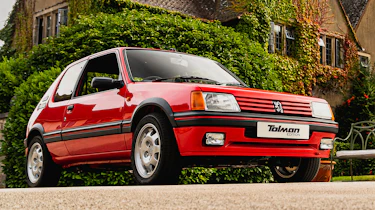
Remember what we said about the whole restomod thing being a bit expensive? Tolman’s 205 GTI perhaps exemplifies this better than the reborn Lamborghinis and Ferraris of this list, because a restomod of this attainable-ish hot hatchback still comes in at six figures. Limited to 20 units, the Tolman GTI cost £125,000 a pop.
For that, you’re getting a meticulously treated 205 shell enhanced with modern suspension and brakes, and a bespoke 1.9-litre engine using the cylinder head from a 306 GTI-6. That four-cylinder unit is good for 193bhp, significantly more than the 130bhp of the original GTI 1.9, and it’ll rev until 7,500rpm. Delicious.
As for that exterior, that’s all as per the original 205 GTI, because how can you improve upon that? It still looks fabulous several decades on, and there’s something nice about the Tolman not letting on about what’s going on underneath.
HWA Evo

The HWA Evo is worth taking seriously due to the company behind it. This isn’t some start-up firm no one’s heard of - HWA has a rich motorsports history, one intertwined with Mercedes and AMG, so it makes perfect sense that its first foray into the world of restromods is a Merc.
Specifically, the inspiration here is the Mercedes 190E 2.5-16 Evo II. However, HWA doesn’t use that car as a starting point. Instead, the middle bit of a regular 190E’s steel structure is strengthened and married with aluminium subframes, allowing bespoke suspension geometry and for the engine to be mounted as far back as possible for better weight distribution. That engine is a 3.0-litre twin-turbo V6 borrowed from Mercedes but given a dry-sump lubrication system.
Although the Evo II’s wild bodykit is used as the primary basis for the car, HWA took its ethos even further. The panels are all made from carbon fibre, too, helping keep the weight under 1,400kg.
As if all that wasn’t enough to get the average fast Mercedes enthusiast salivating, HWA is teasing a W124-based project with either the 500E or 300E AMG Hammer serving as inspiration.
Porsche 911 Carrera Coupe by Singer
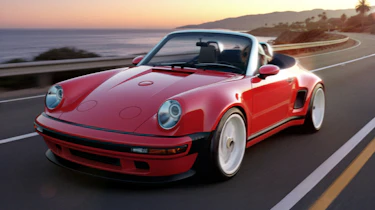
The word ‘restomod’ for many will immediately conjure up an image of a Singer. The American company has been meticulously reimagining Porsche 911s, mostly 964s, for years, evolving and perfecting the process with outside help from some of the best in the business.
The latest version draws upon the expertise of Red Bull Advanced Technologies to strengthen the donor car’s structure, while the naturally aspirated, air-cooled flat-six engine is the work of Cosworth.
Starting with a displacement of 3.6 litres, the British firm’s re-engineering grows it to 4.0 litres for a power output of 414bhp. Unusually, the cylinders remain air-cooled, but the head is water-cooled. It also has variable valve timing, in a first for a Singer.
The bodywork is, perhaps inevitably, made from carbon fibre, with a design that sympathetically modernises the 964’s original look.
Ferrari F355 by Evoluto
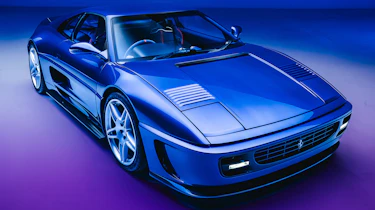
The F355 just might be where Ferrari’s ‘regular’ sports cars (just to count out the likes of the F40) peaked. It doesn’t seem like the most obvious choice of cars to rework, then, because it’d be all too easy to ruin what was special about it in the first place.
Evoluto’s solution with its reborn F355 is to not take things too far in the engine department. The naturally aspirated V8 is only slightly more powerful than standard, with this restomod focusing more on handling. To that end, it sits 20mm lower on a new suspension setup featuring significantly wider front and rear tracks, while the chassis has been spot-welded and enhanced with carbon fibre for better rigidity. The whole thing is also lighter. The original F355 is hardly a weighty thing, but Evoluto’s re-engineered version is some 100kg less bulky.
It is, of course, enormously expensive. Your Swiss bank account will end up down by the best part of a million quid by the time you’ve factored in the donor car and customisations. And if you really must, you can spend more still by speccing the 3.7-litre engine option. Not strictly necessary for the reasons we’ve outlined, but the idea of a 9,000rpm redline is probably tempting if you have the spare money.
TWR Supercat
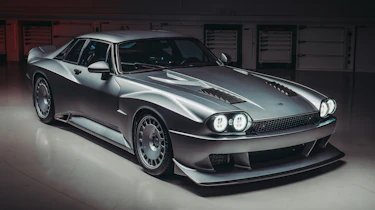
When the Tom Walkinshaw Racing name came back from the dead, it was for a project that couldn’t be more fitting - a wild restomod Jaguar XJ-S. The original TWR (unrelated to the new company other than the name) was famed for its work on Jaguars, including a touring car version of the XJ-S and, of course, the XJ220 supercar.
TWR also produced a small number of butch-looking road cars based on Jaguars, but none quite as lurid as the new TWR Supercat with its enormous wheel arches and general aerodynamic aggression. Much like a lot of the other cars here, the middle bit is from an original XJ-S, but beefed up and joined by bespoke subframes, in this case made from tubular steel. Powering this is a supercharged 5.6-litre V12 pushing out 660bhp.
The starting price of £225,000 could almost be labelled as ‘affordable’ amid some of the cars we’re looking at here, but that doesn’t include taxes or customisation, which will bring the final figure of most Supercats closer to £500,000.
Only 88 will be made, in a nod to the year that the TWR-built XRJ-9 won the 24 Hours of Le Mans.
Analogue Lotus Elise

Let’s get this out of the way right now - this is a Lotus Elise that costs six figures. That’s a lot of money considering how much Lotus originally charged for the car, and from the outside, you might wonder where all your money is going.
There are clues, though. It sits significantly lower than a standard S1 Elise, and you can see that its wheel arches are better filled. That’s because Analogue’s Elise has a substantially reworked chassis, which is potentially controversial given how highly regarded the original car is for its dynamics. Arguably, it might have the best steering feel of any car, well, ever.
Our colleagues at evo magazine were suitably impressed with the Analogue Elise they drove, however. It isn’t simply a case of Analogue having whacked on some trick dampers, which it has, by the way, in the form of a three-way adjustable set from Nitron. The team even went as far as fitting new wishbones to give a wider track, hence that better arch fit we mentioned.
The original Rover K-Series four-cylinder engine is retained, but overhauled to make 210bhp - more than double what it left the factory with. Those wanting to go even further with their Analogue Elise can opt for the VHPK, which relocates the driver’s seat to the centre of the car.
Kalmar RS-6

Not all restomods are the playthings of multimillionaires. At under £40,000 (plus the cost of a donor car), the Porsche 996 911-based, 953-inspired Kalmar RS-6 costs a fraction of some restomods we’ve covered here.
The conversion process can be applied to Carrera 2, Carrera 4 and Turbo versions of the 911. It involves an 80mm lift on bespoke suspension, underbody protection, a spare wheel carrier on the roof, and an enormous LED light bar. The 16-inch wheels are deliberately narrow, and can be shod in either all-terrain tyres or spiked tyres for some fun in the snow.
Should you want to spend more money, you can do so, of course. Options include a roll-cage, a fly-off handbrake, a 50mm hydraulic suspension lift and timing equipment.
Prodrive P25
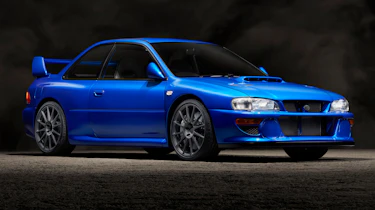
Given how much Subaru Impreza 22Bs are going for these days, dropping more than half a million on Prodrive’s incredible P25 makes some sort of vague sense. If you’re going to get anyone to build a tribute to the 22B, why not the company that built and ran Subaru’s dominant World Rally cars?
The starting point is a two-door WRX STI, which in itself is a special thing (most are of the four-door variety). The donor is stripped back to the bare shell, and redressed in carbon fibre panels. The suspension takes inspiration from Impreza WRC cars, while propulsion comes from a modified 2018 WRX STI engine producing 440bhp. That’s plenty, considering the Prodrive P25 weighs under 1,200kg.
Still not sure it’s worth the money? It’s a moot point - all 25 examples sold out immediately.
Land Rover Defender Works V8

Here’s something we’re surprised isn’t more common - a manufacturer’s own restomod programme. 10 years on from the original Land Rover Defender going out of production, it’s still possible to buy one from Land Rover, but it’ll be rebuilt using a “carefully selected” 2012 to 2016 example, qualifying it as a ‘restomod’.
You can choose between a station wagon, soft top and hard top 90s or larger 110 station wagons or double cab pick-ups, but whatever you choose, it’ll be powered by a V8 engine.
Beefed-up Alcon brakes and fancy Eibach/Bilstein suspension ensure the car can handle its 400bhp, and you get traction control. Also on the tech front, the reworked interior gets a modern infotainment system with Apple CarPlay and Android Auto connectivity.
You can also pick from exterior and trim colours borrowed from the modern Defender OCTA. But however specced, it’ll be expensive - prices start at £228,000.
Buy a car with Auto Express. Our nationwide dealer network has some fantastic cars on offer right now with new, used and leasing deals to choose from...
Don't miss the best of Auto Express on Google! Make us a preferred source. Click here...