How much is company car tax on electric cars?
The UK’s million or so company car users pay two per cent Benefit-in-Kind tax if they have an electric car in the 2024/25 financial year

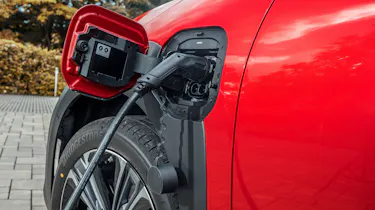
Fully electric cars are exempt from Vehicle Excise Duty (VED) until 1 April 2025, but you still have to pay Benefit-in-Kind (BiK) tax if you’re going to run one as a company car.
The UK’s million or so company car users pay two per cent Benefit-in-Kind tax if they have an electric car in the 2024/25 financial year. This has been fixed since 2022/23 but before this the rate was set at zero.

From the 2025/26 financial year onwards, BiK rates for zero-emissions cars will rise for the first time since 2022/23, starting at three per cent and rising each year thereafter by one per cent: 4 per cent for 2026/27 and 5 per cent for 2027/28.
How does company car tax work on electric vehicles?
Company car tax is comprised of two parts, with company and employee paying amounts dictated by car value, CO2 emissions and employee income tax bracket.
The amount the company has to pay is determined by the car’s P11D’ value (the value of the car including VAT, options and the delivery fee) and its CO2 emissions.
The amount that the employee has to pay is slightly more complicated, and is calculated using the following formula: (P11D value) x (BiK band) x (tax bracket).
For example, an entry-level Tesla Model 3 has a P11D value of £39,935 and its BiK band in 2024/25 is two per cent. A basic-rate (20 per cent) taxpayer will pay £160 per year, while a 40 per cent earner will pay £319.
In 2025/26, the BiK rate will increase to 3 per cent, so assuming the Tesla Model 3’s P11D figure remains the same, the same 20 and 40 per cent earners will pay £240 and £479 per year respectively.
Is the BiK rate different for PHEVs and hybrids?
Plug-in and other hybrids are also subject to BiK tax, calculated in a similar way as above. From the 2020/21 financial year onward, the cost has depended on how far a hybrid can be driven in electric mode in conjunction with CO2 emissions.
If a plug-in hybrid company car with CO2 emissions of between 1 and 50g/km can cover fewer than 30 miles in electric-only mode (as with most non-plug-in hybrids) it falls into a 14 per cent BiK tax band.

There are five more range-based bands for 1–50g/km hybrids, set at 30–39 miles, 40–69 miles, 70–129 miles, and 130 miles or more; for 2024/25, these are subject to 12, eight, five and two per cent BiK tax rates respectively. As with electric cars, these figures are set to increase by one per cent each year from 2025/26 onwards.
It’s worth noting that the vast majority of plug-in hybrids can only manage around 40 miles or so on electric power alone, although those with larger batteries are getting closer to the 100 mile mark. The Range Rover Sport P460e has a claimed electric range of 75 miles, for example, with claimed CO2 emissions of 15g/km putting it in the five per cent bracket.
What are the business tax benefits of electric cars?
Perhaps the biggest tax benefit of an electric car from a business standpoint is that the full value of the car can be deducted from the profits of a limited company before tax – this is known as a 100 per cent first-year allowance.
The car in question must be brand new and purchased either outright or via hire purchase; in the latter case, tax savings are also made on monthly payment interest. Corporation tax is payable when the car is eventually sold.
Leased cars are not included; instead, monthly payments here are filed as a business expense and 50 per cent of VAT can be claimed back.
Subscribe to the UK's favourite car magazine: get Auto Express delivered every week...
Your electric car questions answered
- Electric car FAQ
- Should i buy an electric car?
- What’s the best way to buy an electric car?
- Is a hybrid, plug-in hybrid or electric car right for me?
- Should i buy a used electric car?
- Can i get a plug-in car grant?
- How is electric car range calculated?
- How much do electric cars cost to charge?
- How much do electric cars cost to run?
- How long do electric car batteries last?
- What happens to old electric car batteries?
- Should i get a heat pump on my electric car?
- What are fast charging and rapid charging?
- Should i get a home electric car charger?
- Can i tow with an electric car?
- Is wireless electric car charging the future?
- What’s the history of the electric car?