BMW 116i ES
Entry-level 1-Series offers the appeal of rear-wheel-drive handling

With the recent additions of the Coupé and three-door, plus the
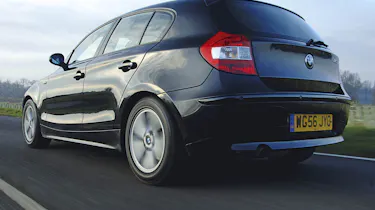
imminent arrival of the convertible, the 1-Series range has grown a lot in the last year. And the latest versions seem to have given new life to the model’s styling.
Whether you like it or not – and it certainly divides opinion – the long bonnet, sculpted flanks and unusual angles mean it’s instantly
recognisable, and further removed from conventional family hatches than the A3.
In fact, even in entry-level 116i spec, the combination of its looks, badge and solid build quality mean the BMW has the premium appeal that’s so crucial in this market.
The 1-Series makes you feel good when you step inside, too, but for a different reason than the A3. The materials are not as tactile as those in the Audi, but the low-slung seating position, small three-spoke wheel and perfectly placed controls give the BMW’s interior a sporty atmosphere.
Cabin quality is as high as you would expect, but the plastics used on the centre console and lower parts of the dash don’t look or feel as expensive as those in the Audi. Nonetheless, the BMW still has an edge on the A-Class when it comes to upmarket ambience.
Apart from a lack of stowage areas, the cabin is ergonomically well laid out and easy to live with. Rear legroom is the tightest of this trio, but with its rear-wheel-drive set-up, the 1-Series was never conceived to be as roomy as a conventional family hatch – it’s all about delivering the famous BMW driving experience.
The flagship 1-Series, the 130i, has 265bhp, so the 122bhp output of the 116i certainly isn’t enough to challenge the talented rear-wheel-drive chassis. It also means it doesn’t have the pace to match the sprightly Audi. Peak torque arrives 2,750rpm higher and the BMW unit has to be worked hard to make progress.
While this means it’s slower than the A3 to respond in-gear, there’s a step up in power at around 4,500rpm. And despite being a four-cylinder unit, the 1.6-litre engine stays smooth and refined to the red line, with nearly as much refinement as you would expect from a six-cylinder motor.
The biggest improvement is with the Efficient Dynamics technology, which has lowered emissions and improved economy. And once you experience the rewarding gearchange, firm brakes and quick steering, you start to forgive the BMW’s lack of power.
It’s immediately obvious that the 1-Series is crisper than the A3 and A-Class. The steering is heavier, but there’s far more feedback, and the rear-wheel-drive chassis offers plenty of traction, with more front-end grip than either rival.
The BMW also has the tightest body control, although even with relatively small 16-inch wheels, the ride is firm. This doesn’t stop the 1-Series matching the A3 for motorway refinement, though, recording a noise reading of 67dB at 70mph.
At £17,475, the 116i SE is slightly cheaper than the Audi and has a similar level of standard kit, including air-con, six airbags and electronic stability control. Crucially, low emissions reduce its company car tax bills, while fixed-price servicing will appeal to private buyers. The question is, will this mix of great driver appeal, low emissions and excellent running costs clinch victory over the faster Audi or more practical Mercedes?
Details
Price: £17,475
Model tested: BMW 116i ES
Chart position: 1
WHY: The 1-Series recently had a power upgrade and benefits from BMW’s Efficient Dynamics system.
Economy
We were unable to record an economy figure for our Efficient Dynamics 1-Series, but the old car has returned 29.3mpg in our hands in the past. The latest 116i has an official figure 11mpg better than its predecessor, so we’d expect 40mpg.
Residuals
Our experts have yet to produce residual figures for the 116i. But the 118i retains 44.7 per cent of its value, which makes it a far better investment than the A-Class. Expect a loss of around £9,600 for the entry-level 1-Series.
Servicing
A three-year/36,000-mile fixed-price servicing deal on the 116i costs £415. Pay £900 and you can buy a service and maintenance pack. Alternatively, the same deals over a five-year/ 60,000-mile period will cost £635 and £1,455.
Tax
Thanks to its stop-start technology, the 116i puts out 139g/km of CO2 – the least here. That not only makes it the cheapest fleet car, at £576 a year on the lower-band, but also means its annual road tax is lowest, at £115.