Toyota Verso-S 1.33 T Spirit
Toyota's newcomer is eyeing the supermini-MPV crown but does it have what it takes to beat its more established rivals?

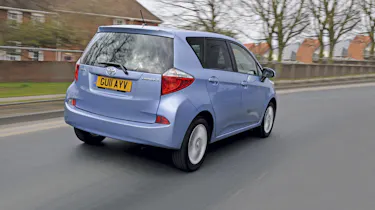
Believe it or not, Toyota has a rich MPV history. The Space Cruiser dates back to 1982, while the Yaris Verso has taken care of the supermini sector in recent times.
The latter’s replacement is an undoubted improvement from the outside, and shows off the new Toyota family face with a wide single-blade grille and sharply styled headlamps. But its proportions aren’t perfect and, compared to the Hyundai and Kia, it looks tall, boxy and narrow.
The result is bland and functional compared to the Korean cars. When sitting in the driver’s seat, the first thing you notice is the cliff-faced dashboard. The squared-off centre console and upright facia look incredibly dated, although the layout is pretty conventional.
There’s little wrong with the high-mounted gearlever and chunky three-spoke steering wheel, but the latter could do with more height adjustment. The instruments are neatly styled, and the new six-inch touchscreen set-up to control the audio, sat-nav system and trip computer looks great and works well.
There’s also a handy double glovebox with an integral iPod connection in the upper section. The whole cabin is made much more inviting by the panoramic glass roof that comes as standard on T Spirit models. It is huge, and means the narrow body feels more spacious than it really is. However, the one-piece design can’t be opened.
The biggest disappointment inside is the lack of adjustment available for the rear bench. While it’s split 60/40, it can’t be moved forwards or backwards. Still, the 430-litre boot is a reasonable size, and the floor height is adjustable. At the track, the Verso-S was the quickest against the clock in the taller gears, although this is partly down to the six-speed box – the Toyota is the only car here to feature an
extra ratio.
Yet on the road, the little 1.33-litre engine begins to feel strained and unwilling, and you have to use the entire rev range to make the kind of progress our figures suggest. The lack of low-down torque is a constant feature of the driving experience, while the light controls all lack feel – which contributes to a sensation of detachment.
The high-sided Toyota also proved susceptible to crosswinds in the blustery conditions of our road test. And while it feels light on its feet around town, the Verso-S is the least composed of the group on fast roads. Its skinny front tyres generate less grip, too. Salvation arrives in the shape of the low CO2 emissions.
An output of only 127g/km makes it the cleanest car here, meaning annual road tax costs a meagre £90 – that’s £35 less than for the Kia. Viewed in isolation, the newcomer is a solid, if rather unremarkable, addition to the supermini-MPV fold. And its high price could cost it dear in this test.
Details
Chart position: 4
WHY: In its first test, the new Verso-S has a tough task as it faces three former class leaders. Low emissions and generous kit count in its favour.