Kia Sportage review
The Kia Sportage continues to evolve, ensuring it remains competitive in a crowded market

Our opinion on the Kia Sportage
The current Kia Sportage can seemingly do no wrong. This model flies out of the showrooms at very nearly the same rate as the Ford Puma, despite that car being both much smaller and costing less to buy. However, when compared with the Sportage’s closest rival, the Nissan Qashqai, it just falls slightly short. There’s plenty of boot and passenger space in the Sportage, but in other areas, including the chassis and hybrid powertrain, it can’t quite match the Qashqai. Even so, the Kia’s value for money, generous standard kit, smart interior design and strong performance – plus its seven-year warranty – mean it's still an appealing package.
About the Kia Sportage
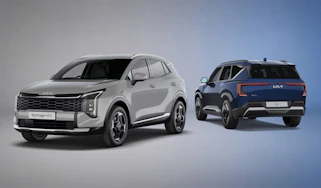
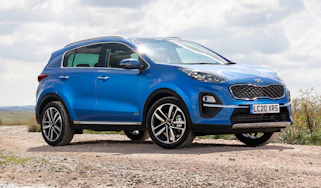
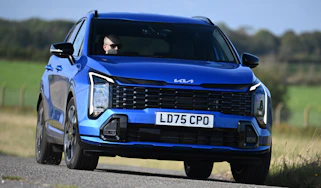
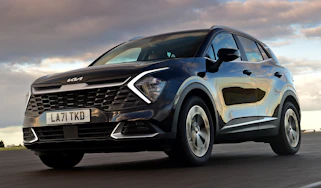
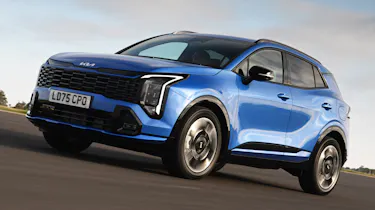
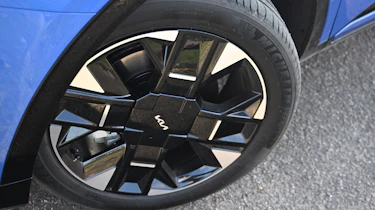
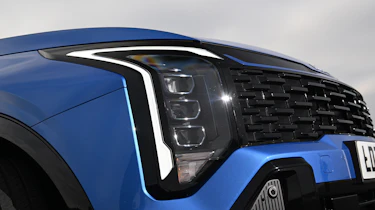
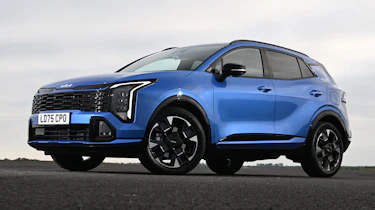
Kia has seen fit to update the Sportage, and it's now got a face inspired by the Kia EV9 electric SUV to match its smaller Kia Stonic and larger Kia Sorento siblings. The brand has introduced a new lighting signature at the front, which makes the car look wider and more imposing, while refreshed wheel designs, measuring between 17 and 19 inches, liven up the profile.
None of these changes have really altered the fundamentals, and that’s a good thing. While the powertrains aren’t quite up with the very best in the class, the Sportage remains a really solid all-rounder
Used - available now

2023 KIA
Sportage
37,913 milesManualPetrol1.6L
Cash £17,599
2023 KIA
Sportage
3,923 milesAutomaticPetrol1.6L
Cash £24,249
2023 KIA
Sportage
10,595 milesManualPetrol1.6L
Cash £18,799
2023 KIA
Sportage
50,363 milesAutomaticPetrol1.6L
Cash £19,749We've driven various petrol, hybrid, and plug-in hybrid versions of the Sportage over the years, with our most recent test being of a hybrid Kia Sportage against the Nissan Qashqai and Volkswagen Tiguan.
Performance & driving experience
Pros |
|
Cons |
|
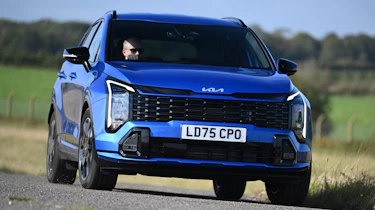
The Sportage has never been about class-leading dynamics, but that’s not a dealbreaker in this segment. What it can offer is a solid all-round mix of secure handling and reasonable overall comfort.
You can get a six-speed manual at the entry point to the petrol line-up, but all other cars feature automatic gearboxes, while front-wheel drive is standard on the majority of models. The exceptions here are the GT-Line and GT-Line S Hybrids, as these can be fitted with four-wheel drive, while it comes as standard on the GT-Line S PHEV.
| Model | Power | 0-62mph | Top speed |
| Kia Sportage 1.6T GDi GT-Line | 147bhp | 9.7 seconds | 119mph |
| Kia Sportage 1.6T GDi HEV GT-Line | 235bhp | 7.9 seconds | 121mph |
| Kia Sportage 1.6T GDi PHEV GT-Line | 283bhp | 7.5 seconds | 128mph |
Performance, 0-60mph acceleration and top speed
All versions of the Sportage use a 1.6-litre turbocharged four-cylinder petrol engine with some form of electrification. The entry-level mild-hybrid car produces 147bhp and is paired with either a six-speed manual gearbox or a seven-speed dual-clutch auto, and gets from 0-62mph in 9.7 seconds.
Despite the slight electrical assistance, the petrol engine needs to be worked hard, and accelerating causes it to emit a gruff, almost diesel-like tone. Overtaking can be quite a steady and noisy process, with a second or two’s delay before the car starts to steadily gain speed.
Hybrid versions still make a gruff noise, but the electric motor is fairly strong, so that unpleasantness doesn’t crop up so often. In total, there’s 235bhp and 265Nm of torque on offer, so it feels really quite lively for this class and posts a respectable 7.9-second 0-62mph time.
The generous oomph from the electric motor is immediately obvious because the Sportage hybrid feels more enthusiastic when setting off. The engine chimes in less often around town, too, boosting refinement and reducing fuel consumption. Compared with the class-leading Nissan and Toyota hybrids, there are a few too many jolts in the Korean machine’s powertrain – most notably when shifting gear (even in EV mode) and when the engine switches on and off.
With 283bhp, the Sportage plug-in hybrid is the most powerful version you can buy, but its extra weight over the 'self-charging' hybrid means it is only slightly quicker, posting a 7.5-second 0-62mph time.
Town driving, visibility and parking
Every Sportage comes with all-round parking sensors, a reversing camera and front collision-avoidance assist as standard, so there’s plenty to protect you from the potential perils of the city streets.
The Kia’s suspension doesn’t quite feel like it offers the same level of sophistication as rivals such as the Nissan Qashqai. While the overall response is quite soft, there’s a level of fidget that makes it through to the cabin, which means that it’s a little less settled at low speeds and across harsher bumps than some alternatives.
Country road driving and handling
While there’s a little more fidget around town than in a Nissan Qashqai, that soft set-up means that it doesn’t really translate into a more agile response through corners, and over larger bumps the body can take a little longer to regain its composure.
When turning into a corner, the initial response is more languid than in a Nissan Qashqai, a Volkswagen Tiguan or a Vauxhall Grandland, and the steering, although naturally weighted, doesn’t feel as precise as the Nissan’s.
Motorway driving and long-distance comfort
At higher speeds, the Kia’s ride settles down, and it proves to be a relaxing, comfortable companion. Stability isn’t quite at the Tiguan’s unflappable levels, but it all feels solid and reassuring.
Kia’s latest hybrid powertrain comes with adjustable regenerative braking, and the paddles behind the wheel allow the driver to adjust the strength of its response on the fly. We really like this level of flexibility, making the car very easy to control on inclines.” - Alex Ingram, special contributor.
MPG & running costs
Pros |
|
Cons |
|
The Kia’s powertrain line-up isn’t the most efficient in the class, with full-hybrid rivals such as the Qashqai and Honda ZR-V having superior fuel economy. During our test, which took place at around 15 degrees Celsius, we averaged a shade under 44mpg on a wide mix of roads in the Sportage. Given the performance on offer, we still consider that a reasonable return versus its official 50.4mpg rating.
While the mild-hybrid petrol Sportage might be the most affordable to buy, it'll be costly in terms of its fuel economy. An official WLTP figure of 40.3mpg is short of the 44.1mpg from the 1.5 EcoBoost Ford Kuga, or the 47.7mpg from the 1.5 eTSI Volkswagen Tiguan.
Meanwhile, the plug-in hybrid Sportage is rated at 104.6mpg, although based on our experience with PHEVs, you're unlikely to see figures like that in real-world driving.
| Model | MPG | CO2 | Insurance group |
| Kia Sportage 1.6T GDi GT-Line | 40.3mpg | 159g/km | 19 |
| Kia Sportage 1.6T GDi HEV GT-Line | 50.4mpg | 126g/km | 23 |
| Kia Sportage 1.6T GDi PHEV GT-Line | 104.6mpg | 23g/km | 28 |
Electric range, battery life and charge time
Just like the petrol and hybrid cars, the Kia Sportage PHEV uses a 1.6-litre petrol engine, but here it's combined with a 13.8kWh battery to provide up to 44 miles of pure electric range on the WLTP combined cycle.
The Sportage isn’t capable of DC rapid charging, but it should only take around two hours to fully charge using a typical 7.4kWh home wallbox charger.
| Model | Battery size | Range | Insurance group |
| Kia Sportage 1.6T GDi PHEV Pure | 13.8kWh | 44 miles | 27 |
| Kia Sportage 1.6T GDi PHEV GT-Line | 13.8kWh | 44 miles | 28 |
| Kia Sportage 1.6T GDi PHEV GT-Line S AWD | 13.8kWh | 40 miles | 29 |
Insurance groups
The mild-hybrid manual Sportage starts at group 19 insurance in both Pure and GT Line trims, while the automatic version sits in group 20 for the GT Line, and 22 for the GT Line S. Full-hybrid models with front-wheel drive range from group 23 to 25 according to trim level, while the range-topping all-wheel-drive hybrid is in group 26.
That means that the base models are, based on those groups, more expensive to insure than entry-level Qashqais, but the top-spec hybrids should be cheaper than their equivalents in Nissan’s line-up.
Tax
If you’re a private buyer, the GT-Line hybrid is the Sportage model we’d go for – not least because of the Vehicle Excise Duty (VED) saving relative to the GT-Line S range-topper. The GT-Line S trim costs more than £40,000, so is subject to the luxury car tax levy, and that’ll add another £440 onto your annual tax bill between years two and six after the car’s initial registration.
If you’re a company car driver, the PHEV will attract the lowest Benefit-in-Kind (BiK) tax rate of any Sportage. However, fully electric cars bring the very biggest company car tax savings, so you may wish to look at an alternative SUV instead. The Sportage’s closest sibling in the mid-size electric SUV market is the Kia EV5.
Depreciation
Our market data shows that the Kia Sportage will retain between 45 and 52 per cent of its initial value after three years or 36,000 miles. This is almost an exact match with the Sportage’s sibling, the Hyundai Tucson, as that car manages 47 to 52 per cent. Elsewhere, the Volkswagen Tiguan emerges with 47 to 51 per cent, while the Vauxhall Grandland trails behind at only 38 to 43 per cent.
To get an accurate valuation of a specific model, check out our free car valuation tool...
Interior, design & technology
Pros |
|
Cons |
|
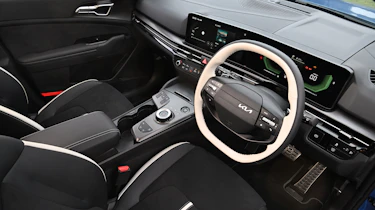
The Sportage’s cabin is smart and functional, if not quite a class leader in ergonomics or material quality.
Standard equipment is at least extensive, with the entry-level Pure coming with all the essentials such as 17-inch alloys, LED headlights, a 12.3-inch touchscreen infotainment system with sat-nav and full smartphone connectivity, front and rear parking sensors, and a reversing camera.
Mid-range GT-Line is our pick because it adds:
- Sportier interior and exterior lighting
- Classier part suede interior trim
- Heated front seats and steering wheel
- Privacy glass
Slipping just above GT-Line trim for an extra £500 is the Storm special edition, adding black leather and suede trim, heated outer rear seats, front ventilated seats, electric front seat adjustment, an 8-speaker Harman Kardon audio system, a 12.3-inch digital infotainment cluster, and wireless phone charging.
The range-topping GT-Line S builds on this with adaptive LED headlights, a panoramic glass roof, driver's side memory settings, an electric tailgate, a head-up display, blind spot assistance, and a 360deg reversing camera.
Interior and dashboard design
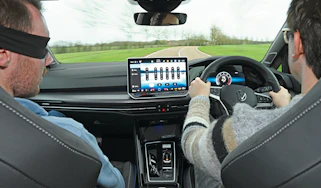
For 2025, Kia has smartened up the Sportage’s interior. Taking inspiration from range mates such as the EV6, the air vents have been consolidated into a single, slim span that runs across the width of the dash, below which sits a dual-function panel; the mix of physical dials and touch-sensitive buttons can be used to adjust either the infotainment or climate functions, depending on its mode. It’s quite easy to use, but we’d like it more if the way to change between those functions was a larger, physical button.
There’s a new steering wheel design – the gently squared-off shape is nice to hold, and features a large driving mode switch beneath the left spoke – while the switches on the centre console are neater than before, too.
Materials and build quality
It’s hard to complain about the actual fit of the Sportage’s interior panels, but compared with rivals such as the Tiguan and Peugeot 3008, there are a few too many hard and scratchy plastics close to areas and buttons that most commonly get touched. The door trim is one example.
Infotainment, sat-nav and stereo
As we’ve come to expect from Kia, standard tech is far from measly – even on the entry-level models in the range. For 2025, that base trim has been renamed Pure, but it still gets wireless Apple CarPlay and Android Auto, plus front and rear parking sensors and a reversing camera all fitted as standard equipment.
The Storm trim and above add a 12.3-inch digital driver’s display, while other models get a large LED-style readout for the road and engine speeds on either side of a 4.2-inch digital screen.
The infotainment set-up itself has been an area where Kia has earned praise in the past, but its systems are starting to fall behind the class best. The graphics are merely okay rather than outstanding, but the main criticism falls on some of the sub-menus, which can feel rather convoluted to use.
While disabling a speed-limit warning system is a matter of two button presses in a Qashqai or Renault Austral, here the process involves scrolling through the digital driver’s display in order to open up a sub-menu on the main touchscreen, then you need to dive into another sub-menu to adjust the warning tech from there – and another if you feel the need to adjust the settings of the lane-keep assist, too. It’s possible to bypass the speed-limit deactivation process by giving the mute button on the steering wheel a long press, though.
“The twin-function panel that sits below the central air vents divides opinion among our testers. Some think that it looks great and presents a neat solution that avoids the dash from being festooned with buttons; others think it’s a bit fiddly. Either way, it’d be improved if the button to switch between the two were a physical key.” - Alex Ingram, special contributor.
Boot space & practicality
Pros |
|
Cons |
|
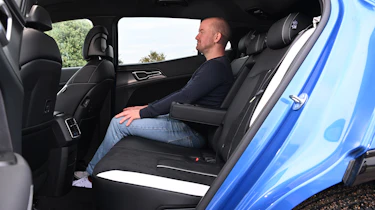
There’s an impressive amount of space available for both passengers and their luggage, making the Sportage one of the most practical cars in its class.
Dimensions and size
The Sportage has external dimensions that are similar to its rivals, but the packaging on board helps to create more space when compared with its closest opponents.
| Dimensions comparison | |||
| Model | Kia Sportage | Nissan Qashqai | Volkswagen Tiguan |
| Length | 4,540mm | 4,425mm | 4,539mm |
| Width | 1,865mm | 1,835mm | 1,842mm |
| Height | 1,645mm | 1,625mm | 1,658mm |
| Wheelbase | 2,680mm | 2,665mm | 2,677mm |
| Boot space | 587 litres | 479 litres | 652 litres |
Seats & passenger space
The Kia offers plenty of room up front, as you’d expect from a family SUV, and fans of a high-set driving position will appreciate it, because it feels like you sit much higher than in the almost car-like Nissan Qashqai.
Anyone in the back will appreciate that there’s enough space for three adult passengers. Against the tape measure, the Kia is a very close match for the Tiguan (marginally beating it in some areas and narrowly falling behind in others), while it offers more space than the Qashqai, Mazda CX-5 and SEAT Ateca, among others.
We like that the Sportage’s rear seats can be reclined by pulling a lever, and all versions get a fold-down centre armrest with cup-holders. These features increase comfort levels for those in the back during a long journey.
Two Isofix child seat mounting points are provided on the outer rear seats. The central seatbelt in the back is a complicated arrangement that comes from the roof, which not only requires you to ensure you’re using the correct seatbelt buckles, but also impacts the driver’s rear visibility, and some might find that the belt rubs their neck on long trips.
Boot space
The full-hybrid versions of the Sportage lose a barely noticeable four litres of boot capacity compared with the petrol mild-hybrid alternatives, but the 587 litres on offer is still very generous. The load lip is among the lowest in the class, which makes it easier to lift heavier items on board than in much of the competition. Drop each section of the 40:20:40-split rear seats, and you can cram up to 1,776 litres worth of kit into it.
Towing
Towing weights for the Sportage are reasonable, with the petrol model offering a maximum capacity of 1,650kg, while the Hybrid is slightly behind, at 1,510kg. However, the VW Tiguan is a better performer overall, and it has several diesel options for even more pulling power.
One word of caution I have is that the top-of-the-range GT-Line S comes with a panoramic sliding glass sunroof, and that has an impact on headroom for those in the rear. If you happen to travel with taller teens or adults in the back, it’s best you avoid this version and go for our preferred GT-Line trim instead. - Max Adams, online reviews editor.
Reliability & safety
Pros |
|
Cons |
|
Kia has previously ranked highly in our customer satisfaction surveys, but over the last couple of years, it's hovered in the lower half of the manufacturer rankings. It has dropped further down the rankings to 25th out of 30 brands in the best manufacturer table of our 2026 Driver Power customer satisfaction survey.
The Sportage wasn't a particularly high scorer in any category, resulting in a 37th-place finish out of 50 models. While that was one place above the latest Volkswagen Tiguan, owners of this Kia SUV felt the driving experience could be better, with low scores for steering and acceleration. The user-friendliness of the car's controls could also be better, along with its rather expensive servicing, fuel, insurance and vehicle excise duty costs. The amount of rear seat leg room, seating flexibility, and ride comfort were well liked, though.
Every version of the Sportage comes with plenty of safety assistance technology, from autonomous emergency braking, lane departure warning, lane keep assistance and a speed limit warning. You will need to specify an automatic version in order to get standard adaptive cruise control, while blind spot assistance and a 360deg camera system are reserved for the range-topping GT-Line S trim.
| Euro NCAP safety ratings | |
| Euro NCAP safety rating | Five stars (2022) |
| Adult occupant protection | 87 per cent |
| Child occupant protection | 86 per cent |
| Vulnerable road user protection | 66 per cent |
| Safety assist | 72 per cent |
Buying, prices and deals
Best buy: Kia Sportage GT-Line Hybrid
Prices for the Kia Sportage start from around £31,500 for the petrol model in base Pure trim. However, considering the increased power and efficiency of the hybrid powertrain, we think this is worth the extra investment. We’d also move up to the GT-Line trim level to bring in a healthy dose of extra kit but without crossing the luxury car tax threshold. In our preferred GT-Line Hybrid spec, you’ll be looking at a starting price of around £37,500.
You can save on the list price when you build your perfect Kia Sportage through our Buy A Car service. We also have some very tempting Sportage leasing deals to choose from, as well as a number of used Kia Sportage models in stock right now.
Kia Sportage alternatives
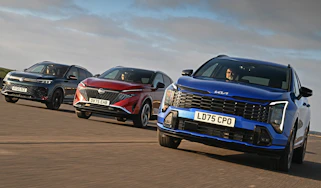
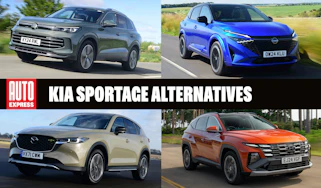
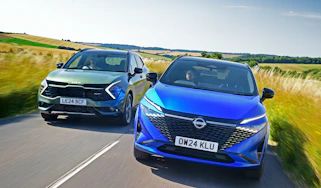
With many capable rivals in the mid-size SUV market, the Kia Sportage has its work cut out. We tested the facelifted Sportage against the Nissan Qashqai, and in our opinion, the Nissan has gained an advantage courtesy of its newer, more efficient and responsive powertrain. It’s not as spacious as the Sportage inside, but passengers won’t complain about a lack of space in comparison.
Another close competitor to the Sportage is the Hyundai Tucson, which is based on the same platform as the Sportage but has won our Mid-size SUV of the Year award four times on the trot from 2021 to 2024. Meanwhile, the Kia has only ever been highly commended.
The Volkswagen Group also offers excellent competition in the form of the Skoda Karoq, Cupra Terramar, and Volkswagen Tiguan. Or if you want more driving fun, consider the Ford Kuga or Mazda CX-5.
In this competitive class, it would also be hard to recommend the expensive Honda CR-V or the commendable but dull-to-drive Vauxhall Grandland. Neither is a bad choice; it’s just that other rivals offer a more complete package.
Kia Sportage pictures
Key updates of the Kia Sportage review
- 24 September 2026: Latest pricing and depreciation data.
- 20 July 2026: Latest Driver Power satisfaction survey information.
Frequently Asked Questions
Whether you go for petrol, hybrid, or plug-in hybrid, your Kia Sportage will need servicing every 12 months or 10,000 miles.
Deals on the Sportage and alternatives
More reviews
Car group tests
Used car tests
Which Is Best