Diesel prices back below £2 per litre: calls for fuel duty cut to keep them there
Fuel prices are now, on average, below £2 per litre, but the AA says an additional 5p cut to fuel duty in the next Budget could make a longer term difference

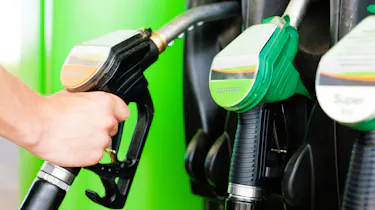
There could be light at the end of the tunnel for car owners, with average fuel prices having dropped below the frightening £2 per litre mark – although experts believe Government intervention is the real key to providing financial relief to drivers, rather than relying on volatile oil markets.
According to the RAC, the price of diesel and petrol now stands at 199.90p and 174.79p per litre, respectively. This comes days after the average cost of diesel rose above £2 per litre for the first time in UK history. The RAC’s head of policy, Rod Dennis, welcomed the dip in pump prices, although he warned that drivers are “a long way from being out of the woods”, pointing out: “As things stand, this year is still set to be the second most expensive year on record for drivers.”
At the time of writing, the price per barrel of Brent crude oil – the type used to manufacture motor fuel – sits at just shy of $103 per barrel; this dipped as low as $97 after G7 leaders agreed to release over 100 million barrels of stockpiled oil to boost supply. Such a move was seemingly a reaction to US President Donald Trump’s threats to ban diesel exports in order to reduce prices for Americans.
While it will take four months for all of this oil to make its way to market, a statement by the G7 confirms that a “frontloaded substantial diesel release” will be made available in the next 20 days in the hope of bringing black pump prices down. Leaders will also meet again at a later date to “discuss the possibility of additional diesel releases”.
Attention turns to October Budget
For the time being, many forecourts are still charging over £2 per litre – particularly those in motorway service areas. The prices of petrol and diesel currently remain 42p and 57p higher than before the start of the Iran war respectively, or the equivalent of £23 and £31 on a 55-litre tank of fuel.
| Car | Fill-up cost (28/02/26) | Fill-up cost (09/10/26) |
| Vauxhall Corsa 1.0l (Petrol, 40L) | £53.13 | £69.92 |
| Ford Puma 1.0l mHEV (Petrol, 42L) | £55.79 | £73.41 |
| Skoda Superb 2.0 TDI (Diesel, 66L) | £93.97 | £131.93 |
| Kia Sportage Hybrid (Petrol, 52L) | £69.07 | £90.89 |
| Land Rover Defender 110 D350 (Diesel, 89L) | £126.72 | £177.91 |
With this in mind, many are calling on the Government to act in the name of drivers at the forthcoming Budget on 28 October. While the Government has postponed the so-called ‘unwinding’ of the temporary five pence cut to fuel duty until next year, the AA says it wants the discount maintained, on top of introducing an additional five pence cut.
“Drivers need the Chancellor to put the brakes on rising fuel costs,” said the AA’s president, Edmund King. “The first step must be keeping the existing 5p fuel duty cut, but with prices rising we believe the Chancellor should go further and cut another 5p. If passed on in full, that additional cut would take around 6p off a litre at the pump and save around £3.30 when filling a typical family car.”

The AA says the cost of such a measure would be balanced out by the additional £374 million VAT income from car purchase and maintenance the Government has received so far this year – growth largely driven by the higher fuel prices drivers are paying at the pumps.
For now, the Government remains tight-lipped as to its Budget plans, although Chancellor John Healey did tell the BBC’s Newscast podcast: “As far as diesel prices go, I’m acutely conscious of how hard this is hitting people… and I will be able to make more commitments [and] set out more detail of any moves that we’re able to make to ease the cost of living at the [Autumn] Budget.”
Gov actions aren’t enough to maintain diesel interest
Aside from extending the five pence fuel duty cut, the Government under ex-Prime Minister Keir Starmer commissioned the Competition and Markets Authority in March to monitor the fuel sector for any evidence of price gouging. While the CMA is yet to find any evidence of retailers changing their pricing tactics to profiteer from the high oil prices, the regulator has pointed out that a lack of competition in the sector has led to “passive” pricing strategies. These keep prices high for consumers, because retailers are sluggish to react to fluctuations in the price of oil, instead waiting for others to do so first.
Yet a lack of direct action appears to have had some unintended consequences as high fuel prices have begun to push buyers away from internal combustion vehicles and into EVs. Between March and the end of September 2026, enquiries – i.e requests to dealers for quotes or test drives – on Carwow dropped by 33 per cent, while interest in petrol cars only fell by around a quarter. At the same time, enquiries for EVs rose by 28 per cent; curiously, enquiries for hybrids dropped by eight per cent, suggesting high fuel prices are turning drivers away from fossil fuels altogether and forcing them to consider full-electric models.
In fact, enquiries for diesel fell by 14 per cent in the last week alone compared to the week prior, driven largely by a recent spike in the cost of fuel. Diesel cars have so far accounted for just four per cent of new car registrations in 2026, which is perhaps no surprise given the dwindling number of options available to buyers. Late last year, Auto Express discovered that only 91 diesel car models were on sale in the UK, compared with 240 a decade prior. That number has reduced even further in the months since.
Don't miss the best of Auto Express on Google! Make us a preferred source. Click here...