Best and worst car ADAS safety tech 2026
Done badly, automatic car safety tech can be annoying and intrusive but it’s also a potential life-saver. Our tests show which brands get it right and wrong…

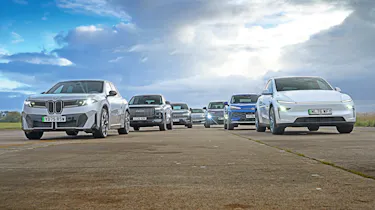
Since 2024, no new car can be sold in Europe unless it’s fitted with key standard safety equipment, including driver monitoring, lane-keep assist, intelligent speed limit warnings and automated emergency braking. The safety benefits of these, and other similar technologies are well proven but they have altered the experience of driving a new car.
No safety aid can serve its purpose if it is deactivated by drivers who find its interventions intrusive or annoying. The challenge for manufacturers is to integrate these crucial safety technologies so they work with drivers rather than against them.
That’s essentially what we set out to judge with our in-depth test of some of the leading ADAS (Advanced Driver Assistance Systems) on today’s market. Part one tested driver safety aids with their warnings and interventions. Part two examined self-driving technology that can take control of your car in certain circumstances. The results of both tests allowed us to rank the ADAS packages from seven leading brands according to its overall performance. You can find our expert team’s final verdicts below…
1. BMW iX3
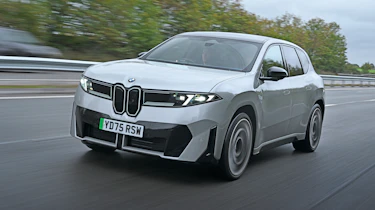
From our experience, BMW is best for Advanced Driver Assistance Systems, with the iX3 getting the top scores in both disciplines. It didn’t miss a single speed limit and instinctively helped slow (or accelerate) the car to stay legal.
The system is incredibly collaborative, with a clever driver monitoring system that cuts the driver some slack with lane changes – so long as they’re intended and safe – and Level 2 self-driving that blends seamlessly in and out and clearly communicates who’s piloting the car. And there’s not an unwarranted beep or bong to be heard. The iX3’s combination of user-friendliness and sophisticated assistance is the blueprint other car manufacturers should follow.
2. Volvo EX60
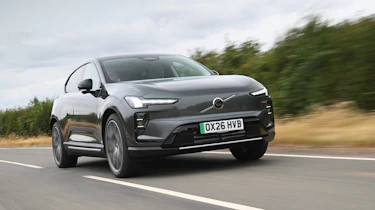
Volvo is a company synonymous with safety, and there’s further proof from its silver medal in our test. The driver monitoring and lane assist functions are beautifully judged, unobtrusively working in the background. Only one speed limit miscalculation prevented it matching the winning BMW’s perfect intelligent speed limit assist score.
The EX60 proved less convincing in the L2 assisted driving test, largely due to overly complex controls and a series of fluffed automated lane changes. In part, this is due to Volvo’s philosophy of keeping the driver engaged and involved in the decision-making, and we have absolute faith that underneath these layers is an incredibly smart safety net.
3. Ford Puma Gen-E
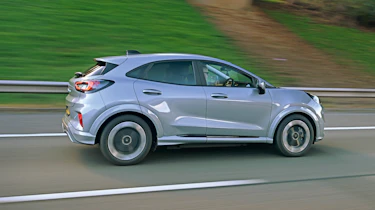
While the Puma Gen-E’s party trick – L2+ motorway self-driving – is novel, it’s the Ford SUV’s performance on a broader range of roads that determines its place on the podium.
Driver monitoring responded to some erratic driving and lane keep assist is nicely calibrated. But it flunked a few speed signs and doesn’t even try to ‘self-drive’ on rural bends – although that’s no problem given that the Ford clearly informs its driver to take responsibility instead.
4. Volkswagen T-Roc
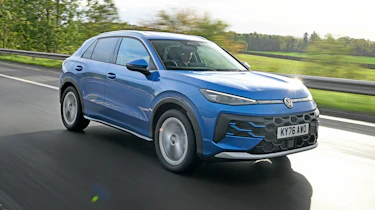
The Volkswagen T-Roc was ranked joint-second as a co-pilot, self-driving through curves most impressively and with a largely clear operating logic – apart from its refusal to attempt automated lane changes. It’s a bit hit-and-miss on speed limits, and has an overly binary approach to lane control.
But VW urgently needs to upgrade its driver monitoring approach, with a point deducted because the system was foxed by a pair of spectacles.
5. Tesla Model Y
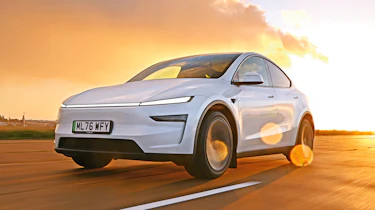
Tesla’s ‘my way or the highway’ approach to collaboration overshadowed our assisted drive, with the system bailing out 11 times due to driver inputs. If Tesla improved this, the Model Y would be right up there for L2 driving.
But its performance on speed and lane assist dragged it down, misreading the road markings once and speed limits multiple times. Driver monitoring is nicely understated, though.
6. Jaecoo 7
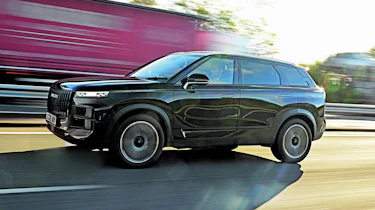
If only 7 was the number of false warnings relayed by the Jaecoo 7: it repeatedly admonished us for phantom lane violations and being distracted, and even displayed disparate speed limits on its twin digital readouts.
Our 37-mile run on the assisted driving test was haphazard: its clumsy reaction to speed signs and the road layout suggests owners should strictly limit assistance to the simpler motorway environment. The gold medal for distracting beeps and bongs, second last for driver assistance.
A spokesperson for Jaecoo said: "Jaecoo takes the performance, quality and real-world usability of its Advanced Driver Assistance Systems (ADAS) seriously. We continue to refine these systems through regular software updates, supported by our parent company Chery Automobile Co. Ltd.’s new, state-of-the-art UK R&D Centre of Excellence. The latest version debuts on the newly unveiled Jaecoo 7 Luxury+ and is expected to roll out free of charge across the Jaecoo 7 range from early 2027.
"The Jaecoo 7 achieved a five-star overall Euro NCAP safety rating, with strong results for occupant status monitoring, lane support and autonomous emergency braking.
"Intelligent Cruise Assist is specifically calibrated for use on motorways and dual carriageways when conditions are suitable. It is not intended to replace driver judgement or control, nor to operate as an autonomous driving system. Outside its intended operating conditions, the system is designed to deactivate, ensuring the driver remains fully in control of the vehicle.
"We remain focused on listening to feedback, refining our technology and ensuring that JAECOO drivers benefit from systems that are both effective and intuitive, while always reinforcing the importance of driver responsibility."
7. Leapmotor B10
Where do we start? A driver monitoring system that makes a hash of relaying information, lane support that fails to read the road properly, speed limit guidance that is a work of fiction – the Leapmotor B10’s ADAS systems do very little to actually assist the driver.
The B10 fared slightly better in the L2 assisted driving test, primarily because it offered little pretension to co-driving away from the motorway. The upshot is we ended up turning off the system, negating the essential safety benefit of Advanced Driver Assistance.
| Model tested | L2 Assisted Driving (20 max) | Intelligent Speed Assist/Driver Monitoring (21 max) | Total Points (41 max) |
| 1. BMW iX3 | 18 | 21 | 39 |
| 2. Volvo EX60 | 15 | 20 | 35 |
| 3. Ford Puma | 15 | 16 | 31 |
| 4. Volkswagen T-Roc | 16 | 15 | 31 |
| 5. Tesla Model Y | 16 | 12 | 28 |
| 6. Jaecoo 7 | 6 | 9 | 15 |
| 7. Leapmotor B10 | 6 | 2 | 8 |
More from our ADAS car safety special
- ADAS warning and safety tech tested (part 1)
- Hands-free self driving systems tested (part 2)
- Best and worst ADAS 2026/2027: megatest verdict
Don't miss the best of Auto Express on Google! Make us a preferred source. Click here...