The Lotus electric car rebirth is struggling, but will new hyper-hybrids save the day?
Despite huge Chinese investment to electrify Lotus, sports car sales still prop up the loss-making business. Can Lotus achieve take-off?

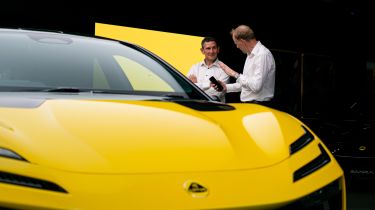
Lotus is a test case on how hard the road to electric motoring will be. The legendary British sports car brand has introduced two impressive clean-sheet EVs – the Eletre SUV and Emeya saloon – in just over a year, yet its petrol-powered, mid-engined Emira sports car almost matches their sales volume.
Then there’s the power of politics to make life hard for the car industry. Tariffs are impacting Lotus exports from China, while President Trump rolls back American EV incentives and Prime Minister Keir Starmer moves in the opposite direction by reconsidering a 2030 ban on UK sales of new combustion cars.
Given the climate, you’d understand if Matt Windle, the managing director of Lotus sports cars, passed on adding Europe’s commercial performance to his responsibilities. Instead, the laid-back Lotus leader is “excited” about his broader remit.
Before Chinese auto group Geely – also owner of Volvo, Polestar, Smart (in a joint venture) and a number of domestic brands – commenced the brand’s growth spurt, Windle told me Lotus was a “sleeping giant”. What is it now?
“It's waking up, it's coming out of hibernation,” he grins. “We are starting to [realise] the opportunity we have. We've got the best products in our history, for technology, for quality. And the global volume is higher than ever.”

Lotus delivered 12,134 cars last year, with the lifestyle EVs accounting for 57 per cent. But the ambition is far higher, especially with Lotus’ Wuhan factory having a 150,000-unit capacity. Isn’t Windle frustrated by the slow growth?
“Is it quick enough? No, but I’ve learned to be patient. The time for impatience is when people don't do what they say they'll do.” With commendable understatement, he continues: “There are a few external aspects that have had an impact: [sluggish] economies, wars and tariffs – and a lot of them you couldn’t have predicted.”
He points out that deliveries in 2024 climbed 74 per cent on 2023’s, and are in another league compared to the 1,710 cars that Hethel (the Norfolk sports car factory) assembled in 2021, the last year of the Elise, Exige and Evora.
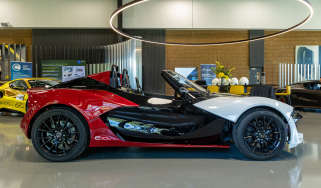
Hethel also produces the Evija, the extraordinary hypercar that kicked off the Vision80 plan to transform Lotus from threatened minnow to luxury electric player by 2028. Getting the four-motor, 1,973bhp monster into production has caused a huge headache, with engineering sign-off running years late and the Evija proving a tricky sell – just like its fellow electric hypercars from Rimac and Pininfarina. The ambition was 130 units at £2.4million each: how many orders does Lotus have?
“I’m not going into the numbers,” says Windle, politely but firmly. “Do I want more? Yes. And the car is going to be out there this year, in front of potential customers, and people now taking delivery of their cars will be advocates for an incredible product. As with every Lotus, you need to get people to drive it and then they understand it.”

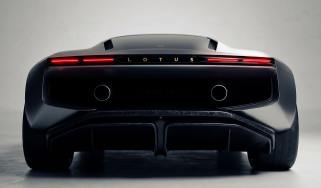
What has Lotus learned from the Evija project? “I could write a book on it!” jokes the sports car boss. “Hypercars are very difficult: you’re producing a car to operate at extreme performance levels while making sure it’s safe.” Writing the software to manage the delivery of the enormous 1,704Nm of torque to all four wheels was the biggest challenge. Being an electric sports car pioneer has clearly given Lotus pause for thought. The Vision80 blueprint announced the Type 135 (all Lotus projects get a sequential ‘type’ number), a pure electric coupe destined to replace the Emira. Full of confidence, Lotus even showed a prototype chassis stacking the batteries in the classic mid-engined position, four years ago. What’s the latest?
“We need to understand where the market is going,” replies Windle. “We’ve got a range out there we’re incredibly proud of right now…which will help with the product strategy. [Future planning] is an incredibly difficult job at the moment. As you’d expect, we’re working in the background with R&D and looking at the possibilities.”
Will it help that Porsche and Alpine should both introduce electric sports cars in the next year or so? “Yes, it does. Relative to those guys we are small, and you need to be absolutely certain there’s going to be the market share for it. I think there is – and that we’ve got to go that way as far as legislation is concerned.”
Windle is also reticent about the Type 134, a smaller electric SUV beneath the Eletre, though he concedes it’s still an aspiration. The priority is “organic market growth” with the existing products, though Lotus has confirmed it must broaden its powertrain line-up with petrol/electric ‘hyper hybrids’ to attract more customers.
The Eletre is likely to get the powertrain first in 2026, and its ‘hyper’ label shows engineers will not compromise on the electric SUV’s mighty performance. Parent Geely is rolling out a new plug-in hybrid system that mixes a 275bhp 2.0-litre turbocharged petrol engine with a 389bhp front electric motor and 496bhp rear unit: that would be sufficient firepower to eclipse the base Eletre S’s 4.5-second launch from standstill to 62mph. And with the group trying to use more technology across more brands, the engineering team is likely to finesse that system for Lotus.
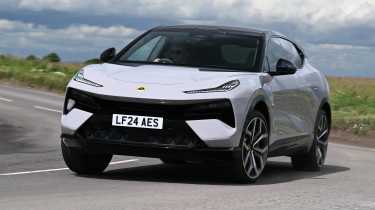
“The products will be based on the performance where we are now, but then you get that addition of range,” says Windle. The Eletre has the space for a big battery, its 800-volt electric architecture may be upgraded to 900 volts for rapid recharging, and a 500-mile combined range should be possible: the battery alone is reportedly good for more than 200 miles.
Rolling out hybrids should accelerate Lotus’s growth – is 30,000 annual sales realistic? “It’s feasible,” he muses. “Whether it's achievable is a different matter. It’s important that we don't chase [a] number. We need to build the business from the bottom up.” The company – whose operations lost $786m last year – hopes to break even in 2026.
The UK and Europe account for 40 per cent of Lotus’s volume, with Lotus striving to keep a lid on price rises despite the 29.9 per cent import duty on EVs going to the mainland. Windle’s growth plan is to look for territorial gaps which could entice new retailers, venture into EV-hungry markets such as the Nordics, and tap the love for Lotus in car-mad countries such as Germany. Likewise the brand can now enter the corporate market, where tax incentives fuel EV sales.
But the scale of the task is huge: Lotus only has 16 retailers in the UK, and they’ve needed to develop a new capability of servicing EVs. Our discussion is in HR Owen’s flagship Lotus store opposite London’s Ritz hotel, and it’s heartening to see faces young and old pressed up to the glass, gazing at the green Evija and Type 72 Formula 1 racer from 1975.

Windle, ever the car guy, persuaded Classic Team Lotus boss Clive Chapman to let him drive it. “It was one of my best ever days,” he beams. “Clive stood [beside the Hethel test track] and watched me do a lap, get a feel, go a bit quicker. I just felt so engaged with that car. It was the most thrilling but the most never-racking thing ever.”
A ground-breaking F1 car couldn’t be much more distant from the big electric cars flanking it. But if Lotus can inject the passion it triggers into the new portfolio, the brand has a chance.
“Think of the [ageing, niche] cars we had just seven years ago to where we are now as a portfolio,” urges Matt Windle. “We’re on a journey – and we’ve already come a long way.”
Latest Lotus deals
Treating yourself to a Lotus? Tell us which model you’re interested in and get top offers from our network of over 5,500 UK dealers. Let’s go…